Category: Media

When Teen Vogue’s newsroom went silent, so did a generation’s voice.

When Teen Vogue’s website folded into Vogue.com earlier this month, it did more than erode a brand. It reshaped what youth media could be: bold, political and unapologetically inclusive.

For many of us who grew up reading Teen Vogue, it was never just about fashion, beauty or pop culture. It was about voice. It was a publication that made room for equity and eyeliner, mascara and movement. It allowed both beauty and politics to coexist in the same room unapologetically.

Read More

Pulitzer value of independence infuses 50 year journey from rookie reporter, to globe-trotting correspondent to founder of nation’s leading news nonprofit

In the fall of 1976, as a young reporter at the St. Louis Post-Dispatch, I was in the early stages of researching a project on nuclear waste. A source told me of key leads contained in an article that had appeared several years earlier in The Rocky Mountain News. To get a copy of the article entailed, first, asking an editor for permission to make a long-distance call; and second, persuading the News reference department to dig the story out of its morgue, make a photocopy of it, and send that copy to me by mail. A week or so later I had the information I sought.

Read More

On His 100th Birthday — A Tribute to Charles Klotzer

When the earth unspools before the sun on Nov. 1, its cargo will include a human population of some 8.2 billion.  Of that total, the number able to claim residence for 100 years or more will be a mere 722,000 – .0088 percent. 

Roughly 1,300 of that group will be Missourians – of whom only about 200 will be men.   

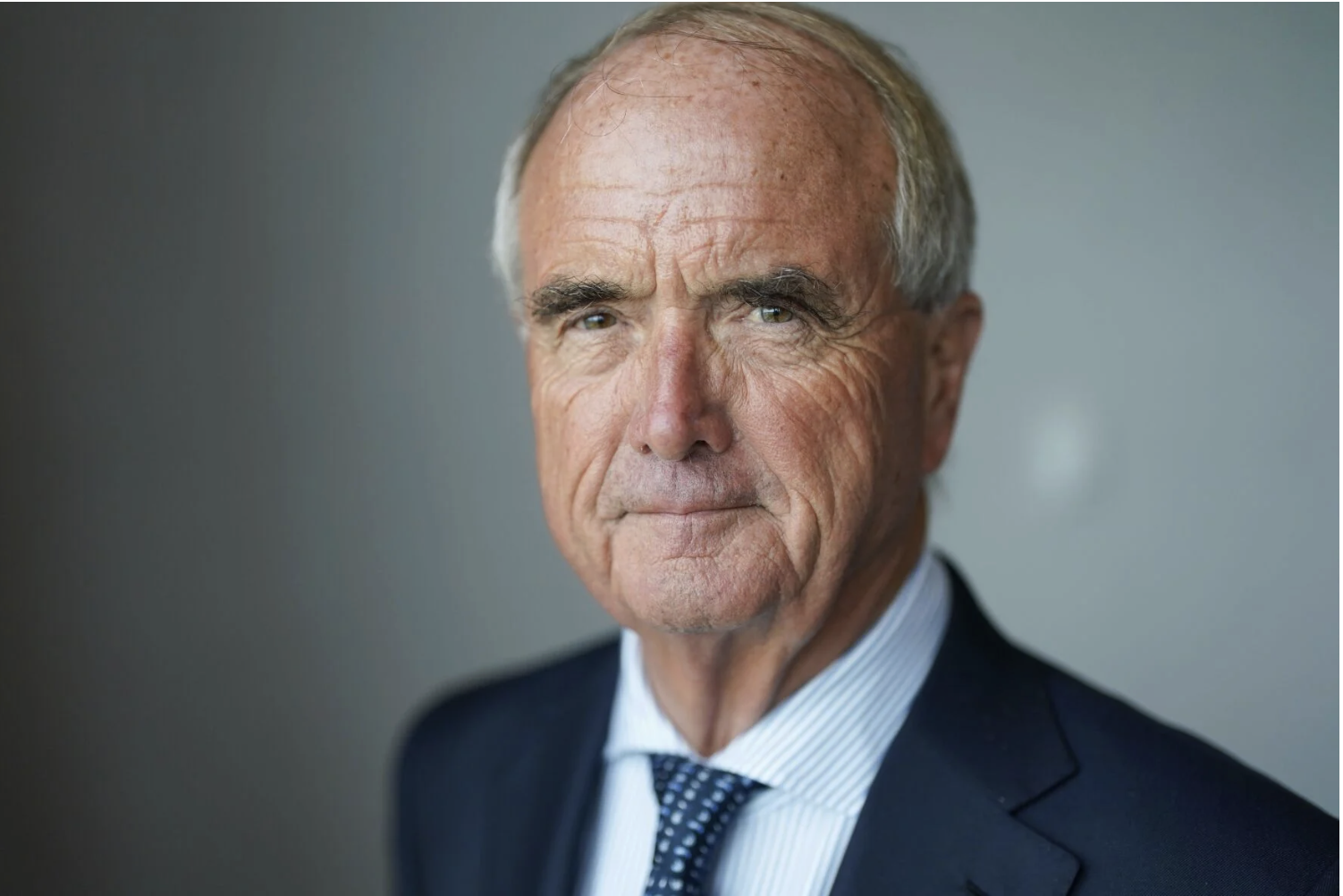
One lives in University City and will be celebrating his centenary that very day.  A cane notwithstanding, he will still be walking with an erect carriage. His daily routine will still feature several hours reading The New York Times and the St. Louis Post-Dispatch (hard copies).  And he will still start most days by writing an email assuring his daughters that all is well.  Daughters, after all, must be humored.

This man is Charles L. Klotzer.  From an actuarial standpoint, he is one in 40,000.  From any other perspective, he is one in millions.   

His life story would challenge fiction writers, let alone statisticians: an Act I in Berlin, Germany, where three nights before his scheduled Bar Mitzvah his synagogue was destroyed in the Kristallnacht rampage; an Act II in Shanghai, China, where he spent nine years in conditions many refugees there found unbearable  (typhoons, intense heat, freezing cold, malaria, hunger); and an Act III – starting in 1948 – in St. Louis, where he achieved local and even a degree of national renown as the founder of the St. Louis Journalism Review (SLJR), now the Gateway Journalism Review (GJR).    

Klotzer will be publicly honored Sunday, Nov. 2, at the GJR’s First Amendment Celebration, at the Frontenac Hilton Hotel. The annual benefit. which previously has featured such eminences as Bob Woodward, Carl Bernstein and Judy Woodruff, will be headlined this year by Marty Baron, the former top editor of both the Washington Post and the Boston Globe. 

At least one ingredient in the GJR’s ability to lure heavyweights like Baron has been Klotzer himself.  He is widely respected not only for having founded the SJR in 1970 with help from his wife, the late Rose Klotzer, but for having personally subsidized it for decades despite modest personal circumstances.       

Written by volunteers from the local media and edited by Klotzer himself, the SLJR revealed issue after issue how journalism was not only a calling but a business. It also kept local journalists on their toes by exposing shortcomings in the way news was covered. It pulled no punches and won national as well as local journalism awards.  

Klotzer ran it until 1995; then gave it to Webster University; then took it back 10 years later when the university decided it would not subsidize its print edition any longer and would instead take it online – a plan Klotzer abhorred; then held onto it until finding a new sponsor in Southern Illinois University Carbondale (SIUC) in 2010. Editorial leadership is now provided by William Freivogel, a veteran St. Louis journalist and professor in the Charlotte Thompson Suhler School of Journalism and Advertising at SIUC, and Jackie Spinner, another veteran journalist and a professor at Columbia College Chicago.  Klotzer continues as an adviser.  

The GJR is now the last print journalism review in the country. (It publishes online too.)    Immodest as it may be to say so in these pages, it is a mouse that roars. Its circulation, print and online, is microscopic. But its coverage of such issues as racism, politics, the courts and police accountability has won it a footlocker’s worth of national reporting awards, including at least one in each of the last five years.  

Given his biography and legacy, the opportunity to honor Klotzer on his centennial is of course obvious.  But the reasons for celebration go much deeper.  Conversations with those closest to him show that the man is simply revered.

In part this is because the unselfish commitment he has shown in his journalistic endeavors is typical of his approach to life. “One of the great lessons that I think I learned growing up with him is, you do what’s right regardless of the outcome,” said Miriam Rushfinn, of Charlottesville, Va., his eldest of his three adult children. The others are Ruth Baruch, or Chicago, and Daniel, of St. Louis. Klotzer also has four grandchildren    

Publishing the SJR on his own nickel is only a part of the story.  Klotzer and his wife Rose resisted the white flight that seized University City in the late 1960s and unlike many other white parents, kept their three children in the public schools.  After Rose entered a long decline that ended in her death in 2019, Klotzer initially served as her “nonstop caretaker” at home, Rushfinn recalled.  Then, after she had to be institutionalized, Klotzer “was there all day long every day.  He just took his computer, he took his papers, and he was there with her every day.”  

In the broader world beyond the family, this strong moral compass typically points left. For example:

  • Having arrived from Shanghai in San Francisco, he chose St. Louis as the family’s destination in part because he thought one of the other options presented – in the South — would be too racist. (He also thought the Mississippi would be lined with restaurants, like the Seine or Danube.) 
  • Only a few years after arriving in St. Louis, he protested the exclusion of Blacks from the swimming pool at the YMHA (Young Men’s Hebrew Association). 
  • His first publication, FOCUS/Midwest, a magazine he and Rose published from 1962 to 1982, devoted significant space to social justice issues and carried columns by such noted liberals as Minnesota Sen. Hubert Humprey and former Post-Dispatch editorial page editor Irving Dillard. (It also featured poetry selected by no less an authority than Washington University’s Donald Finkel.)  
  • In 1988 he headed the presidential campaign in Missouri of Illinois Sen. Paul Simon, another strong liberal (and the person who, remarkably enough, gave him his start in journalism by hiring him, when he was still literally almost fresh off the boat  in 1948, as assistant editor of his family-owned Troy (Ill.) Tribune. Klotzer held the position until 1951.)  

What experiences forged this orientation? More specifically, when did it form? 

Sitting at his dining room table in a room crowded with file cabinets and papers, Klotzer looked this reporter in the eye and deadpanned, “November 1, 1925.” 

A trace of a smile followed. Then he added, “The social compact between people is now considered left.  But if you believe in Judaism, there’s no alternative.  The commitment to justice is paramount.” 

That commitment can exact a price, of course, and Klotzer at times has  been forced to pay it.  Receiving a draft notice in 1951, during the Korean War, he thought he would be excused when he explained he was the sole support of his elderly parents. But when the chair of the draft board made a racist comment during his interview, Klotzer let him know what he thought of it. 

He spent the next two years in the Army. 

A boyhood experience in Shanghai may be telling in this regard.  While Klotzer was a teenager, a group of anti-Semitic Russian refugees beat him up once after work.  A Jewish man who became aware of the situation invited him to join a boxing club. Klotzer went on to fight 12 matches, winning the first 11.  His last bout — for the lightweight championship of Shanghai – ended in a draw. 

“While I consider boxing a sport that should be banned,” he later wrote, “I must confess that the exercise and training instilled in me a lasting measure of self-confidence.”  

Rita Csapo-Sweet is a filmmaker and University of Missouri St. Louis faculty member who became close to Klotzer while making a documentary about him a couple of decades ago. Klotzer has an appealingly courtly, old-world manner whose impact is reinforced by his German accent, and “is a very kind person,” she said in an interview.  But he is “no one you can push around. There’s a border with him, a line in the sand.”    

With that kind of makeup, at least in Klotzer’s case, goes a quiet pride and self-confidence, as well as independence of judgment and action. Physically, those characteristics can be seen in his posture and gait. Verbally, they’re in his unwillingness to describe himself as a “Holocaust survivor,” Rushfinn said.  And in the details of his life story, they are everywhere.  

Klotzer was still a teenager when, due to “family dynamics,” he effectively became the head of his family, he told me.  (His mother, he says, was a down-to-earth woman who ran a toy store in Berlin, his father a well-liked actor and poet with tendencies toward fabulism and groundless optimism. By the time they reached Shanghai, Klotzer’s father was already in his late 60s, equivalent to what now might be his 80s.) In Shanghai Klotzer’s schooling, except for some business classes, ended at 17, at which time he got work to help support the family.  After the family had moved to St. Louis, they spent only a week in the “horrible” hotel selected for them by the Jewish Family Services Agency before Klotzer moved them – without permission – to a better one.  

It can hardly be a surprise, then, that after everyone Klotzer consulted told him that a magazine about social issues in the Midwest would surely lose boatloads of money, he started FOCUS/Midwest anyway.  (The advisers proved correct.)  

Nor should it be a surprise that in 1954, when he founded a short-lived newspaper for the St. Louis Jewish community, he justified the venture by arguing that the existing publication “was just a house organ for the Jewish Federation.”  And it also might have been predicted that when he started the St. Louis Journalism Review, he arranged for it to be funded out of a separate company, his FOCUS/Graphics typesetting firm, so Review advertisers – precious few that there were – could not influence the publication’s coverage.

 “Charles always had a firewall between advertising and the news and editorial sections of the paper,” Csapo-Sweet noted.  “In today’s world of corporate ownership of everything, he still stands out as a kind of example of how journalism can be done right.”   

Klotzer’s own account of his life story, published in the GJR three years ago, is notable not only for the story it tells but for the understated, just-the-facts style in which he tells it.  

A documentary film released in 2002, “Shanghai Ghetto,” depicts the environment in which the Klotzer family lived for nine years as a seriously overcrowded, unsanitary, diseased, impoverished hellhole. In his written account, Klotzer acknowledges that some of those who saw the film “wondered that the impression they had from me was not as depressing as the film.”

But for him, it really wasn’t that bad, he insisted in one of our three conversations in his dining room. “My own experience was much milder than what I saw there,” Klotzer said. “It wasn’t scary to me, it wasn’t exciting.  It wasn’t traumatic.”

(The room – crowded with stacks of papers, file cabinets, and boxes of awards and other memorabilia – is clearly much more about work than the consumption of food. Other rooms are stacked with book cases, overflowing and even reaching to the ceiling. Walls not covered by books are adorned with family photos, Judaic art, and prints by the likes of the Post-Dispatch editorial cartoonist Bill Mauldin and the prominent late artist LeRoy Neiman, who made them for covers for FOCUS/Midwest. The overall impression is not one of chaos, but it’s clear that learning and the preservation of history have lapped order as priorities in this house.)         

Klotzer enjoyed an active membership in the Boy Scouts in China, he said, as well as in a “Tikvah” club  (Tikvah means “hope” in Hebrew) where he socialized with other boys and young men, some of whom went on to careers of distinction in America and Israel. The Japanese occupiers were not hostile to the Jews.  Above all, he – and everyone – knew their situation would not last forever. The war was going to end.  

Her father, Rushfinn told me, simply had an ability, “based on his personality and outlook,” to “not absorb or act on the trauma.” She is grateful for this, she said, “because I think it helped in my upbringing to not have a father who was impacted by the Holocaust and Shanghai ghetto life in the same way as others.”   

In describing the family’s Shanghai years Klotzer does write touchingly about his mother wistfully eyeing a cup of coffee she could not afford to buy, and about her selling her wedding ring to pay for his tuition to classes at Shanghai Business College. But there is no pathos in his description of the Shanghai years for himself, despite all the obvious hardships.   

Likewise, in discussing his publishing ventures in St. Louis never mentions how hard he and Rose worked to simultaneously raise three children and put out two money-losing publications and run a typesetting business. Nor is there one word in this account of any of the honors or awards he has won. 

After Klotzer saw the first cut of Csapo-Sweet’s documentary about him, he was upset, she recalled. He thought Rose deserved more credit and screen-time. So Csapo-Sweet added more Rose. 

Klotzer met Rose Finn (don’t let the last name fool you, she was Jewish) at a Hillel (Jewish student union) event in 1948 at Washington University, where she was a student.  A native St. Louisan, she was extroverted, nature loving, and witty.  Soon thereafter he took her to a synagogue dance and found he liked the “very sensitive” way she responded to his lead.  Not long after that he asked her to marry him. 

No, she said.  She wanted to finish her education.  Five years later, with her M.A. in social work in pocket, she relented.  Everyone who spoke to the GJR about Klotzer said he is nothing if not persistent. (In that regard, it might also be noted that in 1954 Klotzer earned his own B.A. from Washington University in political science and English, having taken most of his classes at night from 1948 to 1951 and just his final year full–time. The thanks for the final year go to the G.I. Bill and, in turn, to the draft board chair who didn’t like his attitude.) 

Rose made one serious mistake during her many years of schooling, he told me in his customary wry deadpan. “She learned typing.”

That gave her the skills to help him with his typesetting business and his publications. So Rose, dropping her social work aspirations, joined Klotzer in his business ventures –and enabled them, actually, because paying a non-family member for what she did would have been impossible.   

It was not a reluctant partnership, observers agree.  Rose was all in.  In fact, Csapo-Sweet so deeply admired the collaborative relationship she saw between the Klotzers that it was one of the reasons she and her late husband “fell in love” with them, she said, and that she chose some 25 years ago to make her documentary about them. (“Who’s Minding the Media” can be found on her website at https://www.csapo-sweet.com/film-video/.  She is currently updating it.)  

Dancing with his wife was one of the great pleasures of Klotzer’s life.  “In dancing with Rose I felt like the conductor of a symphony,” he told me.  “We both followed and led.”

The couple would dance at Casa Loma or one of the other ballrooms in St. Louis on a monthly basis, he recalled. They won at least one tango contest. 

Dancing also fed his self-confidence, Klotzer said in a separate interview many years ago. As did, of all things, table tennis. 

Klotzer took up the sport decades ago and became accomplished. For years he played for hours at a time three days a week and traveled for tournaments. In his 80s, he was reportedly ranked ninth in the country for his age group. He loved not only the sport and the competition but the involvement with people with backgrounds and experiences he never would have otherwise met.  

Mark Sableman is a St. Louis lawyer who is also one of Klotzer’s longtime associates and close friends. “There is a joyfulness, friendliness, and attractiveness to Charles that belies all of the hard experiences of his life,” he said.  

“People like him,” he added.  “That’s why they want to help him.  He has charisma.”  

Jessica Z. Brown-Billhymer is a Gateway Journalism Review board member who has helped organize the annual First Amendment Celebrations for the GJR since their inception in 2011.   

“The reason I’ve done so much for the Review is because of Charles Klotzer,” she said flatly.

“He is a very humble man.  And genuine. And charming. And he knows what he wants. He sticks to what he believes is going to be right for the Review.”

Notice how that thought ends – with Klotzer’s support not for himself, but for the Review.  Perhaps this is his most distinguishing trait, intimates say: With Klotzer, it’s not about Klotzer. 

During his days in Shanghai it was about taking care of his parents. In St. Louis, it’s been about, first his wife and children and parents, then his publications and ideas, which is another way of saying his community. (Note: Klotzer’s parents died in their 80s, his father in 1962, his mother in  1973.  Both had lived the rest of their lives in St. Louis after arriving with Charles in 1948, and both, as previously noted, had depended on him for financial support.) 

As the GJR has attracted its roster of top journalists to speak at its First Amendment Celebration over the years, many people in Klotzer’s position would have made it their business to talk with them personally. The opportunity to enjoy at least a bit of reflected celebrity, if not do some network building, would have seemed like an obvious perk.  

Klotzer shakes his head. He can’t remember ever doing anything of the kind.  

Neither Rushfinn nor Csapo-Sweet is surprised. 

Said Rushfinn: “I don’t think it even occurs to him to have people pay attention to him just for him.”

 Said Csapo-Sweet: “That’s why I have to make the movie, especially in this period of cynicism and despair about the media.  

“A man like Charles L. Klotzer has to be celebrated.” 

Klotzer worries about Trump tsunami but says U.S. is unlike 1930s Germany

Given his boyhood in Nazi Germany, one of the most obvious questions Charles Klotzer can be asked concerns the parallels he may see between that time and place and what is happening in the United States today.  His answers are somewhat encouraging.

Klotzer acknowledges he is surprised by the degree and speed with which President Donald Trump has been able to consolidate power.  “I never thought the democratic impulses (in the United States) would decline as much as they have already,” he said.  

Congress and the Supreme Court have yielded to the Executive Branch, he said, amidst little protest from the old-time (Republican) elite. “Their silence (the Bush/Reagan Republicans’) is partly responsible for the emergence of the Trump tsunami,” he said.

But on the whole, he said, he is still “confident” that what is happening now in the United States is only “a passing phase.”  Klotzer acknowledges he is optimistic by nature.

People on both the left and right in the United States, he said, profess loyalty to the Constitution, “the backbone of American values.  And I think there are enough people who (really) are loyal to it. … Even some of the judges he (Trump) appointed oppose some of the things he does.”

The American free press, Klotzer noted, also stands in stark contrast to the information environment in Nazi Germany, where Hitler used the Reichstag fire of February 1933 to terminate press freedom. In the United States today, the decline of local newspapers is “another dismal aspect of everything,” but strong national media institutions have done “a reasonably good job” of standing up to Trump, Klotzer said.  

Finally, the U.S. economy is immeasurably stronger than the crushed economy Hitler used to help him take power. 

All of this means the environment in the United States today is very much different from the one in Germany in the 1930s. 

“In Germany the whole population was caught up in the hypnotism,” Klotzer said. In contrast, Trump has made himself so unpopular that Klotzer  thinks the Democrats will do well in the 2026 election if it is free and fair — and the likelihood, he thinks, is it will be. By 2029, he adds, a Democrat could well be back in the White House.  

On a related topic, Klotzer also doesn’t see anti-Semitism in the United States as remotely comparable to what it was in Germany. 

Of course there is anti-Semitism in America, he said, but it “cannot be compared to the infiltration of the poison throughout Germany” during the Nazi period.

The Israeli government’s war policies in Gaza have contributed to the rise in anti-Semitism here, he added in an interview in September, a month before the recent cease-fire.  Those policies have been “unacceptable,” he said, and entirely contrary “to what Judaism represents, at least what it represents to me.”   

Analysis: First Amendment and Rule of Law prohibit retaliatory censorship  

Americans believe in freedom and oppose government censorship, in theory.  But in practice, this year many American institutions have acquiesced in censorship.  Censorship is the use of government power to silence a point of view.  It occurs through many means, including the Trump administration’s campaign of retaliation against its perceived domestic enemies. 

In a series of recent actions challenging Trump Administration actions, such as a complaint filed by the Stanford Daily student newspaper, claiming that the administration is unconstitutionally retaliating against student writers based on their writings, the Foundation for Individual Rights and Expression (FIRE) has begun its legal complaints with this compelling sentence: “In the United States of America, no one should fear a midnight knock on the door for voicing the wrong opinion.”   

Americans need not acquiesce to bullying censorship. Our Constitution requires the government to treat us fairly, and a long line of First Amendment precedents bar government retaliation against citizens’ lawful expressions and beliefs.  Government officials who have attempted to bully their adversaries into silence or forced obsequiousness have usually failed.   

Consider an official who disliked an art museum exhibition, claiming that it “desecrated” his and others’ religious beliefs.  He was entitled to those personal views.  But could he use his official position to punish the institution?   The answer was no in 1999, when then-New York Mayor Rudolph Giuliani objected to a modern art exhibition at the Brooklyn Museum, and then tried to cut off future funding for the museum.   

A federal court found that the subsidy cut was a clear “effort to suppress expression,” and prohibited it, because it had been based on disfavored viewpoints and retaliatory motives.  Among other things, the court cited the Supreme Court on the “bedrock principle” that the government may not prohibit expression simply because it finds an idea itself offensive or disagreeable.  

What about taxes—can a vengeful official use the government’s power of taxation to punish (and thereby silence) enemies?  Not according to the Supreme Court.  When the state of Minnesota imposed special taxes on newspapers, the court held the taxes unconstitutional.  Some newspaper tax cases included evidence of retaliatory purposes—the officials behind the tax didn’t like the newspapers’ editorializing—but the Supreme Court didn’t require proof of retaliatory purposes.  The inherent threat of censorship made such taxes constitutionally suspect, thereby requiring justification under a strict scrutiny standard.  

Next consider a mayor who didn’t like the way a local newspaper covered him.  Could he ban that newspaper from City Hall, and his press conferences and events?  The answer was no in 1974 when Honolulu Mayor Frank Fasi barred a Honolulu Star-Bulletin reporter from access to city hall news.  A federal district court similarly enjoined the White House from barring the Associated Press from events because the Trump administration disagreed with its continued use of the name “Gulf of Mexico.”  An appeals court panel reversed most of the injunction, but it distinguished between different kinds of press admissions, and noted that the administration changed its practices, and no longer totally excluded AP from press pools. 

Then there is the right of legal advocacy. It is an essential right for all of us, because all other rights depend upon having lawyersAwho can assert them. Lawyers cannot be coerced, intimidated, or punished for taking unpopular positions or clients.  Some years ago, former U.S. Attorney General Griffin Bell, then with the law firm of King & Spaulding, spoke out in St. Louis, about a nearby court’s reputation as a plaintiff-friendly “judicial hellhole.” The next day, Madison County Circuit Judge Nicholas G. Byron announced to the assembled lawyers in his courtroom, “Is there anyone here from King & Spaulding?  I’m banning them from practicing in the county.”  Judge Byron, however, had no such powers, and his comments were quickly dismissed as improvident and wrong.  Indeed, the judicial code of ethics recognizes the right of every party to be heard.   

Multiple courts have ruled this year that the Trump administration cannot bar lawyers from courthouses and federal buildings, or otherwise punish them for their past advocacy and protected civic activities, like pro bono work, or work for a prior administration.   

Finally, can the government compel its opponents to adopt new government-imposed views (a new government-set “orthodoxy”)? This is the ultimate censorship, combining silencing and submission.  It arises in the Trump administration’s efforts to impose particular views on universities, corporations, and citizens. 

 This was the issue in a landmark constitutional law case, in which Jehovah’s Witnesses had been forced, against their core religious beliefs, to salute the American flag. In that 1943 ruling, Justice Robert Jackson, writing for the Supreme Court, explained: “If there is any fixed star in our constitutional constellation, it is that no official, high or petty, may prescribe what shall be orthodox in politics, nationalism, religion or other matters of opinion, or force others to confess by word or act their faith therein.”  

In short, no, under this time-honored precedent and princple, the government cannot censor you, punish you, or require you to submit to its thinking, because you do not agree with it or with its favored beliefs and positions.  

To the argument that decisions like this would make government weaker, Justice Jackson noted that protecting rights diminishes fears of strong government, “and by making us feel safe to live under it, makes for its better support.”  

Officials have many policy options, but they must make choices based on legitimate legal and policy grounds, not hatred for their enemies or dislike of particular people, ideas, or viewpoints.  Even in areas where officials exercise considerable discretion, the Supreme Court has forbidden public school library polices being set based on officials’ disapproval of certain political ideas, and has suggested that criteria for arts grants that preclude or compel results based on viewpoint discriminatory criteria would be unconstitutional.  

How do we know when an action constitutes retaliatory censorship, rather than ordinary government policy choices?  Sometimes officials make their motive explicit. But even when censorship and retaliatory motives aren’t expressed, a rule of evidence allows courts to examine patterns of conduct, which help explain a litigant’s actions (and even motives) in particular cases.    

The rule of law – insulation from the whims of a king – is essential for security in our daily lives, commerce, and educational and cultural activities.  Businesses can’t function without reliable enforceable contracts, and people can’t prosper if they are subject to arbitrary retribution for who they are, who they associate with, or what they believe. 

As recent American Bar Association President William R. Bay has stressed, “The rule of law doesn’t defend itself.  Lawyers do.”  Indeed, every citizen can and should defend the rule of law, and there is no better first step than standing firm on freedom of expression. 

Citizens and organizations threatened by retaliatory censorship can fight back, based on long-established rule-of-law principles.  By fighting back, they will uphold constitutional freedoms, including First Amendment freedoms of expression and belief. As Justice Jackson noted, those fights will make us stronger, because adherence to the rule of law, and judicial enforcement of our rights to fairness and impartiality, strengthen public support for our constitutional government.  

Mark Sableman is a St. Louis lawyer who has taught Censorship and Free Expression at Washington University School of Law as an adjunct professor.