The story that Governing refused to print for fear of angering Trump (submitted for publication in September, 2025)
The Trump administration has directed its power at people and institutions who criticize the president or oppose his policies. That’s not how free speech works.
Camryn Giselle Booker was a student at Texas Tech University when she came across a campus vigil honoring Charlie Kirk, the recently slain conservative activist. She did not treat the event with respect. “Y’all’s homie’s dead, he got shot in the head,” she chanted.
Booker was expelled from the university and arrested on assault charges, video evidence suggesting she might have flicked the Make America Great Again ballcap of a man who argued with her (and who called her “evil”).
Texas GOP Gov. Greg Abbott had no sympathy for her. “This is what happened to the person who was mocking Charlie Kirk’s assassination at Texas Tech,” Abbott posted on social media, along with video of Booker being handcuffed. He wrote, “FAFO” – the internet acronym for “fool” around and find out.
People have always reacted to tragedies with comments that were offensive or in dubious taste. There have been numerous instances of evangelicals blaming gay people for natural disasters, for example, while multiple mass shootings have inspired hateful rhetoric.
Such comments are typically condemned. But the response to negative remarks following Charlie Kirk’s assassination on Sept. 10 has taken a different form. Across the country, dozens of workers – teachers, pilots, medical professionals – have been fired for making or posting comments offering no sympathy for Kirk or calling him a bigot – most prominently, of course, ABC late-night host Jimmy Kimmel, whose show has been indefinitely suspended.
Rather than defending free speech rights, Trump administration officials are targeting individuals for denigrating Kirk. Hosting Kirk’s podcast, Vice President JD Vance called on people to alert employers to dismissive or hostile social media posts. Attorney General Pam Bondi threatened to prosecute Kirk critics for hate speech, although she partially walked back that comment. “If you are here on a visa and cheering on the public assassination of a political figure, prepare to be deported,” Secretary of State Marco Rubio said.
“There’s no reason to believe they’re interested in enabling or protecting speech that they don’t like,” says David Meyer, a sociologist at the University of California, Irvine, who studies protest movements. “The entire administration has adopted the kind of thin-skinned posture that [President Donald] Trump himself embodies.”
Trump, who believes in counter-punching against his opponents, has paid little lip service throughout his political career to the importance of free speech. Last month, he signed an executive order calling for prosecution of flag burning, even though a 1989 Supreme Court ruling found that such acts are political speech protected under the First Amendment.
In the wake of Kirk’s murder, the administration is planning to use tools such as revoking tax-exempt status to target left-wing groups. Administration officials and Trump himself have suggested that individuals and institutions that are critical or “not fair” to him should pay a penalty or even be shut down. At Trump’s urging, Congress rescinded funding for NPR and PBS, while the administration has gutted the Voice of America. (Disclosure: I was a reporter for NPR from 2010 to 2014 and wrote three articles for VOA’s website several years ago as a freelancer.) The administration has also exacted penalties from universities that were staging grounds for pro-Palestinian protests.
All of this raises the question of whether First Amendment rights – often and perpetually under attack – are now seriously under siege.
Free speech on campus
Last week, thousands of pro-Palestinian protesters in Madrid forced a major bicycle race to shut down. Israel’s war in Gaza was the leading campus cause of 2024 – but when was the last time you heard about a sizable pro-Palestinian protest in this country?
In July, Columbia University – which was a hotbed of protests related to Gaza last year – agreed to pay $221 million in fines to the Trump administration, addressing its concerns about “anti-Semitic” protests and workplace conditions. The administration had held up about six times that amount in federal funding to the university.
The administration has used research grants and visas for international students to pressure universities to end policies regarding transgender rights and diversity, equity and inclusion (DEI). In addition, the administration has revoked visas and sought to deport international students who participated in protests. “We are not going to be importing activists into the United States,” Rubio said.
Several years ago, free speech on campus was a leading conservative cause. Politicians on the right were deeply troubled by sometimes violent protests and demonstrations targeting speakers such as Milo Yiannopoulos and, indeed, Charlie Kirk.
“Most people complain when people they like are getting pilloried or silenced,” Meyer says. “They don’t care about free speech restrictions when they apply to people who are saying things they don’t like.”
There’s been hypocrisy from both the left and the right in recent years regarding free speech on campus, says John Inazu, a First Amendment expert at the Washington University School of Law. People concerned with civil liberties, he suggests, should consistently defend the airing of dissenting views, regardless of their political direction.
“The Trump administration’s pressure on colleges and universities is deeply worrisome,” Inazu says. “It strikes me as a deliberate attempt to weaken longstanding and important institutions in our society.”
Free speech in the media
Given the First Amendment’s protection of freedom of the press, media organizations have won a number of landmark cases in recent decades protecting them against libel suits and government censorship. But that required media organizations with deep pockets to take cases all the way up to the Supreme Court.
In June, a federal appeals court stayed a lower court ruling that would have restored access for the Associated Press to Trump administration events. The White House had barred AP due to its decision not to recognize the president’s renaming of the Gulf of Mexico as the Gulf of America.
Other big media organizations have been wary about challenging the administration. In July, Paramount Global, which owns CBS, agreed to pay Trump $16 million to settle a lawsuit he’d brought charging that the editing of a “60 Minutes” interview with Vice President Kamala Harris during last year’s campaign was deceptive. First Amendment experts said Trump’s claim was baseless, but the company, which is seeking federal approval of an $8 billion merger with another company, decided to settle.
That same month, CBS canceled its late-night show hosted by Stephen Colbert. Executives said the decision was purely financial, but many observers saw it as an effort to placate Trump – who publicly celebrated the decision.
Last week, Jimmy Kimmel suggested the administration was exploiting Charlie Kirk’s death to “score political points.” In his case, the decision from top officials at ABC’s parent company Disney to axe his program came just hours after Brendan Carr, the chair of the Federal Communications Commission, said his agency could “do this the easy way or the hard way… These companies can find ways to change conduct and take action, frankly, on Kimmel, or there’s going to be additional work for the FCC ahead.”
Kimmel and Colbert have been among Trump’s most prominent and consistent critics, certainly outside the Democratic caucuses on Capitol Hill. For many Americans, late-night hosts have become an important source for news.
“This is the federal government bullying a major, wealthy corporation into firing a critic of the president,” wrote Seth Masket, a political scientist at the University of Denver. “It’s a profound violation of the First Amendment, both in text and in spirit, and it’s a substantial shift away from democratic traditions and toward authoritarian restrictions.”
Past presidents including Richard Nixon, George H.W. Bush, Bill Clinton, George W. Bush and Barack Obama all made public appearances with comedians who had mocked them. Trump is calling for more late-night hosts to be fired.
“We were a little nervous this week. We called NPR and asked if they’re going to make comedy illegal,” Peter Sagal, the host of NPR’s “Wait Wait… Don’t Tell Me!” said at the taping of his show in St. Louis last week. “Luckily our audience apparently doesn’t include anyone in the White House.”
NPR, of course, has already been defunded.
Shutting down dissent?
The First Amendment guarantees that the government will not infringe on free speech right; it does not apply to other entities such as private companies. No comedian is entitled to a broadcast platform. Still, the government pressuring broadcasters to alter their programming could represent a violation of First Amendment rights, if anyone were willing to make a federal case about it.
Similarly, it’s clear that Americans still have the right to complain about the government, including not just Trump’s policies but his apparent role in silencing some of his critics. Protests against Trump remain a routine, almost daily feature of American life.
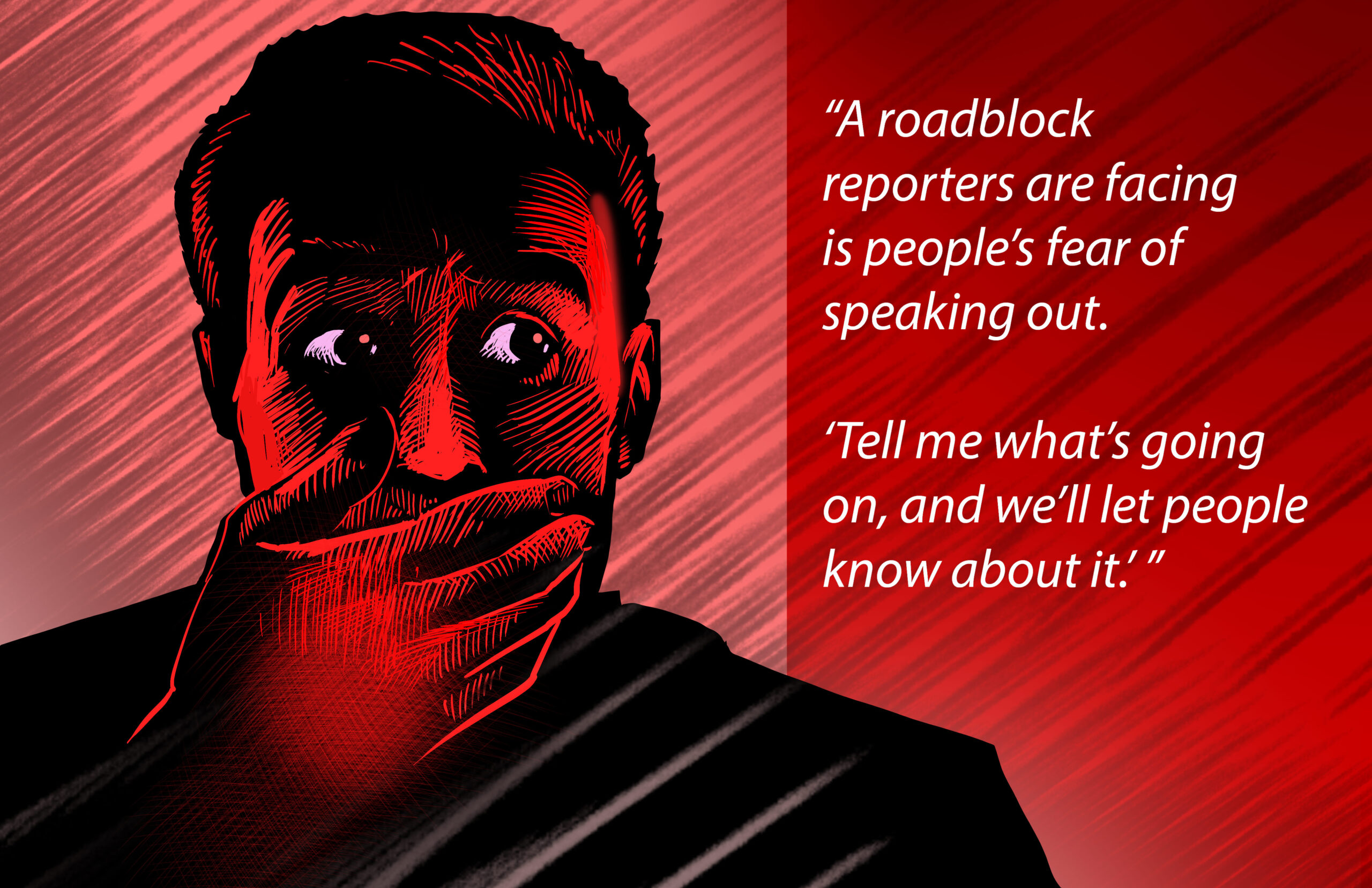
But this is an administration willing to use its power to muzzle dissent. Its complaints about anti-Semitism or “leftwing political violence” at least nod to the idea that opposition speech can’t simply be stamped out. Even so, the persistent attacks on its critics – and its willingness to use financial threats, lawsuits and visa revocations – are likely to have a chilling effect. “There’s a kind of testing going on to see how much they can get away with,” says Meyer, the UC Irvine professor.
Popular speech needs no protection. It was conservative Supreme Court Justice Antonin Scalia who cast the deciding vote in the flag burning case, saying the test of free speech is protecting people who really offend you. “If it were up to me, I would put in jail every sandal-wearing, scruffy-bearded weirdo who burns the American flag,” Scalia said in 2015.
Defending hateful people and speech is difficult, but the point of the First Amendment is to allow people to say what they think without fear of punishment, so that the best ideas win out – and the government doesn’t squelch dissent.
The Trump administration seems determined to put this bedrock principle to the test.
Alan Greenblatt is a former editor of the Governing Magazine, formerly reporter with NPR and Congressional Quarterly.
