“As if the Ministry of Truth in George Orwell’s 1984 now existed, with its motto ‘Ignorance is Strength,’ this Court is now asked to determine whether the federal government has the power…to dissemble and disassemble historical truths when it has some domain over historical facts. It does not.”
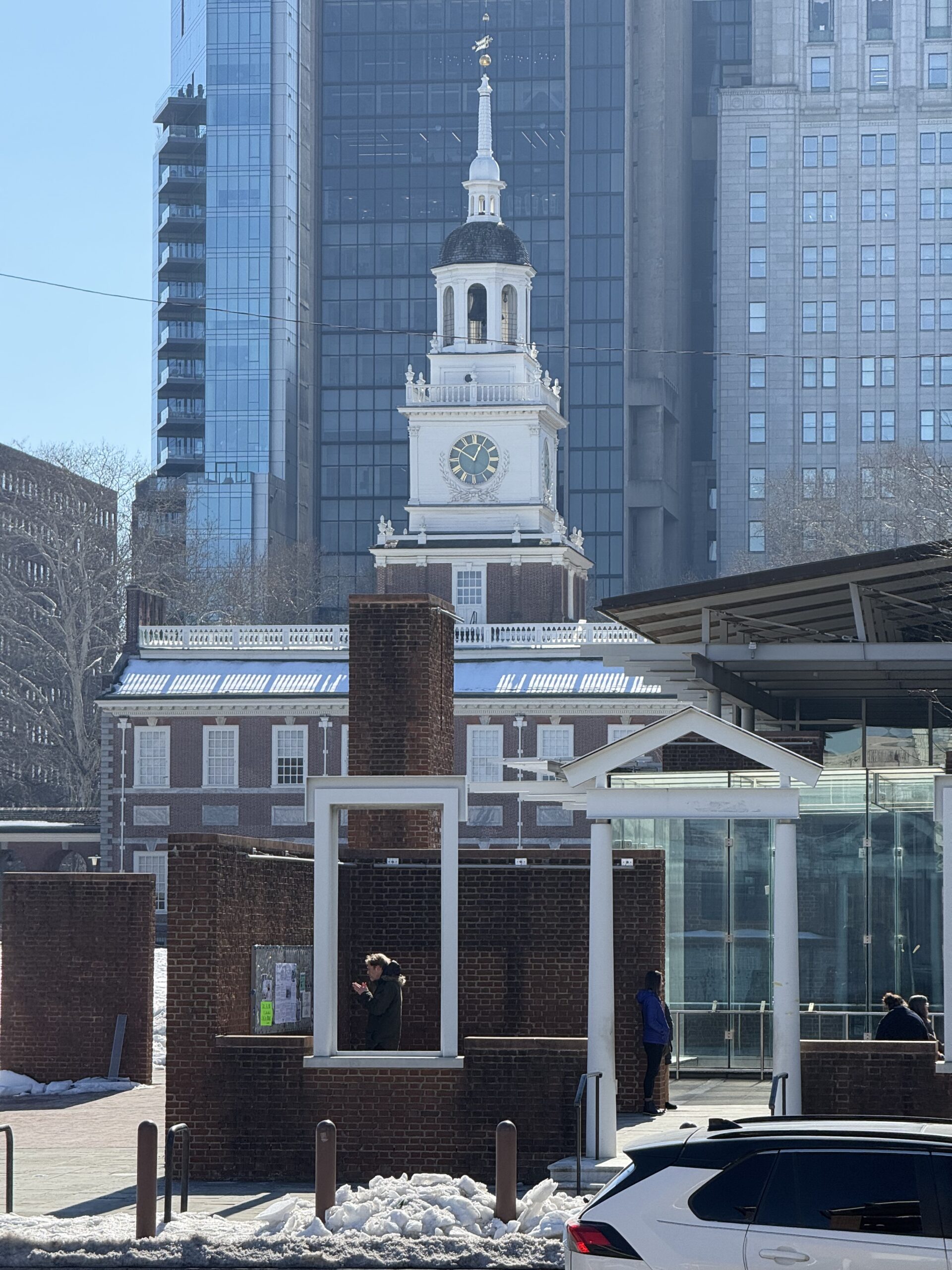
That is the first paragraph of U.S. District Judge Cynthia Marie Rufe’s opinion on President’s Day that President Trump had violated the law in ordering the removal of 34 education panels at the home George Washington lived in near Independence Hall while president. Washington and his wife Martha had brought nine slaves with him from Virginia. One, Oney (Ona) Judge, ran away and Washington tried to have her sent back from New Hampshire..
“The government claims it alone has the power to erase, alter, remove and hide historical accounts on taxpayer and local government-funded monuments within its control,” wrote Rufe, an appointee of President George W. Bush. “Its claims in this regard echo Big Brother’s domain in Orwell’s 1984.”
On March 27, 2025, Trump issued Executive Order 14253 — “Restoring Truth and Sanity to American History.” It says: “Over the past decade, Americans have witnessed a concerted and widespread effort to rewrite our Nation’s history, replacing objective facts with a distorted narrative driven by ideology rather than truth. This revisionist movement seeks to undermine the remarkable achievements of the United States by casting its founding principles and historical milestones in a negative light.”
It goes on to say that the “Secretary of the Interior shall… ensure that all public monuments, memorials, statues, markers, or similar properties within the Department of the Interior’s jurisdiction do not contain descriptions, depictions, or other content that inappropriately disparage Americans past or living (including persons living in colonial times), and instead focus on the greatness of the achievements and progress of the American people or, with respect to natural features, the beauty, abundance, and grandeur of the American landscape.”
On January 22, 2026 the National Park Service (NPS) followed up by removing the educational panels from the President’s House that referenced slavery, and further, deactivated video presentations that accompany these educational panels.
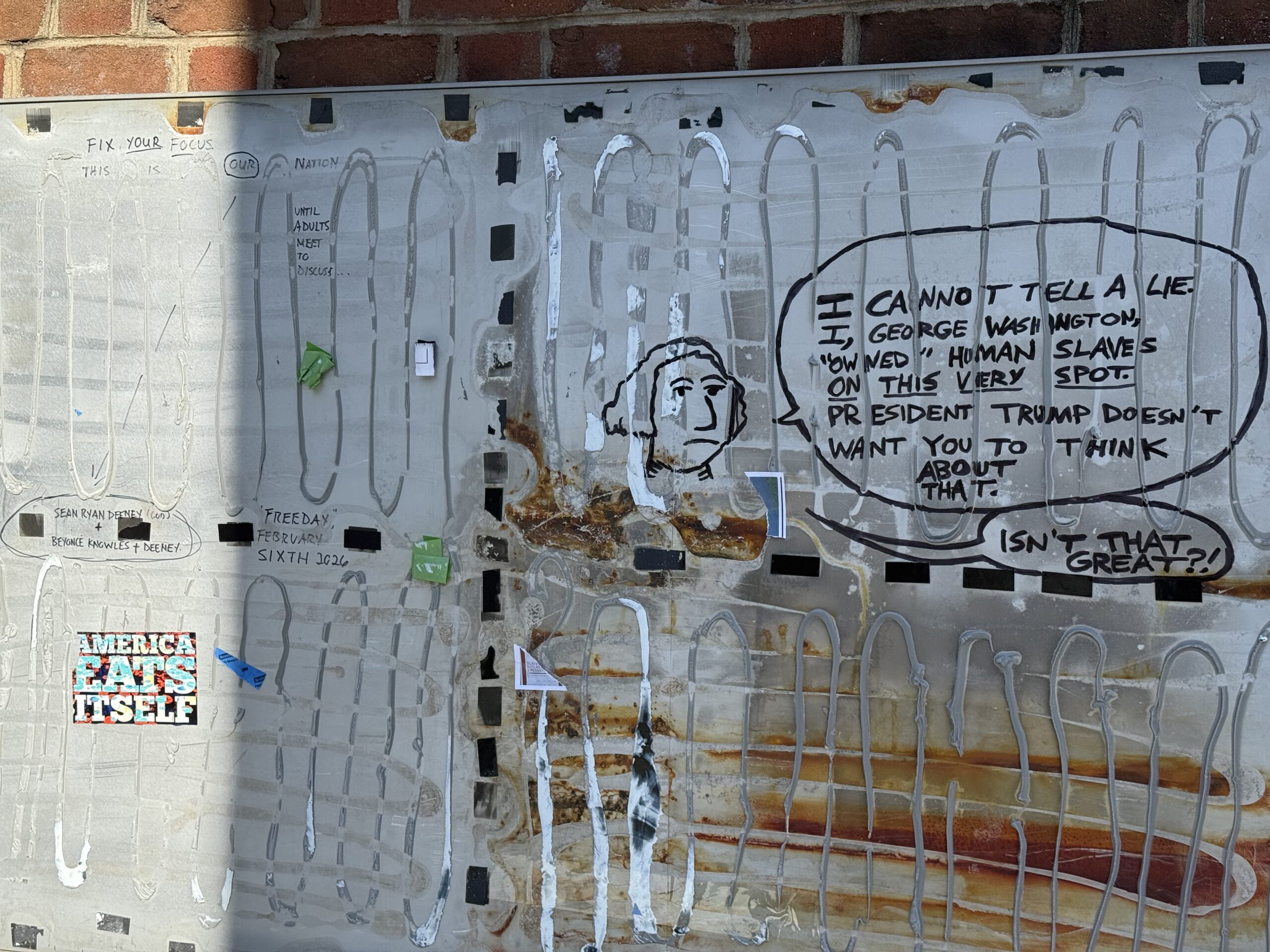
The House, on the corner of Independence Square, was left with blank story boards and empty glass cases. Graffiti scrawled on the story boards contains critical comments – “Stop whitewashing history!”, “Study the past if you would define the future,” and a takeoff on Washington’s famous, if apocryphal cherry tree statement: “I cannot tell a lie. I, George Washington, ‘owned’ human slaves on this very spot. President Trump doesn’t want you to think about that.” (This week the panels were restored.)
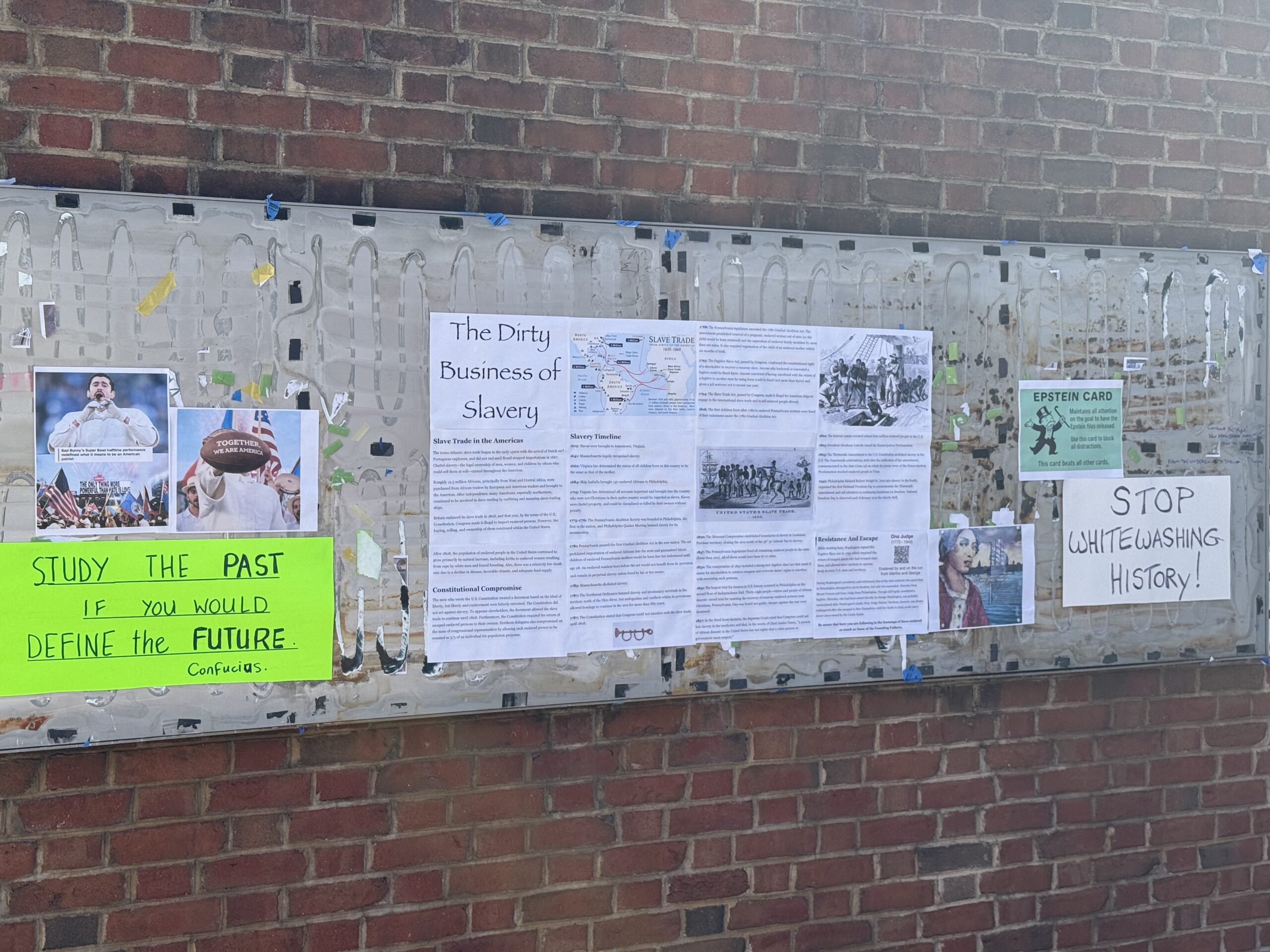
Photo: W. H. Freivogel
“Dismantling objective historical truths”
Judge Rufe wrote that the removal of the educational panel by the Trump administration was “arbitrary and capricious” and actually contradicted the text of Trump’s order. “EO 14253 seeks to prevent revisionist attempts to ‘replace[] objective facts with a distorted narrative’ NPS’s action did the opposite, by dismantling objective historical truths. It is not disputed that President Washington owned slaves.
“In removing displays from the President’s House, NPS removed educational materials about Oney Judge, her escape to freedom, and her life in New Hampshire after she escaped. By removing this information, NPS conceals crucial information linking the site to the Network to Freedom” – a national tribute to the Underground Railroad. “…removal of the displays discounted the purpose of the Network: to preserve and protect historical sites like that of Oney Judge’s bondage and escape.”
Rufe said that the removal of the information about slavery directly contradicted the Park Service’s “Foundation Document” governing Independence Hall. She wrote:
“The Foundation Document, which describes the Park’s purpose, significance, values, and interpretive themes, specifically identifies the paradoxical nature of the Liberty Bell and Independence Hall representing freedom for the colonists while the history of President Washington at the President’s House relied substantially on slavery.
“The ‘Paradox of Freedom and Slavery’ is one of the enumerated statements of significance about the Park,” the judge wrote.
Rufe continued: “The second enumerated ‘Interpretive Theme’ is ‘Liberty: The Promises and Paradoxes,’ which recognizes the ideals of the founding era both as aspirational and as false promises for people who ‘struggle to be fully included as citizens of our nation.’ The removal of displays recognizing the paradox of slavery and freedom at the President’s House therefore conflicts with NPS’s own interpretive themes and directives about the site.”
Washington seeks Ona Judge’s return
Judge – known as Oney while a slave and Ona after her escape – was born at Washington’s Mt. Vernon home in 1774. She was the daughter of a seamstress at Mt. Vernon and a white, English tailor, Andrew Judge. She became Martha Washington’s maid at the age of 10.
In 1796, as Washington’s second term wound down and the household was packing to return to Mt. Vernon, Martha Washington made it known she planned to give Oney as a wedding present to her granddaughter Eliza Custis. Eliza had a reputation for being erratic and volatile, which Oney knew from personal experience.
Pennsylvania had passed a law in 1780 that provided for the gradual abolition of slavery. The law allowed slaveholders, such as Washington, to bring slaves with them to Philadelphia. But it also allowed slaves kept in the state for more than six consecutive months to seek their freedom. Washington was careful during his years living in the President’s House to rotate his slaves back to Virginia before the six months passed. He himself also took care not to lose his status as a Virginia resident.
Ona later explained in an interview with a reporter after years of freedom, that “she was determined never to be her slave… I knew that if I went back to Virginia, I should never get my liberty. I had friends among the colored people of Philadelphia, had my things carried there beforehand, and left Washington’s house while they were eating dinner.”
Washington’s steward placed runaway advertisements in Philadelphia newspapers offering a reward for her recapture. She was smuggled aboard a ship to Portsmouth, New Hampshire, where Judge hoped she would be safe.
Washington’s ad read: “Absconded from the household of the President of the United States. Oney Judge, a light mulatto girl, much freckled, with very black eyes and bushy black hair, she is of middle stature, slender, and delicately, about 20 years of age. She has many changes of good clothes, of all sorts, but they are not sufficiently recollected to be described. As there was no suspicion of her going off nor no provocation to do so, it is not easy to conjecture whither she has gone, or fully, what her design is; but as she may attempt to escape by water, all masters of vessels are cautioned against admitting her into them, although it is probable she will attempt to pass for a free woman, and has, it is said, wherewithal to pay her passage. Ten dollars will be paid to any person who will bring her home, if taken in the city, or on board any vessel in the harbour; — and a reasonable additional sum if apprehended at, and brought from a greater distance, and in proportion to the distance.
FREDERICK KITT, Steward. May 23
In October of 1796, Joseph Whipple, a merchant and customs official, located Judge and took steps to return her to Washington. He reported his deceptive plan to return Judge. “Having discovered her place of residence, I engaged a passage for her in a Vessel preparing to Sail for Philadelphia avoiding to give alarm by calling on her untill the Vessel was ready, I then caused her to be sent for as if to be employed in my family.
“After a cautious examination it appeared to me that she had not been decoyed away as had been apprehended, but that a thirst for compleet freedom which she was informed would take place on her arrival here or Boston had been her only motives for absconding.”
Whipple went on to report that Judge “when uninfluenced by fear she expressed great affection & reverence for her Master & Mistress, and without hesitation declared her willingness to return & to serve with fidility during the lives of the President & his Lady if she could be freed on their decease, should she outlive them, but that she should rather suffer death than return to Slavery & liable to be sold or given to any other persons.”
Washington rejected Judge’s offer in a letter where he said it would be “neither politic or just to reward unfaithfulness” even if he favored “emancipation of that description of People.” He wrote:
“I regret that the attempt you made to restore the girl (Oney Judge as she called herself while with us, and who, without the least provocation absconded from her Mistress) should have been attended with so little success. To enter into such a compromise, as she has suggested to you, is totally inadmissible, for reasons that must strike at first view: for however well disposed I might be to a gradual abolition, or even to an entire emancipation of that description of People (if the latter was in itself practicable at this moment) it would neither be politic or just, to reward unfaithfulness with a premature preference; and thereby discontent, beforehand, the minds of all her fellow Servants; who by their steady adherence, are far more deserving than herself, of favor.”
Judge married a free Black sailor and had three children. She learned to read after he escape.
Self-evident truths
Judge Rufe’s opinion harkens back to the famous language of the Declaration of Independence – We hold these truths to be self-evident, that all men are created equal, that they are endowed by their Creator with certain unalienable Rights, that among these are Life, Liberty and the pursuit of Happiness.
Writes Rufe: “The government here likewise asserts truth is no longer self-evident, but rather the property of the elected chief magistrate and his appointees and delegees, at his whim to be scraped clean, hidden, or overwritten. And why? Solely because, as Defendants state, it has the power. At oral argument, Defendants insisted: Although many people feel strongly about this one way, other people may disagree or feel strongly another way. Ultimately, it is in this context that the Government gets to choose the message it wants to convey.”
Rufe rejected this government speech argument and agreed with the City of Philadelphia that removal of the educational exhibits “constitutes erasure, undermines public trust, and compromises the integrity of public memory… that abrupt elimination of ‘historically significant educational material’ is like ‘pulling pages out of a history book with a razor’.
“The removed displays were not mere decorations to be taken down and redisplayed; rather, they were a memorial to ‘men, women, and children of African descent who lived, worked, and died as enslaved people in the United States of America,’ a tribute to their struggle for freedom, and an enduring reminder of the inherent contradictions emanating from this country’s founding. Each person who visits the President’s House and does not learn of the realities of founding-era slavery receives a false account of this country’s history.”
William H. Freivogel is the publisher of GJR, the only journalism review left in the country that still produces a quarterly print magazine.
