As immigration enforcement intensifies across the country, some Latino journalists say covering the issue has begun to carry risks that extend beyond the job.
Recent cases have heightened those concerns. In February, a Nashville-area journalist seeking asylum was detained by Immigration and Customs Enforcement after appearing for a scheduled immigration appointment, according to her attorney. Other reporters have been arrested while covering protests or immigration enforcement operations.
The incidents underscore a growing tension inside newsrooms: the journalists best positioned to report on immigration because of language skills, community ties or personal background are often the ones who may feel the greatest personal vulnerability while doing so.
According to the U.S. Press Freedom Tracker, at least 32 journalists were detained or charged while reporting in 2025, many in connection with immigration-related protests.
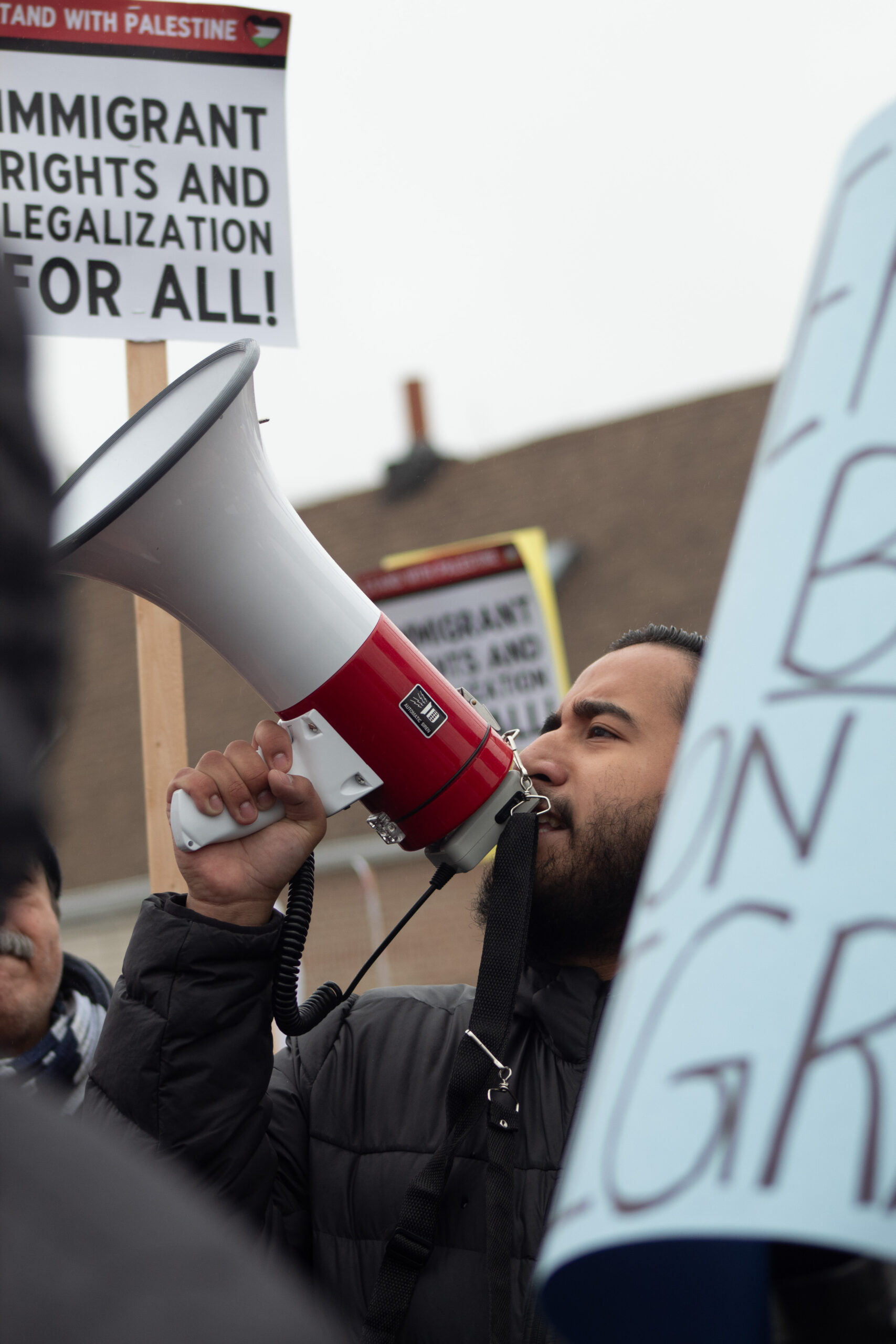
For Francia Garcia Hernandez, a local reporter at Block Club Chicago, those risks have prompted new safety preparations in the newsroom.
Originally from Mexico City, Garcia Hernandez said her immigration status has long been questioned, something she remains mindful of while reporting in the field.
“It’s not a real fear that I’m doing something that’s breaking the law, but it’s more about how could my immigration status impact me in the event that I was detained while doing my job,” said Garcia Hernandez, a legal immigrant.
In October, the risks of immigration reporting became immediate when Border Patrol agents, including former Commander Gregory Bovino, descended on Chicago’s Little Village neighborhood, prompting protests and fear among residents. Garcia Hernandez documented the scene by recording video, taking photographs and detailed notes, a routine she said helps ensure accuracy while working under pressure.
During Operation Midway Blitz, Block Club Chicago editors established a buddy system, shared instructions for accessing legal help and kept copies of her legal documents on file in case reporters are detained while reporting.
Those calculations are not limited to local newsrooms.
Susan Barnett, an independent journalist in Tucson, Arizona, said she was on her way to church when she encountered people being detained and stopped to document the scene.
She recorded video, took photographs and gathered notes, later writing a firsthand account of the arrest.
A first-generation American who grew up in Arizona, Barnett said covering immigration enforcement often pulls her back to childhood memories of fear during the era of SB 1070, an aggressive anti-immigration law passed in 2010. “I lived through the fear that my parents felt because of immigration enforcement in our area,” she said. “It kind of takes me back to that time of being scared.”
Barnett said her identity and language skills also give her access within the community, helping build trust with sources and providing greater comfort to share their experiences. The access, she said, comes with added responsibility.
“The fear is getting something wrong and spreading misinformation,” Barnett said. “These stories move fast, and a lot of people see them. If someone reads something that isn’t true and it has to be corrected later, that’s one of my biggest fears.”
Like many journalists, Barnett said physical activity helps manage the stress. She also relies on a WhatsApp group of local Latina journalists for support.
While reporters have developed their own ways of coping, Hugo Balta, a publisher and executive editor who has twice served as president of the National Association of Hispanic Journalists, said newsroom leaders play a central role in ensuring safety.
“For me, there’s nothing more important than the safety of our journalists. There’s no story that is more important than their lives, so I always caution them to use their common sense,” Balta said. “We often run towards what most people run away from, but in doing so, we need to make smart decisions that do not place them in a situation where they could be harmed.”
The risk does not always end when reporters leave the field or the newsroom. Gregory Royal Pratt, an investigative reporter at the Chicago Tribune who has been with the newsroom since 2013, said he has faced sustained online harassment and doxxing after reporting on immigration enforcement.
While covering a Border Patrol operation in the Brighton Park neighborhood, Pratt said he was tear-gassed along with others at the scene and faced the risk of arrest. After later reporting on Bovino, Pratt said the Department of Homeland Security publicly accused him of committing a crime by “telegraphing” his location, a claim he denies. The accusation prompted him to remove personal information from the internet.
“A lot of journalists will tell you it’s a badge of honor, and it is,” Pratt said. “But it’s also painful, because I’m trying to do the best I can.”
As a Latino journalist who grew up in Little Village, he said the public targeting added to his safety concerns. “This is our community that’s experiencing these things,” he said. “You always want to be fair, but you especially want to be fair in that type of situation.”
For some journalists, those risks have already begun to reshape how — and whether — they report.
An anonymous photojournalist based in California, who is on Temporary Protected Status and has worked in the industry for more than a decade, said fear of encountering Border Patrol or Immigration and Customs Enforcement agents has forced him to slow his work in the field.
“I’ve been really anxious and worried about having to cover anything that will put me in contact with Border Patrol or ICE,” he said. “That’s kept me away from doing my job the way I like to do it — which is to jump in and go where the story is.”
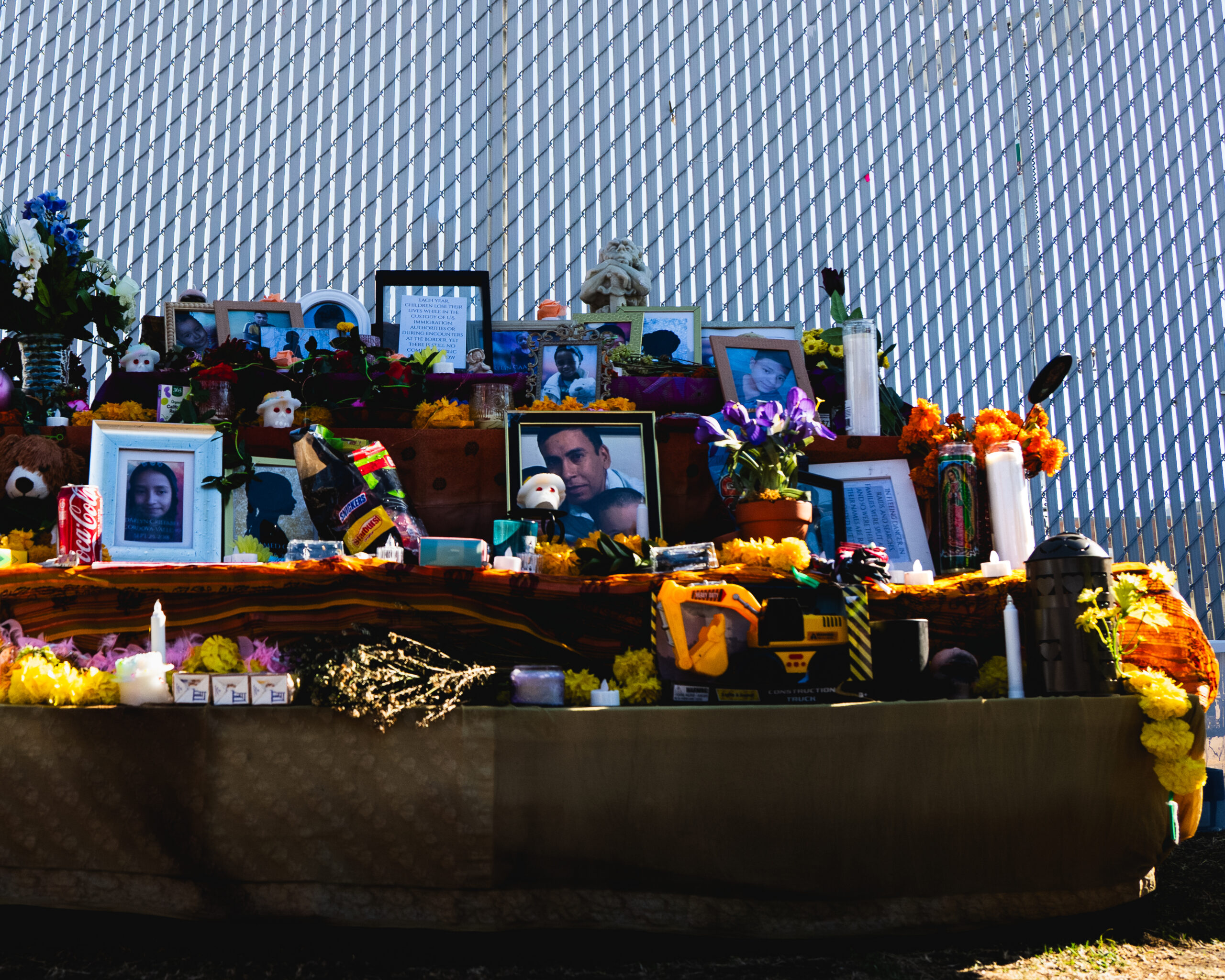
The concern intensified, he said, after learning that Mario Guevara, a Spanish-language journalist, was detained while covering a protest in Georgia and later deported in June 2025. Temporary Protected Status allows immigrants to live and work legally in the United States, but the protections are temporary and contested, according to the Associated Press. While his newsroom has been supportive, the threat has required him to let go of certain assignments in order to prioritize safety.
“I want to cover everything,” he said. “But I can’t.”
He added that what has changed most is the realization that having legal status no longer feels like protection.
“It’s not really about your status,” he said. “It’s about whether you look like an immigrant. I have status — I’ve lived here for more than 20 years — and knowing that doesn’t really protect me anymore is something I’ve never felt before.”
In other parts of the country, the risk of immigration reporting takes a different form.
Elizabeth Flores, a photojournalist at the Minnesota Star Tribune for more than two decades, has built long-standing relationships with the communities she documents. As one of the few Spanish-speaking journalists in her newsroom, Flores said she is typically relied on to report intimate moments in families’ lives.
A first-generation Mexican American, Flores said those stories often echo her own family’s history. “It brings you back to your own parents, how they came to this country to make a better life for us,” she said. “It just hits you hard when it comes from your own experiences. It hits you to the core.”
Her concern now centers less on her own safety than on the risk of exposing the people who speak to her. A single detail, photograph or misstep, she said, could carry consequences for families already living with uncertainty.
The weight of that responsibility has made each reporting decision more deliberate, as journalists carry not only the story, but the obligation to protect the people who trusted them with it.
Araceli Ramirez is a Chicago-based freelance journalist who reports on art, activism and neighborhood life.
