For nearly four decades as a community newspaper editor, I’d often coach reporters to write and report from the viewpoint of their audience. What do readers need to know? How can your story best inform them? What will make them act in positive ways for their community?
I had the opportunity recently to give a TEDx Talk at Columbia College Chicago, my alma mater. My story was about how one career abruptly ended and a new one began. I had to submit my script for review. Like I did for my reporters, I took my inspiration from the advice I had given them. Yes, it was my story and it was an emotional subject for me, but what did my audience need to know?
I would be speaking to a room full of mostly Columbia students. They were either looking for jobs or just about to start their careers. And exactly 40 years ago, I was in their position, graduating on Friday night and starting my first reporting job on Monday morning.
I had a 38-year journalism career that ended with a layoff in June 2023. Somehow – by chance, opportunity and the experience I was unsuspectingly collecting over time – after a year as a substitute teacher, I was hired as a public school administrator, helping to prepare preschoolers for kindergarten.
Being laid off from your job is traumatic. And being the top editor at three publications since the 2008 recession, I often was the person conducting the layoffs. Over 20,000 media jobs were cut in 2023, so I wasn’t alone.
During my newspaper career, I led award-winning coverage of 9/11, tornadoes, deadly apartment fires and Kansas University’s 2008 NCAA basketball national championship. I also served for 11 years on the Associated Press Media Editors board of directors and led statewide, multi-newspaper reporting and election projects for APME’s Illinois association.
It was a rewarding career that I’m proud of. And being a journalist was my identity. Yet, I witnessed technology change readers’ habits and the industry struggle to maintain revenues and readership in a digital world.
With advice from Kari Sommers, Columbia College’s associate dean of student life and my script editor, these were questions I planned to ask the students as they looked toward their professional future: When your career ends – and they all do – what do you do? What experience and resources do you have to rely on for what comes next? Are there passions you want to pursue? Do you transform who you are and what’s most important to you as an individual?
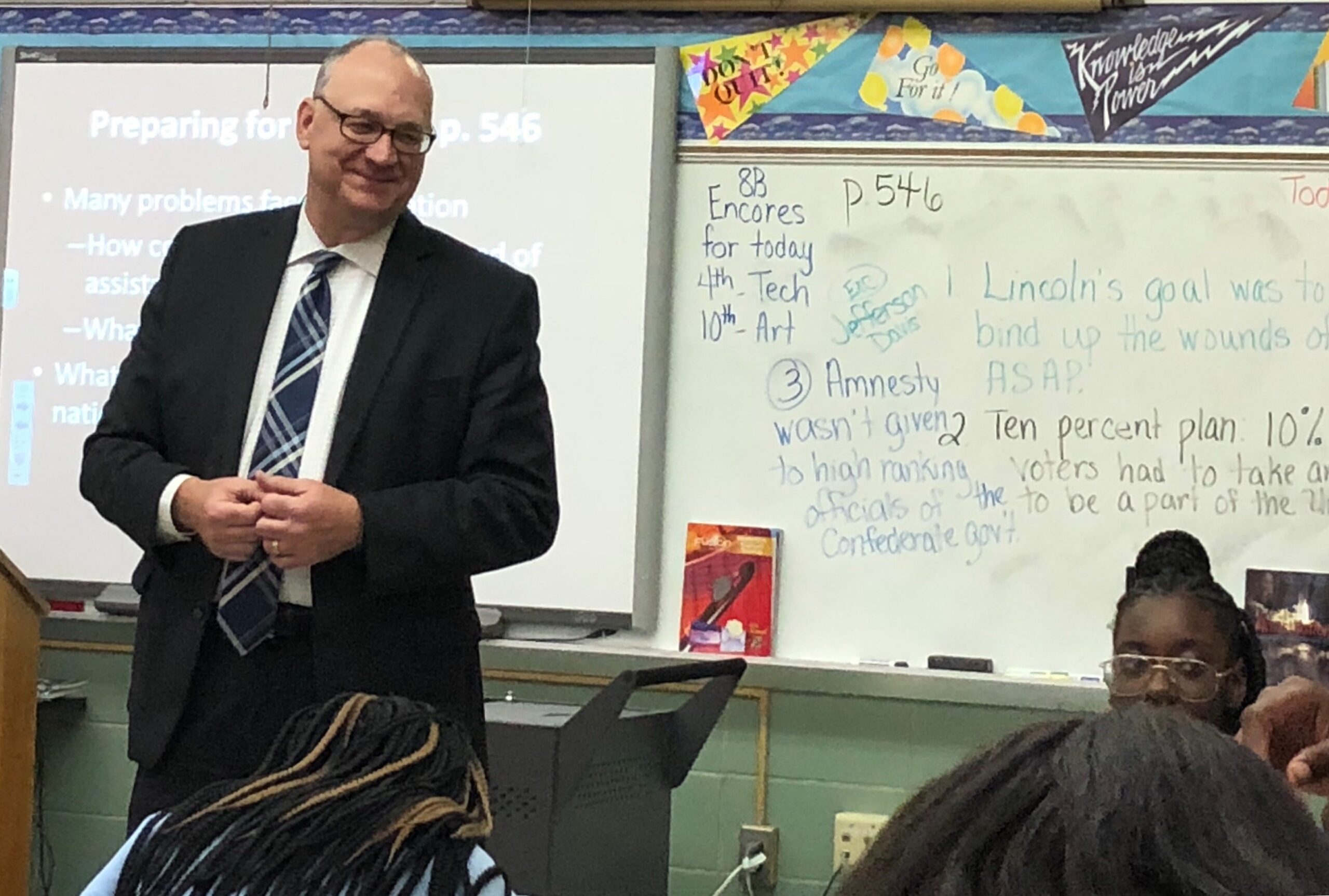
Without realizing it, I learned that my community engagement work as a journalist and 20 years as a Big Brother were preparing me for the job I have today. I am the Family & Community Engagement Coordinator for U-46 in Elgin, Illinois. I lead a family advisory council, a family education series, summer activities, and I recruit families with young children to have their kiddos screened for our preschool program.
My mission is similar to what it was as a journalist because I’m still engaging families and making a difference in my community. But if I wasn’t open to doing and trying new things during my previous career, I wouldn’t have this opportunity today.
Dennis Anderson, a Chicago native, served on the Associated Press Media Editors board from 2008-2019. He worked at the Daily Herald in suburban Chicago, the Binghamton (New York) Press & Sun-Bulletin and the Norwich (Connecticut) Bulletin. He was the top editor at the Lawrence (Kansas) Journal-World, Peoria (Illinois) Journal Star and Shaw Media (Illinois). He is now the Family & Community Engagement Coordinator for U-46 in Elgin, Illinois, the state’s second-largest school district.
