
When protests over the police killings of George Floyd and Breonna Taylor erupted across Chicago in the summer of 2020, most news outlets framed the demonstrations through official statements, arrests and property damage. The TRiiBE covered them differently — from the vantage point of protesters themselves.
That decision wasn’t accidental. It reflected a newsroom philosophy that rejects traditional notions of journalistic “objectivity” and instead centers transparency, context and community accountability.
That approach put The TRiiBE at odds with one of journalism’s most deeply ingrained professional norms: objectivity. Long taught as a standard meant to protect credibility, objectivity has increasingly come under scrutiny — particularly from journalists serving communities historically misrepresented or ignored by mainstream media.
Objectivity in journalism refers to upholding principles of impartiality, factuality and neutrality, to allow readers to make up their own minds based on “facts” alone. But critics argue that this framework — birthed by media consolidation and corporate ownership — often results in reporting that amplifies power without interrogating it.
The TRiiBE is part of a growing movement of newsrooms questioning who objectivity actually serves and whether transparency, context and accountability offer a more honest path forward. Founded in Chicago in 2017, the Black-owned newsroom has built its editorial mission around rejecting the myth of neutrality and centering communities most impacted by the stories being told.
For many marginalized and systemically oppressed communities, true objectivity has never existed. The earliest publications in the country published slave ads and falsely accused Black people of crimes leading to lynchings, Even now social media and mainstream news outlets give platforms to white supremacists to spread hate, recruit and organize.
But Black and other marginalized communities have never let up in the fight for narrative sovereignty, creating their own platforms for counternarratives. In cities like Chicago, the Black laureates of the early 20th century addressed rising antiblackness with their writings and publications like The Chicago Defender and The Chicago Conservator. Figures like Ida B. Wells, made it their life’s work to draw national attention to the rising anti-black fascist acts of terror in order to bring light to a more sinister systemic pattern of authoritarian, white-supremacist politics that would in hindsight be seen as ringing the proverbial bell to the rise of fascism in America. As Wells herself said, “The people must know before they can act, and there is no educator to compare with the press.”
Where and how we consume news is the difference between active resistance and passive submission. The TRiiBE exists as a product of the moment we find ourselves in today, a moment that requires us to re-imagine a new media landscape where Black people and other historically marginalized groups control our own narratives, center our stories, humanize our existence, and where journalists practice responsible reporting.
Owned by two Black alumni of Northwestern University, Morgan Elise Johnson and Tiffany Walden, The TRiiBE is a for-profit media company, “reshaping the narrative of Black Chicago and giving ownership back to the people [through their] original works in journalism and documentary, alongside creative writing and video, captur[ing] the multifaceted essence of the Black experience in pursuit of truth and liberation.”
Walden, a journalist, and Johnson, a documentary filmmaker, connected in college over their love of Black Chicago, and in 2016 decided to combine their skills to create something new.
“She’s a documentary filmmaker and I’m a journalist so we were like we could use our skills and then do this together.”
From the start, they challenged traditional journalistic conventions, including objectivity.
“We were pretty early on figuring out that objectivity is not real. I had to unlearn the parts of what’s described as the foundation of journalism that I learned at school, which is objectivity,” Walden says.
“You know in documentary film, when you decide to follow a person and have that person tell a verité story about an issue, you’re making a decision in that moment on who you’re covering and why you’re covering that person and why that person is telling the story. Journalism does the same thing. Anytime you interview somebody you’re making a decision on who to highlight in your story, to narrate the story that you’re trying to tell,” Walden says. “And so, we just decided to be upfront and transparent about that in our mission and in the work that we did and when we started to build out our newsroom in 2020.”
Walden, The TRiiBE co-founder and CEO, says that their coverage of the Summer 2020 protests is where they began to see the differentiation in action. “Particularly as we moved into the summer long protests around the police killings of George Floyd and Breonna Taylor, that’s when I think our work really started to make an impact because we were covering protests from the actual perspective, vantage point of protesters, and not many, I don’t want to over generalize, but mainstream media really was not doing that,” she says.
“We chose to unpack what organizers were doing; we went to all the different protests that were happening in Chicago that entire summer. We talked about abolition and what it means and why they’re asking for it and broke down a lot of the terms that organizers were screaming in the streets, defunding the police, and all these things were all very new concepts that people, a lot of people hadn’t heard before and couldn’t even imagine,” Walden says.
In addition to The TRiiBE’s journalistic style that rejects traditional ideals of objectivity, their journalism is impact driven and intentionally frames stories and selects sources in ways that best represent communities, and add educational elements that enhance readers’ understanding of a topic.
“It’s hard because you’re opening up people’s minds to things that they may not have experience with or even know how to talk about, and it is challenging, but we approach all of our work from this place of learning and also healing too,” Walden says. ”When I was in mainstream or corporate media newsrooms it was not told to me to think about, ‘oh does my reader know the history of whatever this thing is that I’m talking about today.”
It is this extra mile to not just to report something happening or cover a story, but to take the time to provide useful context, background and history that breaks the traditional mold.
For Tonia Hill, The TRiiBE’s systemic racism reporter, that also begins with centering communities in non-transactional ways that center the voices of the people most deeply impacted.
“We are intentional about centering the voices of the community because their voices matter and also, we want to be there to report on the resiliency and the joy that our communities have always exhibited.”
“We think that their voices deserve to be centered in news.” Hill says she and the other TRiiBE reporters regard it as “our due diligence to get the voices of the people most deeply impacted by whatever issue we’re covering. It’s great to talk to a politician or whomever but the real story is always going to be with the people because that is who is impacted by these things you know day in and day out.”
According to Diamond Hardiman, reparative narrative and creative strategy director at Free Press, the reporting style at The TRiiBE is reparative in nature. “Most reparative storytelling includes elements of solidarity, accountability, joy, [and] care for Black folks that’s present in the type of reporting that you do, like with The TRiiBE.”
Unfortunately, it’s easy to get drowned out in this oversaturated digital media landscape. Hill says a huge challenge today more than ever is the spread of mis- and dis- information from faux journalists, influencers and sensational entertainment blogs, “misinformation and disinformation with blogs specifically, those are the ones that really are frustrating for me. Those hip-hop kinds of blogs that will just have a headline but no context about an issue unintentionally aiding in disinformation.”
The TRiiBE is one of few Black-owned media outlets in the U.S., according to NPR, only 4% of all media in the U.S. is Black owned.
To many, the rise of digital media and online publications, presented an opportunity for more stories to be shared and more voices to be heard, however this phenomenon quickly became the reason that independent and minority owned news outlets struggle to stake their claim. A research report by American Economic Liberties Project, MediaJustice and News Media Alliance, outlines how the rise of Facebook, Google and Amazon are taking up an outsized claim on online ad revenue, leaving minority-owned digital media with a disproportionately low share of advertising and little hold in the media space.
And when a new media outlet can break through, the damning reputation of exploitative news practices past and present often precedes them resulting in an environment of distrust between the media and Black and other marginalized communities. Hill said that her greatest challenge as a reporter doing this work is trust. “I would say like trust, that’s the biggest thing it’s a lack of trust and honestly that reputation has been earned.”
In traditional approaches, Hill says, reporters are, “just sticking a microphone in someone’s face and asking them about probably their worst day or about something traumatic that happened to them and then just leaving and that’s it, like you don’t have any further interaction with that community other than when something traumatic is happening.” This transactional, extractive process often results in a lack of trust.
Fortunately, these funding and reputational challenges have not deterred them from flipping traditional journalism on its head.
The TRiiBE has made strides in their interview process to address this historic lack of trust. Hill makes it a regular practice to ensure people are comfortable throughout the interview process and clearly understand how it works. She shares why she’s recording, how a story is drafted and where they can find it once it’s published. She also ensures that her sources feel free to give her feedback and will make edits if something was inaccurately represented. And she regularly meets her sources for coffee outside of the story, attends community meetings, and supports local events. Each of these actions goes a long way to build trust, ensuring that The TRiiBE is in the communities they report on, not just simply coming and going.
Walden is currently working on the research to develop a style guide for journalists and newsrooms to ethically and authentically engage and cover Black communities based on lessons learned from operating The TRiiBE.
“It has been us learning as we go along and adapting as we go along, which is something that I wasn’t necessarily taught in journalism. Journalism has always been this thing that existed. It’s been here. This is how you do it . But we’ve been blending a combination of journalism and documentary filmmaking practices and just adapting as we go along and following in a tradition of the Black abolitionist press of the past,” she says.
Deborah Douglas, senior lecturer and director of Midwest Solutions Journalism Hub, founding co-editor in chief/advisory board member of The Emancipator, and senior leader at The Op-Ed Project notes that “marginalized groups of people do not have [and have not ever had] a fair share of voice in the public conversation” sharing that “one way [she] facilitates resistance in this time, “is to make sure that good ideas and great responses to systemic issues find a home.”
“And that’s one reason I love The TRiiBE because like the early abolitionist newspapers, it really shows what it looks like to be fully enfranchised in this political system. They publish great cultural stories, and great stories about entertainment, but they also publish a lot of stories that just show how the system works or how it doesn’t work and then give us information to observe and consider as citizens [on] how we might want to impact the development of policy making,” Douglas says.
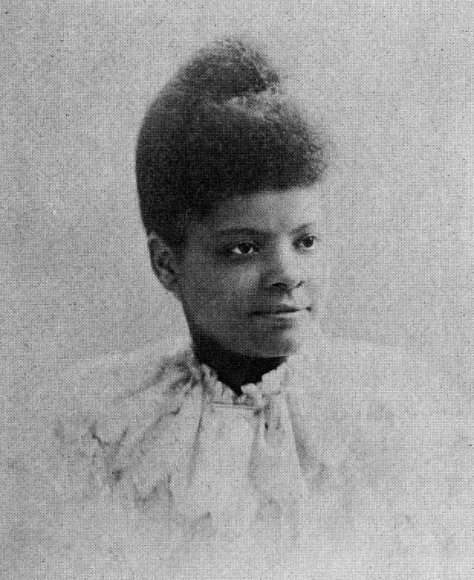
The TRiiBE follows in the footsteps of a long history of Black American journalists and publications in Chicago like The Chicago Defender, which was founded in 1905. The publication, which hosted talent such as Wells, Langston Hughes and Gwendolyn Brooks, covered the race-based violence of the Jim Crow Era. It was the nation’s most influential Black weekly newspapers with more than two thirds of its readership base located outside of Chicago by World War I.
“If you look back at Ida B. Wells in her work, we wouldn’t be The TRiiBE today if she wasn’t writing about and unveiling the lynching that was happening during her time when other news wouldn’t write about [and] refused to even acknowledge that that was happening,” Walden says.
This story has been corrected. Morgan Elise Johnson and Tiffany Walden are the owners of the TRiiBE.
Chandler Cofield works as the senior communications associate for Third Sector, a national nonprofit that advises state and county government departments on systems change initiatives to reshape their policies, systems and services toward better outcomes for all people no matter their race, background or circumstances.