I walked into John H. White’s “Intro to Photojournalism” class last week, expecting to observe a lesson and, instead, I watched a philosophy of teaching unfold.
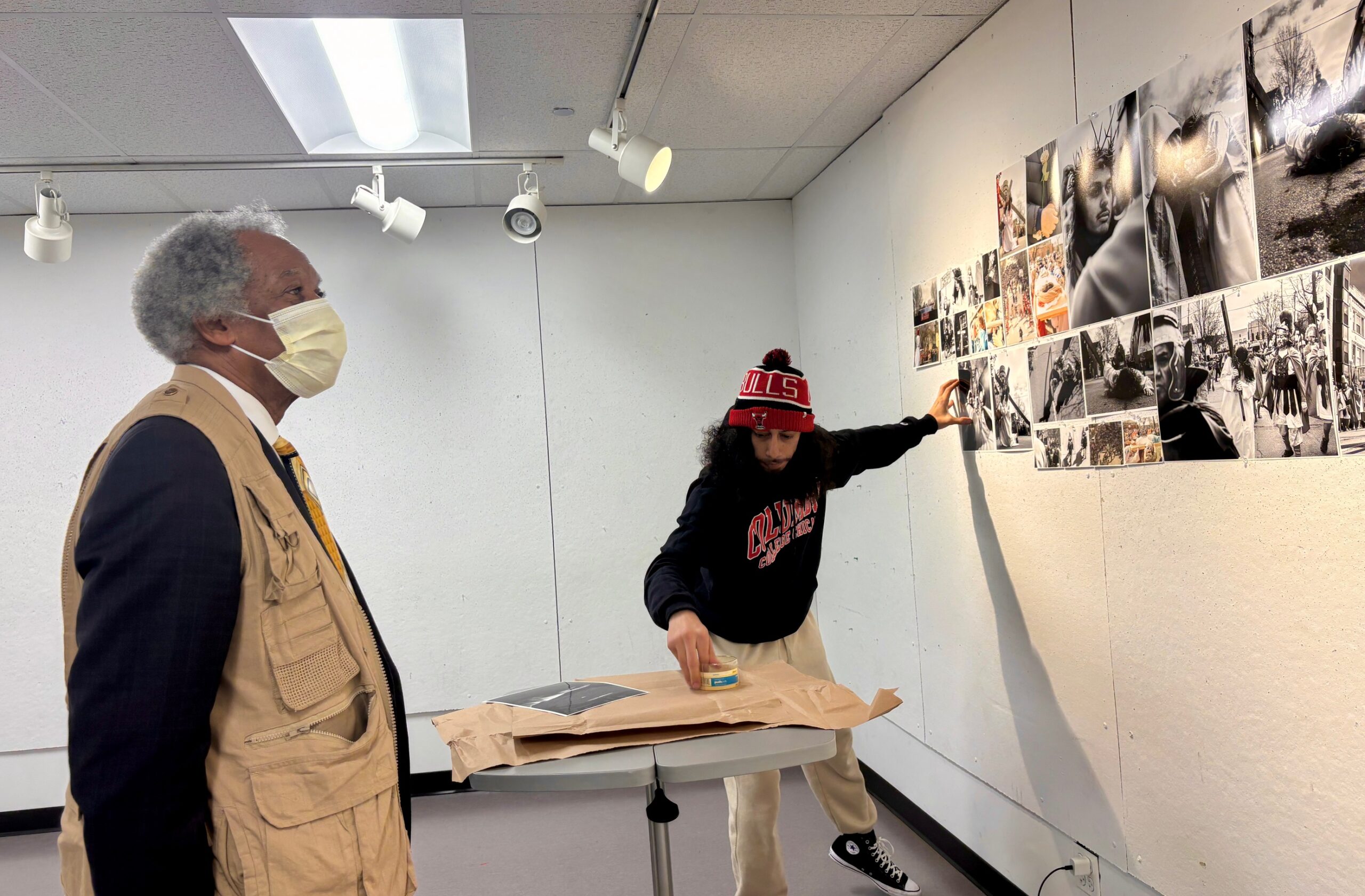
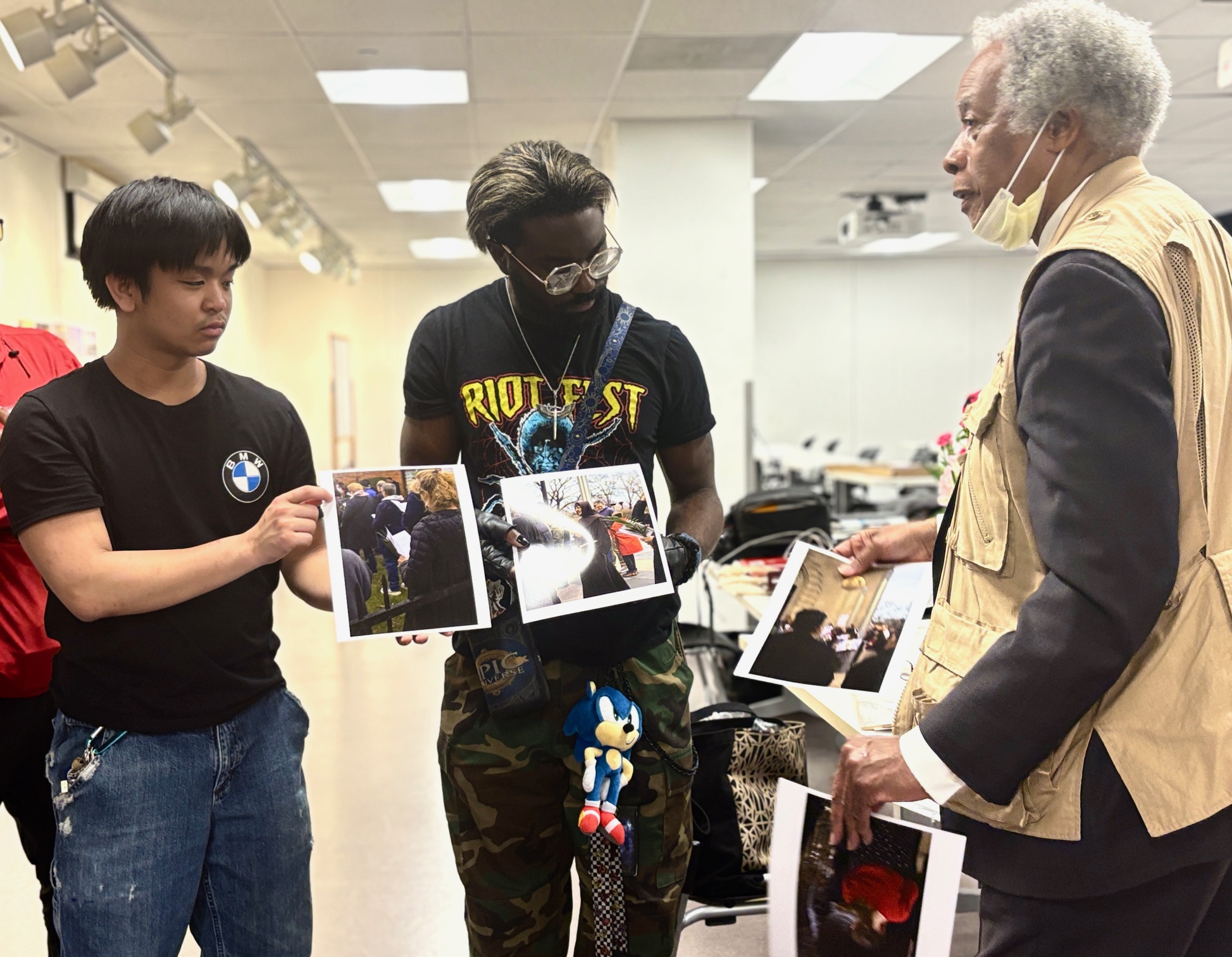
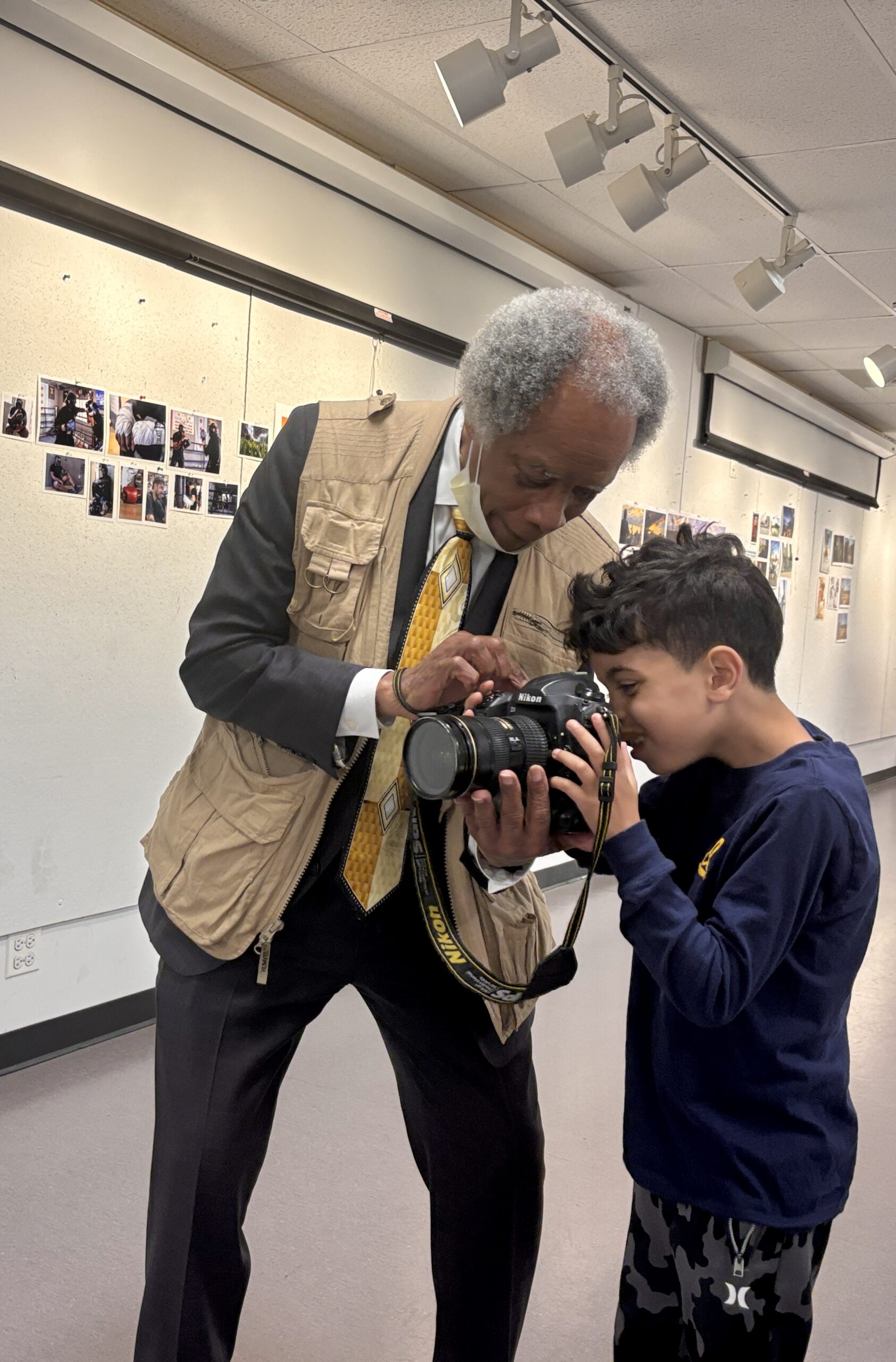
White, a Pulitzer Prize–winning photojournalist and longtime Columbia College adjunct faculty, does not teach with detailed slides or modules. He teaches by presence. By story. By standing around photographs with students and asking them to look closely, at the pictures and at each other. When he was teaching, no one was on a screen.
That alone felt radical.
Colleges and universities have spent years investing in digital infrastructure, accelerated by the COVID-19 pandemic, with national organizations such as EDUCAUSE documenting the growing emphasis on learning technologies, analytics and scalable course design. Digital is transformative.
I have embraced much of that shift in my own teaching. I use Canvas extensively, going beyond what I am required by my institution. I build rubrics and automate grading where I can and think carefully about how students access materials outside of class. I teach them how to use AI tools ethically and efficiently. I want them to be prepared for the industry they’re entering, one that is fast, digital and constantly evolving.
But in White’s classroom, where he had placed a small bouquet of flowers in the center of the room, I realized something I had not fully reckoned with: not everything that matters in teaching can or should be digitized.
White’s course is built on a personal contract. You show up. You pay attention. You listen. And in return, you learn.
He offers feedback on assignments in person, meticulously and thoughtfully, spending much more time than I do when I type and send feedback electronically. At the end of each semester, he personalizes a letter to the class — it’s much more than a note — that offers praise, inspiration, kindness and guidance. “Remember we live in the world where Everybody is Somebody, and your camera brings out that Somebodyness,” he wrote to students last fall.
It reminded me of a graded paper I saved from graduate school. I still have it, years later. On it, my professor, Neil Henry, had given me advice and instruction about my writing. Do my own students have anything I’ve written? Have I even given them anything to save that isn’t feedback typed on a computer?
White’s way of teaching is deeply personal, and in many ways, it is more demanding than my own because it requires students and their teacher to interact in a way that is becoming increasingly unfamiliar. It is special and unique and cuts through the sameness of technological monotony, bright code amidst the black and white.
The students were locked in on the day I visited his class, responding and asking questions, following the rhythm of his stories, including how he documented the first lunar landing in July 1969. He drew on decades of experience as a photojournalist, teacher and mentor who has shaped generations of journalists.
Those things are not easily uploaded.
What struck me most was not nostalgia for a pre-digital classroom but clarity about what technology cannot replace.
In recent years, faculty across the country, including at my own institution, have been asked to do more with online learning systems and to integrate AI in our teaching. We cast judgments when colleagues do not use technology “robustly” enough to meet expectations of 21st-century teaching. These pressures are not abstract. They are tied to evaluations, retention metrics and institutional survival.
When students come to tour our campuses, we show off our labs and state-of-the-art equipment, equating modernization with job potential and technology with success.
Watching White teach made me see the risk in overcorrecting.
I am not going to abandon all of the digital tools I use: the modules, the discussion boards, the interactive lessons. I will still create PowerPoint slides. They make my class more accessible and can enhance learning, especially for neurodiverse students.
My courses benefit from these things, and the broader landscape of journalism demands fluency in digital integration.
But I am thinking differently now about what I can let go.
Not every moment needs to be documented. Not every discussion needs to be mediated through a screen. There is space and maybe a growing need for classrooms that ask students simply to be present. Maybe, once in a while, we just come together to talk.
In White’s classroom, I was reminded that the best teaching is about connection, which is almost always analog.
Jackie Spinner is the editor of GJR and a professor at Columbia College Chicago.