Ray Hartmann was part of the character and topography of St. Louis. We have our landmarks – like the Gateway Arch, a square-beyond-compare pizza, an amazing Forest Park. And, we once had our landmark journalist.
The landmark journalist is gone. How the hell could that happen? Could it really be that an errant tire, bouncing off an interstate median, crashing through his car windshield, taking out the 73-year-old driver?
His demise is one of life’s absurdities, the kind Ray might have pondered and pontificated about – with his hands up in the air. That was so much fun. We loved when he put his hands up in the air in exasperation on TV or on a sidewalk – talking at us a mile-a-minute.
We took this landmark journalist for granted. It’s not fair. He was always supposed to be around – with opinion columns, with some snark on the radio, with some pithy commentary on television. And now, he’s gone?
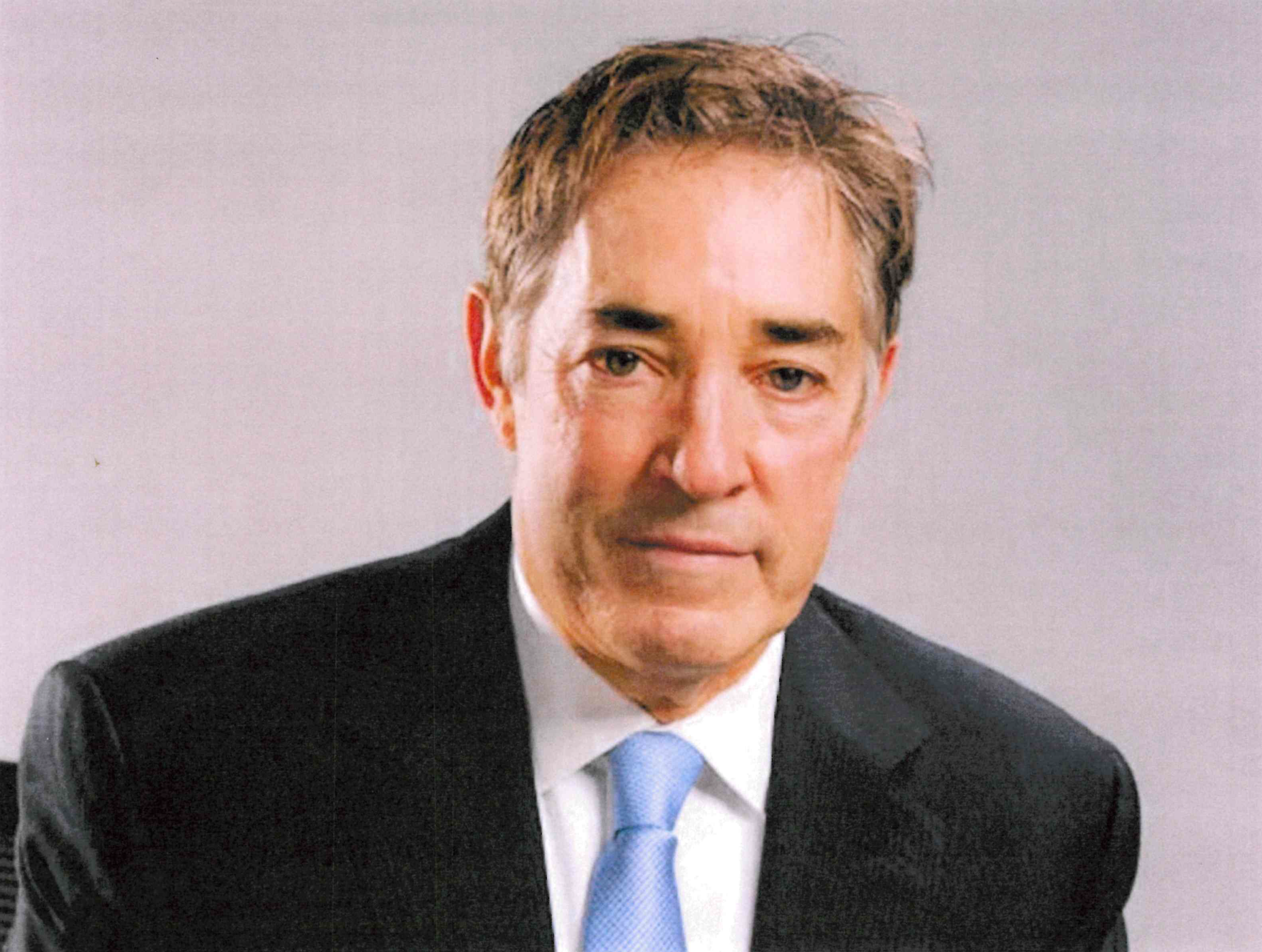
How the hell could that happen?
Sudden death is often a shock to the system. It’s a safe bet that a tear or two has rolled down the face of both friend and foe alike in the case of Ray Hartmann. He had the charm of a sort of Mark Twain on steroids.
Among his journalism contemporaries, his death is a sucker punch to the gut. And it’s not just because he was such a talented voice for justice – and such a loved and needed representative of our kind.
His friends in journalism mourn because his death is the bittersweet icing on the cake – maybe a final nail in the coffin of a craft. It’s the death of a time when a journalism credential, great passion, some insomnia and hard work – might make a difference.
Earlier this year, Hartmann joined several dozen of his colleagues at a Gateway Journalism Review luncheon to discuss the fate of media. It was like an old St. Louis Journalism Review meeting with founder Charles Klotzer very much in attendance.
Journos at the meeting took the usual shots at television news; lamented the precipitous decline of newspaper readers; and expressed horror that local congressmen were not calling back for comment on the latest outrage from Washington, D.C., or Jefferson City.
“This is what did us in,” said Ray Hartmann. He held up his tiny cellphone and looked on it as if it were an invasive spore from another planet. Read the conspiracies theories on Instagram, and you’ll probably learn that the “smart” phone is, in fact, a spore from another planet.
Hartmann told the assembled how his defunct Riverfront Times once carried essential news on the best drinking holes, music joints, off-beat arts and culture in St. Louis. Now, that kind of stuff is all in his phone.
Most of all, he said the RFT carried local news and opinion, with a take that could not be found anywhere else. The alternative journalist of the alt-newspaper of another century spoke his mind at the lunch, then sat down.
Making an alt-journalist
Hartmann was always proud of his journalism credentials and non-partisan bona fides early in his career. After high school, he signed on as an undergrad with the University of Missouri and its prestigious J-School. He made his mark there in the early 1970s.
Did Hartmann really need that Mizzou journalism education? College friends contend he missed “one heck of a lot of classes.” He was always busy putting out a campus newspaper.
He was at Mizzou eight semesters and six of those semesters, he was managing a newspaper. His college years included reporting and editing stints with The Maneater and the Campus Courier.
Andy Leonard of Kirkwood, an attorney who aided Hartmann in his post-college media enterprises, can tell Hartmann stories from their early years at the University of Missouri-Columbia.
“Ray once ran against Jeff Gluck, who became owner of the old St. Louis Globe Democrat, for election to editor of The Maneater,” recalled Leonard. “Ray came in second and he became managing editor. His election loss did not slow him down.”
Hartmann told GJR that right after his Mizzou graduation, he visited 20 newsrooms in 15 days to ask for a job. He went into newsrooms with hutzpah and story clips, and without an appointment. He got a job covering stories for a newspaper in Albany, New York.
Hartmann worked in the New York state capital for 14 months, before coming back to Missouri in 1975 to audition as a speech writer for Republican Christopher “Kit” Bond, who was running for governor against Democrat Joe Teasdale.
Bond gave Hartmann three topics to write speeches on, and he pulled an all-nighter so he could hand Bond three speeches the very next morning. Hartmann got hired.
Hartmann said he worked for Bond for 18 months, rode in a parade for Republican Bob Dole and later voted for Republican Gerald Ford in 1976. He said those past experiences show he can be bi-partisan, even if all that was in a distant past.
RFT: an alterative paper
Attorney Leonard expressed amazement at Hartmann’s initial operation with starting an alternative newspaper – in the tradition of The Boston Phoenix or the Big Apple’s Village Voice – right in downtown St. Louis.
“He and his gang were in a tiny office in Mansion House, and he asked me to read a story for libel consideration,” said Leonard. “Ray was laying out and pasting up the paper, selling ads, taking papers out for distribution.
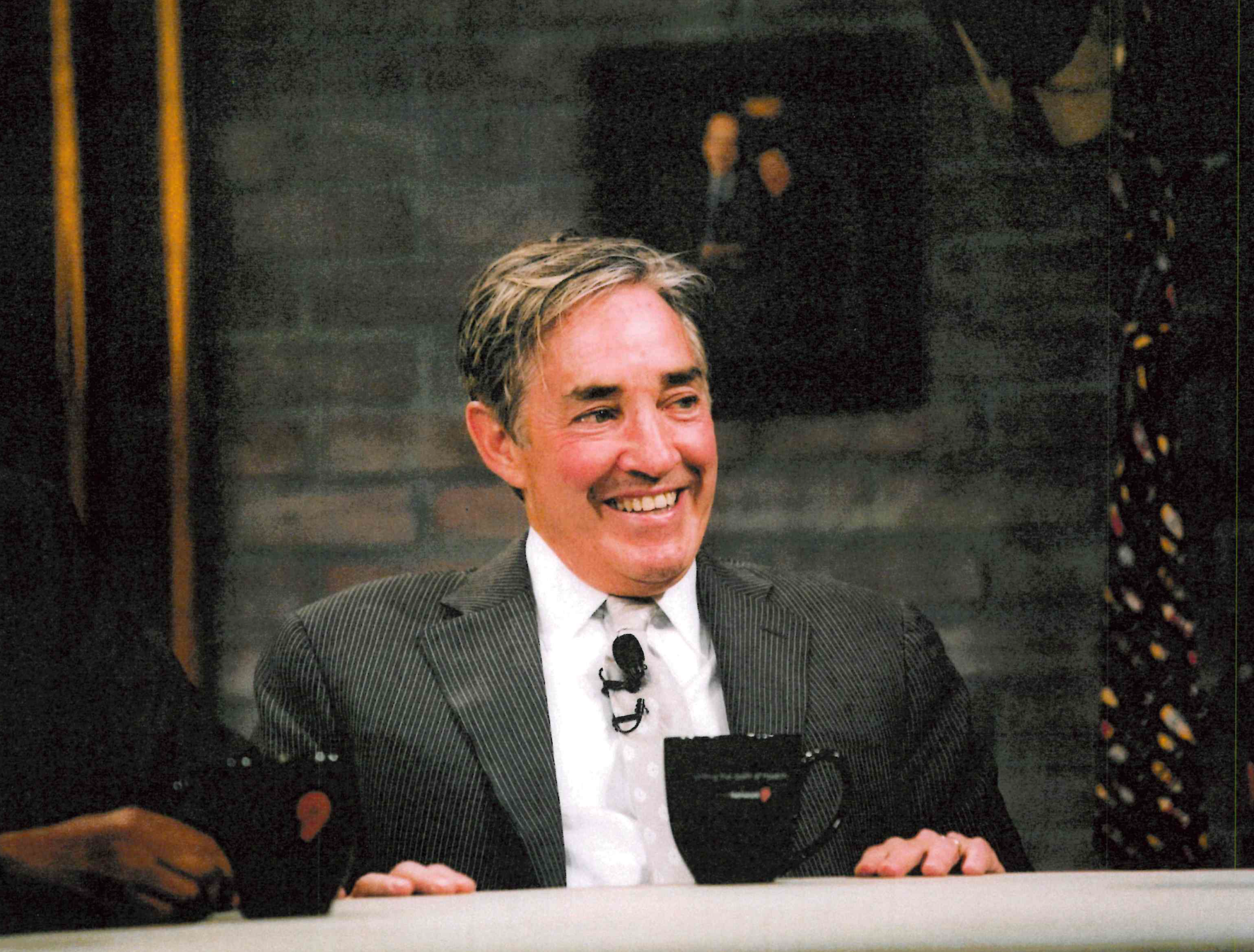
“They were a seat-of-the-pants, week-to week operation,” said Leonard. “I remember him and Dick May always getting carry out from Park Chop Suey. And while they were at it, they talked the owner into taking out a back-page ad for a year. That’s how it worked.”
Leonard said Hartmann and May frequented the same bars, nightclubs and restaurants that they wrote about. He said that the RFT and the staffers “really became part of the culture” of St. Louis.
Roland Klose was one of the RFT editor/reporters whom Hartmann took on in the early days. Klose covered fights over abortion rights, taxpayer subsidies for the VP Fair, Missouri’s loose gun laws and its gun violence.
“Ray hired me in 1981 while I was finishing up at WashU,” said Klose. “I worked there for a while, then returned to the RFT as managing editor after New Times bought the paper. I’d edit Ray once in a while at that point.
“Ray was a deeply opinionated liberal, strong on civil rights and civil liberties, the environment, and social justice issues; but at the same time, a populist who opposed government handouts to big business and the rich,” Klose observed.
Many St. Louisans were upset with Hartmann when he sold the RFT to New Times in 1998. Klose said he understands that move. He said that Hartmann was in his late 40s, restless and eager to try new things – and, also, there was a lot of money to be made.
Hartmann used some of the sale money to beef up the pages and frequency of St. Louis Magazine, which he owned and operated until 2018. He also appeared on the weekly talking-heads show, Donnybrook, on Channel 9; various radio stints; and commentary in his city magazine.
“Ray deserves a lot of credit for attracting and employing some of the best writers, editors, illustrators, and photographers in the St. Louis market, said Klose. “He somehow managed to build staffs of nonconformists, adventurers, eccentrics, iconoclasts, enthusiasts, hellraisers.
“Many are still out there, making a difference,” added Klose. “Among them are well-known names in media like publications designer Tom Carlson, photographer Jennifer Silverberg, writers Jeannette Batz Cooperman and Wm. Stage, and editors Safir Ahmed, Susan Hegger and Cliff Froehlich.”
Others, who Hartmann employed – and who are no longer with us – include reporter/editor J.A. Lobbia, editor/columnist Ed Bishop, reporter/columnist D.J. Wilson and food writer/restaurant critic Joe Bonwich, Klose noted.
Ray’s Donnybrook days
Friends of Ray Hartmann said he regretted losing some of his editorial clout with the sale of the RFT. On the other hand, he compensated with weekly TV appearances on Donnybrook, which marks 40years in 2027.
“Ray was Donnybrook. That’s because without his viewpoint, his brashness, his hair, I doubt the show would have been the hit it became – and still is,” said Alvin Reid, an on-air colleague.
Donnybrook is credited as one of the most-watched local public affairs programs in the country. Reid’s Channel 9 on-air compatriots – Charles Brennan, Sarah Fenske, Joe Holleman, Wendy Wiese and Bill McClellan – echo Reid ’s regard for Hartmann’s role in making the show a success.
“I loved that Ray was always lively and opinionated, but the arguments on the show were among friends, not adversaries,” said Reid. “I also enjoyed that Ray loved sports, which is my writing passion.
“Ray had Blues and Rams season tickets, but his first love was hoops,” Reid added. “I thought, and still do think, that St. Louis could support an NBA franchise. Ray thought I was crazy and said so.”
Reid said he will never forget walking into Soulard Market in south St. Louis on a Saturday morning when Ray called to say: “I’ve got to tell you two things. First, I’m leaving Donnybrook. Second, I’m running for Congress against Ann Wagner.”
“I think Ray always wanted to run for political office,” said Reid. “So, he went for it. Good for him. Now, two years later, I think he would have made it a close race.”
However, the race was not close in 2024. Hartmann became just another Democratic “sacrificial lamb” in the heavily-gerrymandered 2nd District held by incumbent U.S. Rep. Ann Wagner.
The first-time candidate told GJR that he hoped name recognition from his decades on TV’s Donnybrook would give him a leg up in the 2024 race. He said he had his say on television, and he wanted to hear what district residents had to say.
“I’m an optimist. I think I can win,” said Hartmann. “I listened to a lot of people say that I couldn’t start a St. Louis newspaper when I was 24. I did okay with the RFT. Running for Congress is the closest I can get to that feeling I had when I was 24 – and being told it can’t be done.”
Political prediction
Hartmann’s good friend, Ken Warren, a political science professor at St. Louis University, warned his buddy that taking on Wagner was very near an insurmountable challenge.
With decades of expertise on polling, democracy and politics, Warren stressed there’s less turnover in the U.S. Congress than in the old Soviet Politburo. He advised Hartmann that on average 93% of incumbents win reelection in Congress.
Warren also predicted in the pages of GJR that after Hartmann’s loss to Wagner, he was likely to return to journalism in some fashion.
“Journalism is in his blood. He writes good columns, devoting a lot of research to them,” noted Warren. “Unfortunately, some of the media outlets he’s written for have gone belly up. But he will likely dabble in journalism for the rest of his life.”
For the two years remaining in Hartmann’s life, he did remain in journalism, building a following on Substack, an online platform that allows writers to publish content directly to subscribers via email and a blog-style website.
Two Substack subscribers from Kirkwood, Hartmann’s favorite St. Louis suburb, lamented that his online column writing has been silenced by what appears to be a freak highway accident.
“Ray was so gifted and dedicated as a writer,” said David Eagleton, a retiree and advocate for transportation safety. “Ray asked critical questions and challenged entrenched power and the status quo, always with the intention of improving our quality of life.
“During this time of AI content acceleration, one of Ray’s lasting legacies will be the regional journalists who Ray Hartmann mentored so as to carry on the torch,” said Eagleton. “He will be sorely missed in St. Louis.”
William Ruppert, a longtime horticulturist who enjoys political repartee, also said Hartmann will have a lasting impact on St. Louis. He said he was shocked by the freak highway accident on April 23, even before the 73-year-old victim’s name was released.
“His Substack postings were always well-written and researched,” said Ruppert. “I liked his April 5 column on how the Missouri legislature disrespects the people’s right to vote – and the lengths that they will go to overturn the initiative process.”
In the interest of full disclosure, writer Corrigan was a good friend of journalist Ray Hartmann. At the April 7 meeting of GJR, the two reminisced about the early days of the RFT and the Webster-Kirkwood Times, which Corrigan edited up until 2020.
As a Kirkwood resident, Corrigan enjoyed seeing Ray play on the baseball diamonds of Kirkwood Park with his friend Kirkwood Police Chief Dan Linza. Hartmann and Corrigan also frequented the media parties held at the Ponca Trails home of the late U.S. Rep. Jack Buechner, R-Kirkwood.
