Author: Charles L. Klotzer

Coming of age on Kristallnacht

My Bar Mizvah in Berlin, Germany, was scheduled for Saturday, November 12, 1938. However, the night of November 9 lasting through November 10, Nazis launched a night and day of terror attacks against Jews in Germany and Austria.

The Nazi’s attacks were revenge for the killing of Ernst vom Rath on November 7, 1938, who was at work at the German embassy in Paris when Herschel Grynszpan, a 17-year-old Polish Jew, walked up to him and fired five times at close range.

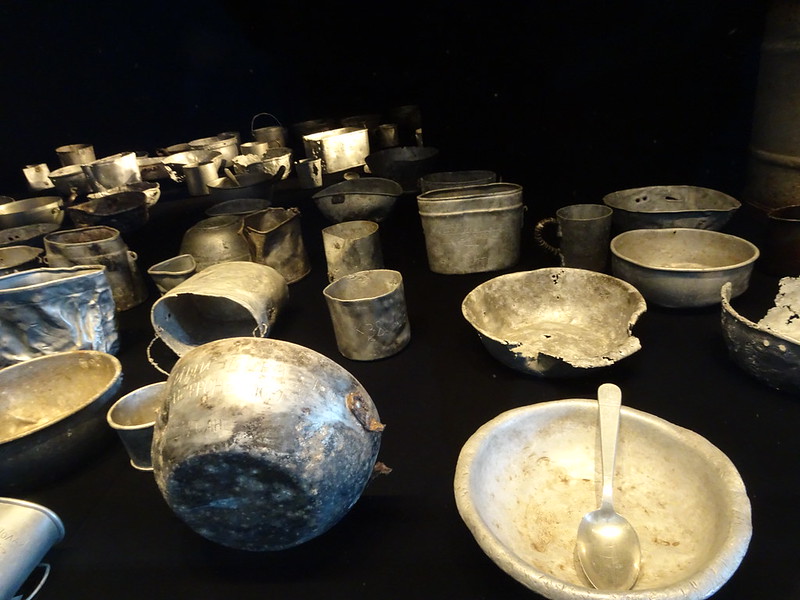
(Photo by Dr. Hans-Günter Wagner via Flickr)

The events are now called Kristallnacht, the night of the broken glass, because the riots against Jews were well organized and participants smashed windows and glass doors wherever located.

Obviously I wasn’t bar mitzvahed. The synagogue was destroyed. 

Life in Berlin

As a child, when I saw a Nazi coming down on one side of the street, I walked to the other side of the street. My parents never told me, I just did it. I didn’t wear a Hitler youth badge. I didn’t have a uniform. So I avoided this kind of stuff, fear was always there, pervasive. Like you couldn’t go to public parks; you couldn’t go swimming.

My parents, to the best of their abilities, tried to protect me from the surrounding nightmare. These efforts had their limitations. Initially, I was enrolled in a public school. One day all the kids around me moved away. The elderly, gray-haired teacher asked what is going on? The kids replied “Klotzer stinks.” The teacher immediately knew what was going on and announced that this kind of behavior will not be tolerated in his class. Shortly thereafter, my parents transferred me to  a Jewish school.

One day coming home, I saw the word “Jude lebt hier” (Jew lives here) painted on the outside of the residential building where we had an apartment on the first floor. On another occasion, walking home with my mother but lagging way behind, some kids my age, I guess I was 11 or 12, tried to accost me. Their leader became aggressive and I hit back, knocking him down.

On the ground floor of our residence was a tobacco shop where my father, Salo Klotzer, bought cigarettes. One day the owner embarrassedly told my father how much he liked him but if he would not mind buying his cigarettes somewhere else where they do not know he is Jewish. He apologized.

 I also remember that my father had a radio which we listened to secretly when Joe Louis, an American, fought Max Schmeling, a German, for  the world boxing championship. When Louis knocked out Schmeling in the first round, the radio stopped broadcasting. (After World War II, Schmeling and Louis became friends.)

  My father was arrested in our home in June 1938 as German authorities may have suspected him of political activities or simply because he is Jewish. The Nazis arrested thousands of Jews in the attempt to frighten them into leaving Germany. He was 58. 

Two plain clothed police officers knocked on our door early one day and asked him to come along with them. My father said something like, “Don’t worry, I’ll be back soon.” I remember the officers telling him, “Well, you better say goodbye to your wife.” He was sent to the Buchenwald Concentration camp.. 

That early arrest was fortunate. It motivated my mother to try to emigrate, secure all the necessary documents and obtain shipping tickets. At the time, camp inmates were released if they provided evidence that they would leave the country. Many relatives, who procrastinated, never made it out.

My father spent about 10 weeks in Buchenwald, six of which he was actually in an infirmary (yes, there was such a facility at that time) after another inmate accidentally poked a hole in his skull with a pickaxe. Inmates had to break up large stones and carry them to another location, only to carry them back to the original location the next day. By then, he had also acquired broken ribs thanks to a German guard. He entered the camp at about 160 pounds and was released weighing 90 pounds.

The day before the release a German attendant at the infirmary replaced all the bandages on his head with a band-aid and told him to walk straight and strong past the inspection team or he would never be released. He did. He was taken to a Berlin police station. Weak and barely able to walk, he tried to call a cab. None would stop. Finally, one did. The driver brought him home, did not accept any fare and said, “ Do not tell anyone I drove you.” 

He came up to the second floor, and my grandmother was home. He crawled up on all fours on the first floor, you know, and then stayed in the hospital.

We were ordered to leave within two weeks, but our departure was postponed repeatedly because of my father’s stay in the Jewish Hospital. He improved rapidly partly because of the medical care and partly because of his unbending optimism. His favorite phrase: “Everything will turn out for the best.”

The weekend of Kristallnacht

By the time of my scheduled Bar Mitzvah (a Jewish ritual for young males and a Bat Mitzvah for young girls) on Saturday, November 12, 1938, my father had recovered enough to attend. But on Wednesday, November 9, 1938, the Nazis organized an attack on synagogues, Jewish stores and individuals all over Germany in an orgy of destruction in revenge for the killing of a German embassy official by a Polish Jew who had heard of Nazi misdeeds. Those events are now internationally known as “Kristallnacht,” meaning the night when crystals were broken. My Bar Mitzvah was postponed and held weeks later along with

four other boys in a school.

My mother registered me to go to England under the Kindertransport program, because my sister, Elfriede (we called her Friedel), nine years older, was scheduled to receive a labor permit also from England. When the permit failed to arrive in time, my parents decided that I would go with them to Shanghai. Just after they had turned down the Kindertransport opening, my sister’s permit arrived. My parents checked about my spot to go to England but it had been reassigned.

Still, my sister made it to England, where she rediscovered relatives and stayed with them throughout the German bombing raids on England, known as the “Blitz.” She later moved to Wales with other relatives. She joined us in the United States in 1948.

Although we were permitted to take out 10 Marks, my parents were intent on getting rid of any money. So we kept buying hot dogs whenever the train stopped on the way to Genoa, Italy.

  When the train reached the border, uniformed German guards questioned all travelers and inspected their travel documents. When they asked how much money we had, my parents said “Nothing,” They questioned what we would do when we get to our destination.” My parents said that they hoped that some organization would help. The guards shrugged and moved on. We crossed the border and we were greeted by Italian Carabinieri in their green caps with  the words, “Relax, you are out of Germany, smile,” (Mussolini ruled in Italy at the time.) The world had changed for us.

Passing through the Red Sea on Passover

 Although we traveled third class on the Conte Biancamano, an Italian ship, the trip was a vacation for us. All meals were served with red wine. We seemed to be the favorite of  the waiter. The day of the arrival in Shanghai, he addressed my mother in German—he had never spoken German before—telling her, “You have never complained, you were always appreciative. Thank you.”

 We traveled through the Red Sea during Passover 1939. What seemed odd to me, a 13-year-old, that Asia was on one side and Africa on the other, yet the sand looked the same on both sides. 

Upon our arrival in Shanghai we were loaded on trucks, standing up, and brought to “godowns,” the Malay term the British used for warehouses in the Hongkuo district then under Japanese occupation. The warehouses were subdivided by blankets into small room-size spaces, one per family. Teenagers were housed in a separate area with double-decker bunks.

The chilling view of a nearly destroyed city—the Japanese had invaded in 1937—caused many refugees to worry about their future and survival. In spite of these fears, what happened to that area is a testament to the refugees’ ingenuity and creativity.

 Streets were rebuilt, giving them a European touch with sidewalk cafes. Several weekly and three daily newspapers were published by refugees. A hospital with 200 beds was established. A puppet theater, a Yiddish theater and a radio station among other cultural institutions came to life. In about 60 theaters plays were produced, in some of which my father acted. He called himself a poet and actor. I have a file drawer full of his German poems. Sport teams in soccer, table tennis and boxing became well known. I have many pamphlets and newspaper clippings of these events.

The fate of the 20,000 or so refugees was mixed, some of them did very well, even establishing thriving companies. Others suffered from hunger and disease. When my children at one time saw the film “Shanghai Ghetto,” some wondered that the impression they had from me was not as depressing as the film. These ups and downs were also reflected in our family.

Just after our arrival in 1939, 350 refugees came down with scarlet fever, including me. By the  time I was released from the hospital my parents had moved out of the camp and into a one-room apartment. Thanks to the Hebrew Immigrant Aid Society (HIAS) they had received US$125, a sum that was sufficient for a family of three to live modestly for about two years.

Back to the camps

Initially, my parents opened up a small store offering household utensils and similar items. They enlisted a partner because, they thought, he was more knowledgeable. That venture did not last long because they discovered that he was making underhanded deals on the side. They sold the store. That kept them from entering into any new venture. Gradually, the funds were depleted and they moved back into the camps after two years.

There were a number of refugee camps to house the thousands of refugees. Recently, I discovered a list of eight moves we made from camp to camp my mother recorded during our nearly nine years in Shanghai. In one camp, the Pingliang Home, I was sleeping under a net on an upper bunk to keep large flying insects off me. As a result, I have acquired an aversion to flying insects. The last three years we lived in the Seward Camp, on a second floor of a four-room house. The upstairs had a very large room separated by blankets. Since we had the backroom, we had to walk through the other family’s room to the only door leading to the stairs.

Winters were cold and we all suffered from frostbitten toes. Water had to be boiled for drinking (it still has to be boiled in 2022). Cooking was done on charcoal stoves either on the windowsill or outside. A separate building housed toilet and shower facilities.

As mentioned, my father at heart was a poet and actor and an extrovert par excellence. He had been taught by his father the repair of leather goods that came in handy. He also wrote and acted in a number of plays and became a solo performer at various cafes and nightclubs.

With an abundance of professionals and teachers, it was only natural to open a school, the Kinchow Road School, later replaced by the Kadoori School funded by Horace Kadoori, whose family of Iraqi Jews had been prominent traders in Asia for many decades. Another Jewish merchant, who had holdings in Shanghai for many years and supported the thousands of European refugees was Victor Sassoon.

I entered the school at age 13. My class was the oldest. After about three years my class was discontinued, equivalent to graduation, but no ceremonies. My mother had arranged for me to enroll in Xavier’s College a high school accredited by the University of London. Surrounded by teachers in clerical garb speaking French, I felt lost. After my first day, I never returned. Some friends of mine did attend, received an excellent education and went on to prominent academic and professional careers.

Mother sold wedding ring

 I enrolled in the Shanghai Business College that taught accounting, shorthand and typing. All of which came in handy both in Shanghai as well as later after my immigration to the U.S. By then my family had used up the HIAS funds they had received. Reluctantly, I agreed to my mother selling her wedding ring to pay for my tuition.

 In 1943, I joined the 16th Independent Boy Scout Group under the direction of the Shanghai British Boy Scouts. After some time I became their Scoutmaster and later headed the senior group called Rovers. We made excursions, camping trips and had monthly meetings. One of the scout leaders, a Colonel Stembera, visited our senior scout group and asked us to help Allied Forces once they invade Shanghai. Meanwhile, Japanese forces had started building concrete-reinforced bunkers at major street intersections. While we were never called upon to be of help—not that anyone of us knew what to do—we were awarded some medals after the war.

 After Pearl Harbor, the English and French settlements, actual colonial enclaves, had been taken over by the Japanese. Hongkuo, where most refugees lived, had been under Japanese occupation since the invasion in 1937. Initially, nothing much changed for the refugees. A year later, most likely because of German pressure, the Japanese established the Hongkuo Ghetto into which all “Stateless Refugees” (they never referred to any religious identities) had to move. Refugees who lived outside had to sell their homes or try to exchange homes with non-Jews living in the Ghetto.

One memory that never left me. I was sitting with my mother in the camp’s canteen, a sort of social gathering spot, which also housed a snack and coffee bar. I watched my mother’s eyes following a cup of coffee bought by someone. She didn’t have the money to buy one. Not a really tragic moment, nevertheless an image that cut deep.

Boxing and ballroom dancing

 Life in Shanghai was a mosaic of poverty, of sidewalk traders, of shop owners, of a few entrepreneurs, who managed to establish business ventures—especially those who had close connections with prominent Chinese or Japanese.

  Looking for employment, I took a job with another refugee who founded a small paint factory, earning the equivalent of $3 per month. He also paid for meals for us at the camp’s community kitchen. To leave the Ghetto, refugees were issued daily, weekly or monthly passes. The Ghetto was guarded by refugees. Because of my employer’s connections, I got a monthly pass, a lapel button.

My job was about two miles from where we lived. Some White Russian youngsters noted my daily walks and decided to have some fun. The Czarist Russians, who had fled the Bolshevik revolution from Russia were known for their Anti-Semitism. A little boy would pester and hit me.

After several such incidents, I hit back. It was then that a big brother would appear and accuse me of hitting the little boy. After being beaten up, I joined a boxing club. I never intended to compete, but peer pressure undercut my resolution and I fought twelve three-minute bouts, eleven of which I won. The final one was for the featherweight championship in China (read: Shanghai) ended in a draw. While I consider boxing a sport  that should be banned, I must confess that the exercise and training instilled in me a lasting measure of self-confidence.

Incidentally, the boxing instructor also conducted classes for ballroom dancing that I also joined. In later years I managed to win with my wife Rose some awards in that activity.

American bombing of Japanese facilities in the surroundings was of no

concern to us. We ran into the streets to watch the silver birders streak high in the sky. That all changed when American planes dropped bombs on our part of the city that killed 30 refugees and scores of Chinese. After that, we dug deep ditches outside of our homes and covered them with corrugated sheet metal.

Many feared the end of the war and the withdrawal of Japanese authority would generate an outpouring of masses of Chinese, celebrating finally being free. When the war did end, Japanese

soldiers were ordered to turn in their weapons. They did but stayed on guard with clubs. After they were assembled for repatriation, the Chinese army moved in. The turnover was peaceful.

The arrival of American forces opened up job opportunities. After working for years for US$3 per month, I was hired as a warehouse manager at $80 per month. Due to “warehouse politics,” I was reassigned to a $40 per month job—still a fortune.

With the departure of American troops, I was hired as secretary to Charles H. Jordan, the top American social worker assigned to the refugee community in Shanghai by the American Jewish Joint Distribution Committee (JDC), who administered refugee affairs and emigration to other countries.

A group of us—all males ranging in ages 18 to 21–formed a Tikvah Club that published a regular monthly journal. (I still have these and the local Jewish archives wants these and many other boxes of Shanghai memorabilia.) Many of the members immigrated to the U.S. and settled in different states. They formed local Tikvah clubs in about six cities and had national conventions twice. With more integration in American activities, these efforts faded. In St. Louis, we campaigned in the early 1950s that the local YMHA should integrate its swimming pool.

Meeting Paul Simon

After arriving in San Francisco, we had to decide where to settle permanently. We didn’t  want to move to states in the South. Philadelphia had a reputation of a coal industry. By elimination, we settled on St. Louis, it was the center of the country. You could easily leave. I had some notions of the Mississippi, having cafés, restaurants along the river. While some improvements along the river along its nationally known arch have taken place, the river and its potential has largely been ignored.

 The Jewish Family Service Agency helped us get settled in a not well maintained hotel. After one week, I moved to another, cleaner hotel. I told the social worker, who later became a friend, “We can save money. We get all this money for eating out, we can cook.” The social worker was very upset. “You did this on your own?” I said, “Yes. It makes more sense.”

  I became active politically supporting Henry Wallace, not Truman. I went to Jefferson City and heard Paul Robeson, a Wallace supporter, sing.

I got a job as a bookkeeper, entering Social Security figures. We had no calculators at the time. It got very boring.  I switched to take over public relations, advertising and personnel for a local construction company. While income and work were acceptable, It did not offer long-time prospects that would meet my expectations.

So I put an ad in the St. Louis Post-Dispatch looking for work in journalism. Lots of responses wanted to hire me as an insurance salesman. One very poorly typed letter was from a young guy interested me. He was 19 years old, living in Troy, Illinois, publishing a weekly newspaper. We met downtown in St. Louis. I told him my views on race and politics. 

“I love it,” he said. And I said, “Well, I’m a Jew?” He said, “You’ll be the first Jew to work in Troy, Illinois, and everybody will look at you.”  They did.

His name was Paul Simon. He asked me to join him as assistant editor. We became close friends. I organized his campaign for President in Missouri. We had many conversations about his plans for the future, what he would do as senator and when he would run for President. He later became a U.S. Senator and ran for president in 1988.  I was talking to him on the cell phone when he was going into heart surgery. He died after that surgery in 2003. 

 I got to know my wife Rose while I attended Washington University under the GI BIll (I had been drafted and served in the military). I proposed to her after a few months. She said, “No,” I want to finish school. Five years later, in 1953, and after being released from the army, I married her. I continued at Washington University, graduated with a degree in political science and continued graduate studies.

While part time still in school, I decided the Jewish community really needs an independent newspaper, because the Jewish Light then was just a house organ for the Jewish Federation. My school advisor, Prof. Merle Kling, advised me not to do so as it will take up all my time and I will never complete my studies. I published the Jewish Star for nearly half a year. My wife was getting her master’s in social work and we were struggling to make ends meet. Prof. Kling turned out to be correct.

Representatives of the Jewish Federation contacted me and asked, “Why struggle? Why don’t you become editor of the Jewish Light and director of public relations for the Jewish Federation?” I accepted. They offered a reasonable salary. It dawned on me later that they were really co-opting me and killed off a competing voice. For one year, I worked for the Federation. Restrictions at the Light made me look for another job. I accepted a public relation, advertising, and personnel position for a construction company in St. Louis.

While we were active in groups such ACLU and NAACP, my wife and I wanted to do more. So in 196I, I suggested to her, “How about starting a Midwest magazine featuring political, social, cultural and racial issues, covering Chicago, Kansas City and St. Louis, and gradually grow and take on other midwestern states.” She agreed. 

My wife, rather than pursue her social work career, worked with me for the next five decades or more to keep the ventures alive. The contents of F/M encompassed the Chicago-St. Louis-Kansas City triangle. The hope, that once F/M was self-supporting we could expand into adjacent midwestern states remained a hope, but F/M never did expand.

The expense to buy typesetting copy for the journal made us buy an IBM typesetting system that became profitable, known as FOCUS/Graphics, producing books for major publishers throughout the country. 

Birth of journalism reviews

The birth of the modern journalism reviews in the United States by working journalists flourished during the late 1960s through the early 1980s. The birth of the first of the reviews is encapsulated in one paragraph by Ron Dorfman, co-organizer of the first, the Chicago Journalism Review (CJR), now long defunct.

 “The Chicago Journalism Review was a product of the local newspaper coverage of the Democratic national convention (1968) and the violence that attended it in the streets of Chicago. When the convention was over and the national press had left town, Chicago editors proceeded, deliberately and shamelessly, to rewrite history in an effort to patch up Chicago’s reputation as ‘the city that works’.”

Mayor Daley had marshaled an army of police to confront thousands of protesting students. Newspapers reported that the confrontation resulted in a student riot. Reporters, some of whom were also beaten up by police, knew it was a police riot.

Dorfman recalls that newspapers told their readers that their own reporters had lied. Outraged, scores of reporters met, raised funds and published the first issue of the Chicago Journalism Review, the prototype for nearly 30 others which cropped up in cities and institutions around the United States. (Chicago Journalism Review and other JRs collected by SJR over the years, have been donated to the SIU-Carbondale library and are available for research.)

The father of journalism reviews actually is George Seldes, who founded “In Fact” in 1940. He revealed, among many other exposes, that tobacco causes cancer.  And he showed that the New York Times had an understanding with the tobacco industry that it would continue advertising as long as the paper would not be critical of tobacco. His publication folded after ten years, the victim of red-baiting and blacklisting.

When I read the first issue of the Chicago Journalism Review, it struck me that here was a paper not unlike Seldes’ and it had a means to influence and reform the media that controls what we knew about the world. The media are powerful. They define, influence, and often join forces with particular interests, which may or may not serve the general public. At the time, we thought that while politicians must always keep the electorate in mind, business leaders cannot forget their stockholders and labor leaders, their members. Who calls the media to account for their treatment of news? 

 I invited a number of reporters from the St. Louis Post-Dispatch and the St. Louis Globe-Democrat to meet. Some local reporters, including Ted Gest, then a reporter of the St. Louis Post-Dispatch had also discussed the idea of a local journalism. They joined us in months of discussions and meetings, creating a core group of 20 members of the working press. 

First issue of SJR

 Because we expected a strong reaction by the Globe and Post, it was decided not to use any bylines. Nevertheless, 13 journalists (Robert E. Adams, Margaret M. Carlan, Al Delugach, Peter A. Donhowe, Ted Gest, Charles L. Klotzer, Richard Krantz, Gerald Lindhorst, Gus Lumpe, Roy Malone, John Shelton, Ellen Sweets, Fred Sweets) decided to be included on the editorial board.

Two Globe reporters did experience severe management criticism, with one seeking other employment and a second resigning from SJR’s editorial board. The Post was more open-minded. At one of the sessions of key Post employees at the home of Pulitzer III (Joseph Pulitzer Jr.) , the publisher asked whether any members of SJR were present and three hands went up. From what we know, they experienced no “official” reaction. 

 St. Louis journalists endorsed the concept that only the press can insure an informed public, which is needed to make democracy work. An informed public, declared the inaugural issue of SJR, requires that every segment of society knows about the needs, fears and hopes of all others Irrespective of the powers which represent the status quo.

The issues below highlight why reporters felt that it is their ethical duty to report on shortcomings of their employer. Some were accused of biting the hand that fed them. But these were stories that the mainstream media were not publishing:

  • The first issue revealed that the Post and Globe had established a Joint Operating Agency (JOA) and had combined all operations except for news and editorial coverage. A Post editor called accusing SJR of libel and threatening legal action.
  • SJR’s coverage of the Globe demise by Roland Klose was the only investigation that showed that the Globe circulation exceeded that of the Post. When Pulitzer offered S.I. Newhouse, owner of the Globe, 50% of profits under the continuing JOA, Newhouse could not afford to turn It down and agreed to close the Globe.
  • Suburban Journals, before they were bought by the Post, banned African-Americans from being pictured on the front page above the fold.
  • SJR disclosed that Globe editor G. Duncan Bowman was receiving lucrative guardian ad litem fees from Juvenile Court Judge Gary Gaertner after the Globe had heralded Gaertner for jailing more juveniles. The Post refused to print the story.  
  • A student reporter at the University of Missouri School of Journalism carried a wire for the Columbia, Missouri police with the permission of faculty in order to entrap a solicitor for providing nude dancers.
  • Local media ignored for years how the police dealt with young African-Americans who assembled in downtown streets late Sunday nights to socialize during the summer. Police would corral the car cruisers towards the highway and block all exits until they were in the suburbs.
  • The Alton Telegraph, an Illinois daily across the river from St. Louis, fired its cartoonist and editor after a local bank complained that a cartoon was critical of the bank.
  • In the summer of 1971, one of the Post’s investigative reporters became a paid informer for the St. Louis police and testified before the US House Internal Security Committee. The reporter claimed he was not “paid” because what he was paid just covered his expenses. The Post just pressured him to quit being an informer.
  • The Post had information that  the publisher of the then best-known local Black papers that he was an informer for the FBI. He published derogatory Items about leftist groups. When the Post failed to publish this information, a Post reporter turned over the material to SJR. The Post did publish similar material about the Globe, its competitor.
  • SJR made a more lasting contribution when we questioned the Post sports editor why he had only white male reporters. That question never occurred to him and he agreed that women and African-Americans should be on his staff. So he hired one African-American woman covering both fields.
  •  When SJR disclosed in 1998 that Post editor Cole Campbell had appointed an editorial editor at a time he was having a social relationship with her, Campbell threatened SJR editor Ed Bishop with a libel suit. SJR published the story anyway.

Concerned about survival

  Having been involved in publishing for thirty years and having witnessed the closing of journalism reviews throughout the country, we searched for a new home for SJR in the 1990s.

 Don Corrigan, professor of journalism at Webster University, and a long-time supporter and writer for SJR, after many discussions and negotiations he talked his university into sponsoring SJR.

 At the time, Bishop was co-editing SJR and had been for a number of years. He agreed to stay with SJR at Webster and also teach there. During the years at Webster from 1995 to 2005, he became an institution in his own right. When he died in 2016, his obituary stated, he was “a journalist cut from old-school cloth, a cantankerous grader, and a man of considerable wit and outspoken opinions.”       

A decade later, as part of the downsizing of the Post staff, William Freivogel, an editor, moved to Southern Illinois University at Carbondale as chair of its School of Journalism. With his help, SJR was adopted by the School of Journalism at SIU Carbondale in 2010 with the explicit condition—like at Webster University—that SJR will editorially remain independent.

GJR established a free weekly online newsletter, while reducing SJR’s publishing schedule to quarterly and added the name of Gateway Journalism Review that reflected its wider geographic coverage. William Freivogel is now publisher and Jackie Spinner, Assistant Professor of Journalism at Columbia College Chicago and one-time Baghdad Bureau Chief for the Washington Post, is editor. GJR has continued SJR’s interest in civil rights and civil liberties with its projects on the Ferguson protests, police accountability and the history of race in Missouri and Illinois.

For my wife, Rose, and I taking up the cause of media criticism in 1970, was not as impetuous as it may sound. At the end of the century, the SJR remained the sole survivor of the privately published journalism reviews. Why had it survived? We had decided many years before that there must be more to supporting good causes than simply belonging to the American Civil Liberties Union.

For the time being, the Midwest media will continue to have a watchdog that keeps tap on its power and influence, and expose its corruption.

Publisher’s note: Eighty-four years ago this month, Lothar Gustav Gabriel Klotzer was turning 13 and looking forward to his Bar Mitzvah that was scheduled, as it turned out, on the weekend we now know at Kristallnacht. This week the Holocaust Museum in St. Louis reopens with its much expanded exhibition on the importance of media literacy to combat propaganda. Klotzer, who fled Nazi propaganda, went on to found the St. Louis Journalism Review to counter disinformation he found in American media.  

In recounting his career, Klotzer once wrote, “Memories are a fragile commodity. Episodes come to mind: anecdotal flashbacks, some we cherish, others we have not managed to forget. None of them however, offers an even flow of events, a flow that would enable us to record the past dispassionately, rationally and with authority. That thread we are obliged to find and insert with hindsight.” 

The account below is the thread of Klotzer’s memory compiled from his writings and interviews over the past half century. It includes a recent account Klotzer wrote as he approached his 97th birthday.

Charles Klotzer is founder of St. Louis Journalism Review.

Founder of St. Louis Journalism Review reflects on history, promise of publication

The birth of the modern journalism reviews in the United States by working journalists, which flourished during the late 1960s through the early 1980s, is encapsulated in one paragraph by Ron Dorfman, co-organizer of the first – the Chicago Journalism Review, now long defunct.

“The Chicago Journalism Review was a product of the local newspaper coverage of the Democratic national convention (1968) and the violence that attended it in the streets of Chicago. When the convention was over and the national press had left town local editors proceeded, deliberately and shamelessly, to rewrite history in an effort to patch up Chicago’s reputation as ‘the city that works’.”

Mayor Daley had marshalled an army of police to confront thousands of protesting students. Newspapers reported that the confrontation resulted in a student riot. Reporters, some of whom were also beaten up by police, knew it was a police riot.          

Dorfman recalls that newspapers told their readers that their own reporters had lied. Outraged, scores of reporters met, raised funds and published the first issue of the Chicago Journalism Review, the prototype for nearly 30 others which cropped up in cities and institutions around the United States. (The Chicago Journalism Review and other journalism reviews and alternative newspapers are in a searchable collection at the SIUC library in the Charles L. Klotzer Freedom of the Press collection.) It was a time of excitement, confidence and rejuvenation. There was a feeling that a better world was visible beyond.

Charles and Rose Klotzer

The birth of SJR

The father of journalism reviews is George Seldes, who founded In Fact in 1940. He revealed, among many other exposes, that tobacco causes cancer.  And he revealed that the New York Times had an understanding with the tobacco industry that it would continue advertising as long as the paper would not be critical of tobacco. His publication folded after ten years, the victim of red-baiting and blacklisting.  

When I read the first issue of the Chicago Journalism Review, it struck me that here was a paper not unlike Seldes’ and it had a means to influence and reform the media that controls what we knew about the world.

The media are powerful. They define, influence, and often join forces with particular interests, which may or may not serve the general public. At the time, we thought that while politicians must always keep the electorate in mind, business leaders cannot forget their stockholders and labor leaders, their members. Who then calls the media to account for their treatment of news. (This perspective, in our time, must be viewed through the filter of the U.S.  Supreme Court decision on Citizens United vs. Federal Election Commission. The decision opened unlimited and unchecked spending for any political cause in the media or through outside avenues.)

In 1970, I invited a number of reporters from the St. Louis Post-Dispatch and the St. Louis Globe-Democrat to meet. A number of local reporters, including Ted Gest then a reporter of the St. Louis Post-Dispatch, had also discussed the idea of a local journalism review and had met with organizers of the Chicago Journalism Review. They joined with others in months of discussions and meetings, creating a core group of 20 members of the working press.

In September 1970, the first issue of the St. Louis Journalism Review (SJR) appeared. Because we expected a strong reaction by the Globe and Post, it was decided not to use any bylines. Nevertheless, 13 journalists  – Robert E. Adams, Margaret M. Carlan, Al Delugach, Peter A. Donhowe, Ted Gest, Charles L. Klotzer, Richard Krantz, Gerald Lindhorst, Gus Lumpe, Roy Malone, John Shelton, Ellen Sweets, Fred Sweets –  decided to be included on the editorial board.

Two Globe reporters did experience severe management criticism, with Lumpe seeking other employment and Shelton resigning from SJR’s editorial board. The Post was more open-minded. At one of the sessions of key Post employees at the home of Joseph Pulitzer Jr., the editor and publisher asked whether any members of SJR were present and three hands went up. From what we know, they experienced no “official” reaction.

For my wife, Rose, and I taking up the cause of media criticism in 1970, was not as impetuous as it may sound. At the end of the century, the SJR remained the sole survivor of the privately published journalism reviews. Why had it survived? We had decided many years before that there must be more to supporting good causes than simply belonging to the American Civil Liberties Union.

In 1962, we had started publishing a magazine called FOCUS/Midwest (F/M). Before commencing publication, I consulted scores of top publishers and political leaders in the Midwest. Contact was easy because I was an organizer for the Stevenson-for-President campaign. Their advice was uniform, small magazines cannot economically survive irrespective of the need they may fill.

My wife, rather than pursue her social work career, worked with me for the next three decades or more to keep all ventures afloat. Focus/Midwest, which lasted for 21 years until it was merged into SJR in 1983, took on the whole range of social, political, economic and racial concerns that dominated the 1960s. Among its columnists was Irving Dilliard, the former Post-Dispatch editorial editor, Hubert Humphrey and Paul Simon. The contents of F/M encompassed the Chicago-St. Louis-Kansas City triangle. The hope, that once F/M was self-supporting we could expand into adjacent midwestern states, remained that, a hope. F/M never did expand.

We kept expenses at a minimum, operating out of our basement and acquiring typesetting equipment, looking like a typewriter but capable of imitating sophisticated typesetting. The system, we realized, offered a separate source of income, a typesetting business.

Thus when we met with reporters to organize SJR in 1970, the one-year-old typesetting business was profitable and we could not resist the temptation to publish a second periodical.

 St. Louis journalists endorsed the concept that only the press can insure an informed public, which is needed to make democracy work. An informed public, declared the inaugural issue of SJR, requires that every segment of society knows about the needs, fears and hopes of all others, irrespective of the powers which represent the status quo.

In the early years, coverage of the media nearly exclusively concentrated on the St. Louis area. SJR’s policies and coverage depended very much on volunteers who researched issues, met and discussed submissions, proofread copy and even pasted up copy for the ten-issues-per-year journal.

Over the next five decades it was co-edited by Rich Lowenstein, Steve Means, Roland Klose, Staci Kramer and Ed Bishop. Klose, who joined us in 1982, also helped edit F/M for its last four issues. A supportive community of reporters, academics and others working in media related professions evolved over the years. They met monthly to discuss the current issue and made suggestions for future issues.

In 1983, it became too difficult to maintain two deficit publications. We decided to merge F/M with SJR. Outside commentators kept critiquing SJR that it sacrificed its “media objectivity” by embracing F/M’s social reform drive. They were correct.

Local coverage

While the St. Louis had a slick city magazine and an alternative weekly, the Riverfront Times, and–at the time–three black newspapers, none of these engaged in investigative journalism. At the time, Dilliard, former editorial editor of the Post, a supporter of F/M and SJR, warned, “The counting house runs far too much of American journalism today.”    

The issues below highlight why reporters felt that it is their ethical duty to report on shortcomings of their employer. Some were accused of biting the hand that fed them.

The first issue revealed that the Post and Globe had established in secret a Joint Operating Agency (JOA) and had joined all their departments except for news and editorial coverage thus splitting profits. A Post editor called accusing SJR of libel and threatening legal action. All SJR had done was report on Publisher Pulitzer’s statement before the U.S. Subcommittee of Antitrust and Monopoly.

SJR’s coverage of the Globe demise by Roland Klose was the only investigation that showed that the Globe circulation exceeded that of the Post. When Pulitzer offered S.I. Newhouse, owner of the Globe, 50% of profits under the continuing JOA. Newhouse could not afford to turn It down and agreed to close the Globe. Newhouse retained part ownership until Lee Enterprises bought the Pulitzer Company.

Suburban Journals, before they were bought by the Post, banned African-Americans from being pictured on the front page above the fold.

A student reporter at the University of Missouri School of Journalism carried a wire for the Columbia, Missouri, police with the permission of faculty in order to entrap a solicitor for providing nude dancers. When SJR’s report made national news the relationship between SJR and the School of Journalism soured.

Local media ignored for years how the police dealt with young African-Americans who assembled in downtown streets late Sunday nights to socialize during the summer. Police would corral the car cruisers towards the highway and blocking all exits until they were in the suburbs. Not only the cruisers but all drivers could not exit till they were in the suburbs.

The Alton Telegraph, an Illinois daily across the river from St. Louis, fired its cartoonist and editor after local bank complained that a cartoon was critical of the bank.

In the summer of 1971, one of the Post’s investigative reporters became a paid informer for the St. Louis police and testified before then US House Internal Security Committee. The reporter claimed he was not “paid” because what he was paid just covered his expenses. The Post just pressured him to quit being an informer.

The Post had information of the publisher of the then best-known local Black papers that he was an informer for the FBI. He published derogatory Items about leftist groups. When the Post failed to publish this information, a Post reporter turned over the material to SJR. The Post did publish similar material about the Globe, its competitor.

SJR made a more lasting contribution when we questioned the Post sports editor why he had only white male reporters. That question never occurred to him and he agreed that women and African-Americans should be on his staff. So he hired one African-American woman, Lorraine Key, covering both fields.

Al Delugach, Pulitzer Prize winning reporter, left the Post when the paper published on page three instead on page one Delugach’s scoop of Life Magazine’s article by Denny Walsh—with whom he had worked when both were at the Globe–of alleged ties between St. Louis Mayor A.J. Cervantes and organized crime. Many newspapers throughout the country played it on page one. The Globe also played it on page three. Both papers downplayed the charges and called them innuendos. The Mayor was given extensive space for rebuttals.

In the 1980s, we got to know Hyman P. Minsky, who taught economics at Washington University. While we were unschooled about the intricacies of economics, his ideas were appealing, and he agreed to write a regular column. Today his “financial instability hypothesis” refined in the 1970s, is known throughout economic academia as the “Minsky’s moment.”

Concerned about survival

Having been involved in publishing for thirty years and having witnessed the closing of journalism reviews throughout the country, we searched for a new home in the late 1990s. While many local universities were eager to accept it, they were unable to provide any subsidies. Don Corrigan, professor of journalism at Webster University, and a long-time supporter and writer for SJR, after many discussions and negotiations talked his university into sponsoring SJR.

At the time, Ed Bishop was co-editing SJR and had been for a number of years. He agreed to stay with SJR at Webster and also teach there. During the years at Webster from 1995 to 2005, he became an institution in his own right. When he died in 2016, his obituary stated, he was “a journalist cut from old-school cloth, a cantankerous grader, and a man of considerable wit and outspoken opinions.” Ed remained a rabble-rouser through SJR and a teacher loved by many of his students. During the years at Webster, Ed had the help of Tammy Merrett-Murray, not only in bookkeeping but also in proofreading and other essential tasks.

In 2005, when Webster decided that they could not afford to continue subsidizing SJR, they offered to continue SJR as an online venue. That alternative had been suggested for many years, but we considered it unacceptable, we were addicted to the feel of paper.

At that point, the media hastened to declare the end of SJR.

But SJR had created a community of support, both financially and editorially, that kept SJR alive. Under the legal direction of Mark Sableman, a decade-long supporter and writer for SJR, a board of directors was established with Dave Garino, another veteran supporter and guide, as chair. The late Roy Malone agreed to become editor with the help of Avis Meyer and many other writers, while our search for a new home continued for the next five years.       

As part of the downsizing of Post staff, William Freivogel, a Post-Dispatch editor, moved to Southern Illinois University at Carbondale as chair of its School of Journalism. With his help, SJR was adopted by the School of Journalism at SIU Carbondale in 2010 with the explicit condition—like at Webster University—that SJR will editorially remain independent.

The new owners established a free weekly online newsletter, while reducing its publishing schedule to quarterly and added the name of Gateway Journalism Review that reflected its wider geographic coverage. It is produced by Prof. William Freivogel, publisher, and Jackie Spinner, Assistant Professor of Journalism at Columbia College Chicago, as editor. 

GJR has established an annual “Celebration of the First Amendment” that features prominent media personalities—such as Bob Woodward, Carl Bernstein, Judy Woodruff–and solicits public support. The success of these events depend upon the labor of many supporters, such as Jessica Z. Brown, Da Sullivan and man others.

Beyond doubt, this brief summary has left out the support contributed by hundreds of journalists and supporters over the past fifty years. My apologies.

Charles L. Klotzer was founder of the Greater St. Louis Jewish Star and later, editor of the St. Louis Jewish Light. In 1970, Klotzer and his wife Rose founded the St. Louis Journalism Review, which was later renamed as the Gateway Journalism Review.

The top censored stories of 2015-2016

1 Comment Media

The Journalism Review’s presentation of the top censored stories of 2015-2016 extends the tradition originated by Professor Carl Jensen and his Sonoma State University students in 1976. That tradition now includes faculty and students from campuses across North America.

During this year’s cycle, Project Censored reviewed 235 validated independent news stories representing the collective efforts of 221 college students and 33 professors from 18 college and university campuses.

How do the organizers know that the top stories brought forward each year are not only relevant and significant, but also trustworthy? The answer is that each candidate news story undergoes rigorous review, which takes place in multiple stages.

Candidate stories are initially identified by Project Censored professors and students, or are nominated by members of the general public. Together, faculty and students vet each candidate story in terms of its importance, timeliness, quality of sources, and corporate news coverage.

Once Project Censored receives the nomination, a second round of judgment is conducted, using the same criteria and updating the review to include any subsequent, competing corporate coverage.

In early spring, the faculty and students at all affiliate campuses, and the panel of judges cast votes to winnow the candidate stories from several hundred to 25. Once the top 25 list has been determined, Project Censored student interns begin another intensive review of each story using LexisNexis and ProQuest databases.

The finalists are then sent to a panel of judges, who vote to rank them in numerical order. (This writer is one of the judges.) These experts include media studies professors, professional journalists, and a former commissioner of the Federal Communications Commission.


(1) U.S. Military forces deployed in 70 percent of world’s nations

If you throw a dart at a world map and do not hit water, Nick Turse reported for TomDispatch, the odds are that US Special Operations Forces “have been there sometime in 2015.” According to a spokesperson for Special Operations Command (SOCOM), in 2015 Special Operations Forces (SOF) deployed in 147 of the world’s 195 recognized nations, an increase of eighty percent since 2010. “The global growth of SOF missions has been breathtaking,” Turse wrote.

As SOCOM commander General Joseph Votel told the audience of the Aspen Security Forum in July 2015, more SOF troops are deployed to more locations and are conducting more operations than at the height of the Afghan and Iraq wars. In Turse’s words.


(2) Crisis in evidence-based medicine

In April 2015, the Lancet’s editor, Richard Horton, wrote, “Something has gone fundamentally wrong with one of our greatest human creations.” Describing the upshot of a UK symposium held that month on the reproducibility and reliability of biomedical research, Horton summarized the “case against science”: “Much of the scientific literature, perhaps half, may simply be untrue. Afflicted by studies with small sample sizes, tiny effects, invalid exploratory analyses, and flagrant conflicts of interest, together with an obsession for pursuing fashionable trends of dubious importance, science has taken a turn towards darkness…. The apparent endemicity of bad research behaviour is alarming.”

In 2009, Marcia Angell, a former editor of the New England Journal of Medicine, made comparable claims in an article for the New York Review of Books: “It is simply no longer possible to believe much of the clinical research that is published, or to rely on the judgment of trusted physicians or authoritative medical guidelines. I take no pleasure in this conclusion, which I reached slowly and reluctantly over my two decades as editor of The New England Journal of Medicine.


(3) Rising carbon dioxide levels threaten to permanently disrupt vital ocean bascteria

Imagine a car heading toward a cliff’s edge with its gas pedal stuck to the floor. That, Robert Perkins wrote, is a metaphor for “what climate change will do to the key group of ocean bacteria known as Trichodesmium,” according to a study published in the September 2015 issue of Nature Communications by researchers at the University of Southern California and Woods Hole Oceanographic Institution.

Trichodesmium is found in nutrient-poor parts of the ocean, where it converts nitrogen gas into material that can be used by other forms of life. From algae to whales, all life needs nitrogen to grow. Reporting for the Guardian, Emma Howard quoted Eric Webb, one of the study’s researchers, who explained how the process of “nitrogen fixation” makes Trichodesmium “the fertilising agent of the open ocean.”


(4) Search engine algorithms and electronic votiong machines could swing 2016 election

From search engine algorithms to electronic voting machines, technology provides opportunities for manipulation of voters and their votes in ways that could profoundly affect the results of the 2016 election. In the US, the 2012 presidential election was won by a margin of just 3.9 percent; and, historically, half of US presidential elections have been won by margins under 7.6 percent. These narrow but consequential victory margins underscore the importance of understanding how secret, proprietary technologies—whether they are newly developing or increasingly outdated—potentially swing election results.

Mark Frary, in Index on Censorship, describes the latest research by Robert Epstein and Ronald E. Robertson of the American Institute for Behavioral Research and Technology on what they call the Search Engine Manipulation Effect (SEME). Their research focuses on the powerful role played by the secret algorithms (including Google’s PageRank and Facebook’s EdgeRank) that determine the contents of our Internet search results and social media news feeds.


(5) Corporate exploitation of global refugee crisis masked at humanitarianism

According to a June 2015 United Nations report, sixty million people worldwide are now refugees due to conflict in their home nations. The UN report indicated that during 2014 one out of every 122 people was a refugee, internally displaced, or an asylum seeker; and over half of these refugees were children.

Although the extent of the global refugee crisis has been covered in the corporate media (including, for example, the New York Times and the Washington Post), the exploitation of refugees has been less well covered. In February 2016, Sarah Lazare published an article on AlterNet that warned of the World Bank’s private enterprise solution to the Syrian displacement crisis. “Under the guise of humanitarian aid,” Lazare wrote, “the World Bank is enticing Western companies to launch ‘new investments’ in Jordan in order to profit from the labor of stranded Syrian refugees. In a country where migrant workers have faced forced servitude, torture and wage theft, there is reason to be concerned that this capital-intensive ‘solution’ to the mounting crisis of displacement will establish sweatshops that specifically target war refugees for hyper-exploitation.”


(6) Over 1.5 million American families live on two dollars per person per day

According to Kathryn J. Edin and H. Luke Shaefer, sociologists and authors of the book $2.00 per Day: Living on Almost Nothing in America, in 2011 more than 1.5 million US families—including three million children—lived on as little as two dollars per person per day in any given month. Edin and Shaefer determined this figure on the basis of data from the US Census Bureau’s Survey of Income and Program Participation (SIPP), income data from the federal Supplemental Nutrition Assistance Program (SNAP), additional data on family homelessness, and their own fieldwork in four study sites.

Corporate coverage of Edin and Shaefer’s sociological study of extreme poverty has been limited. In early 2012, USA Today published a straightforward report on a previous version of their findings, which indicated 1.46 million families lived on less than two dollars per person per day.


(7) No end in sight for Fukushima disaster

Five years after the 9.0 earthquake and tsunami that destroyed the nuclear power plant at Fukushima, Dahr Jamail reported that Tokyo Electric Power Company (TEPCO) officials in charge of the plant continue to release large quantities of radioactive waste water into the Pacific Ocean. Arnold Gundersen, a former nuclear industry senior vice president, called Fukushima “the biggest industrial catastrophe in the history of humankind.” As Jamail reported, experts such as Gundersen continue warning officials and the public that this problem is not going away. As Gundersen told Jamail, “With Three Mile Island and Chernobyl, and now with Fukushima, you can pinpoint the exact day and time they started…but they never end.” Another expert quoted in Jamail’s Truthout article, M.V. Ramana, a physicist and lecturer at Princeton University’s Program on Science and Global Security and the Nuclear Futures Laboratory, explained, “March 2011 was just the beginning of the disaster, which is still unfolding.”


(8) Syria’s war spurred by contest for gas delivery in Europe, not Muslim sectarianism

At least four years into the crisis in Syria, “most people have no idea how this war even got started,” Mnar Muhawesh reported for MintPress News in September 2015.

In 2011–12, after Syrian president Bashar al-Assad refused to cooperate with Turkey’s proposal to create a natural gas pipeline between Qatar and Turkey through Syria, Turkey and its allies became “the major architects of Syria’s ‘civil war.’” The proposed pipeline would have bypassed Russia to reach European markets currently dominated by Russian gas giant Gazprom. As a result, Muhawesh wrote, “The Middle East is being torn to shreds by manipulative plans to gain oil and gas access by pitting people against one another based on religion. The ensuing chaos provides ample cover to install a new regime that’s more amenable to opening up oil pipelines and ensuring favorable routes for the highest bidders.”

Although there is plenty of coverage in US corporate media about the violence in Syria and the refugee crisis that is sweeping Europe and reaching North America, this coverage has failed to address the economic interests, including control of potentially lucrative gas pipelines,


(9) Big pharma political lobbying not limited to presidential campaigns

Pharmaceutical companies have been among the biggest political spenders for years, according to data from the Center for Responsive Politics. As Mike Ludwig of Truthout reported, based on CRP data, large pharmaceutical companies made over $51 million in campaign donations during the 2012 presidential election, nearly $32 million in the 2014 elections, and, as of September 2015, they had already put $10 million into the 2016 election. During the 2014 elections, Pfizer led drug companies with $1.5 million in federal campaign donations, followed by Amgen ($1.3 million) and McKesson ($1.1 million).

Although these are large sums of money, campaign donations by large pharmaceutical companies pale in comparison to how much they spent on lobbying politicians and influencing policies outside of elections. As Ludwig reported, according to data gathered on the 2014 election, the industry spent seven dollars on lobbying for every dollar spent on the election. The $229 million spent by drug companies and their lobbying groups that year was down from a peak of $273 million in 2009, the year that Congress debated the Affordable Care Act.


(10) CISA: The internet surveillance act no one is discussing

On December 18, 2015, President Obama signed the Cybersecurity Information Sharing Act (CISA) into law as part of a 2,000 page omnibus spending bill. As drafted, CISA was intended to “improve cybersecurity in the United States through enhanced sharing of information about cybersecurity threats, and for other purposes.” The act authorized the creation of a system for corporate informants to provide customers’ data to the Department of Homeland Security (DHS), which, in turn, would share this information with other federal agencies, including the Departments of Commerce, Defense (which includes the NSA), Energy, Justice (which includes the FBI), the Treasury (which oversees the IRS), and the Office of the Director of National Intelligence.

As Sam Thielman of the Guardian reported, civil liberties experts had been “dismayed” when Congress used the omnibus spending bill to advance some of the legislation’s “most invasive” components. Anthony Romero of the American Civil Liberties Union criticized Congress for using the spending bill “to pursue their extremist agendas.” “Sneaking damaging and discriminatory riders into a must-pass bill usurps the democratic process,” he told the Guardian. Lauren Weinstein, who cofounded People For Internet Responsibility, also spoke critically of the legislation: “There is not a culture of security and privacy established in the government yet. You have to have that before you even consider sharing the amounts of data [CISA] would cover.” Evan Greer of Fight for the Future called CISA “a disingenuous attempt to quietly expand the US government’s surveillance programs.”


Leo Drey: Progressive Pioneer

Leo Drey left us at the age of 98.

It was in the mid-sixties that I first met Leo. He had heard about struggling FOCUS/Midwest magazine and wondered how it was doing. We met in his unpretentious office–no secretary. You just walked in.

The simplicity of his and his wife’s lifestyle, both in their work and in their home, was in sharp contrast to the far-reaching progressive adventure they pursued over these many decades. While Leo devoted himself to sustain an environment on the ground that would benefit generations to come, his wife Kay became a prophetess, who not only analyzed and recognized the implicit dangers of nuclear power plants, but also became an unrelenting voice informing the public and government how the nuclear industry poisons our environment. St. Louis Magazine called both “Green Giants”.

Leo encapsulated much more than being a national pioneer in land reclamation, a philanthropist who made one of the largest gifts of its type in Missouri, if not the nation, a founder of environmental groups that will outlast all of us. Moreover, he also represented a reconciliation of two lines of thought of particular concern to the Jewish community as well as to many others.

In a High Holiday, Yom Kippur, sermon, the late Rabbi Jim Diamond, then director of Hillel, a student group at Washington University, offered his evaluation of where American culture diverted from Jewish culture. Americans, he declared, have established individualism as the principal guide in shaping their lives. Jews, on the other hand, have always considered the community, whether of their own tribe or on a more universal base, as the core of their belief system.

If Rabbi Diamond would have had an opportunity to meet Leo and review his lifework exalting individual values that contributed to many communities, he would have had to amend his theories and recognize that individualism and community work can complement each other, benefiting both aspects of American life.

Leo Drey represented the best of many cultures.

Publisher’s note: Leo and Kay Drey were major supporters of the St. Louis Journalism review and chaired the most recent First Amendment celebrations for the Gateway Journalism Review.

Benjamin Israel remembered

Benjamin Israel, 65, died Monday after a lengthy period of ill health. There will be no funeral for Mr. Israel, who donated his body “ to serve science after death.”

A memorial service is scheduled Saturday between noon and 1 p.m. at the St. Louis Art Museum in the East Building in a private room of the Panoroma Restaurant.

His wife of 25 years, Virginia, said she “Just lost my boy friend.”

“He wanted to be an agent for social change,” she said, “whether it was leafleting or campaigning for one of his many causes.”

Don Corrigan, a professor at Webster University, called Mr. Israel, “A fellow of integrity that few of us can match.”

Mr. Israel was immersed in local and national media, and he had a deep knowledge of African-American history. For years, he was a frequent contributor to the former St. Louis Journalism Review and to Gateway Journalism Review.
He had recently been a writing tutor at Harris-Stowe State University. His reporting has been published in the St. Louis Post-Dispatch, North County Journal, Jefferson County Leader and the Columbia Tribune.

He received his B.A. at University of Missouri’s School of Journalism in Columbia and his M.A. at University of Missouri-St. Louis in history.
Besides his wife, he is survived by his sister, Sylvia Woodbury, and daughters Rosaclaire Baisinger, Zainab Smith and April Heermance; sons Josh Baisinger, Aasim Inshirah and Atief Heermance; and two granddaughters.