St. Louis and Missouri are extraordinarily well represented on the legal and law enforcement teams of President Donald J. Trump. D. John Sauer, solicitor general; Will Scharf, White House counsel; Andrew Bailey, co-deputy director of the FBI; and Ed Martin, former interim attorney for the District of Columbia and former pardon attorney, all are native sons or have strong local ties.
But there is now at least one native son who can be placed, in a sense, on the opposite side of that ledger. He is Will Rosenzweig, 40, a native of Clayton and graduate of Clayton High School, who filed suit August 7 against the U.S. Department of Justice; Todd Blanche, now the attorney general; Jason Quinones, the U.S. attorney for the Southern District of Florida; and the Office of Personnel Management in Washington.
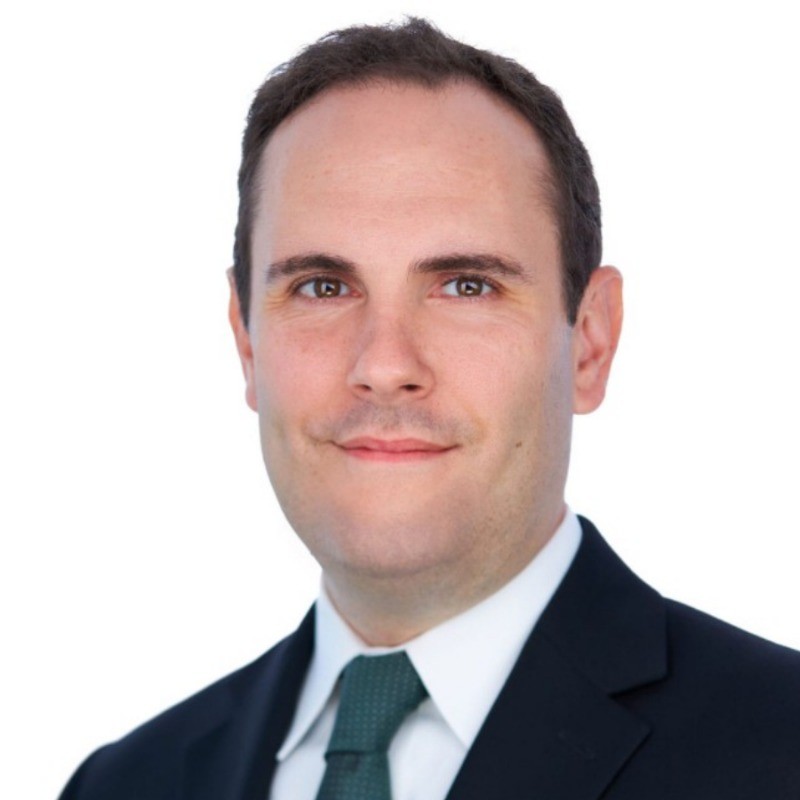
The suit, filed in the U.S. District Court for the Southern District of Florida in Miami, poses an important test of the Trump Administration’s ability to chill free speech in America.
Rosenzweig, whose St. Louis origins have not been previously reported, was abruptly fired from his job as deputy U.S. attorney for the Southern District of Florida on Sept. 23, 2025. The firing – delivered by email and offered without explanation – came after five years of rave performance reviews and just weeks after he’d been awarded a free parking spot in recognition of his outstanding performance.
It came, moreover, just two weeks before the opening of a trial in which Rosenzweig was lead prosecutor against three defendants charged with a multi-year, multimillion dollar Medicare fraud scheme.
None of that, however, counted against what Natalie Winters, a far-right protégé of Steve Bannon, posted on her X account at about 3:45 p.m. Sept. 23. Rosenzweig, she wrote to her 640,000 followers, had previously kept a blog in which he had been “attacking President Trump and his administration.” Now, she said, he was “using government power to wage LAWFARE against MAGA patriots” – clearly the three defendants he was about to prosecute for healthcare fraud.
“Fire him,” she concluded. Then she “tagged” her post – which has since been deleted – with the official accounts of DOJ; then-Attorney General Pam Bondi; then-Deputy Attorney General Blanche; DOJ official Ed Martin; and the U.S. Attorney’s Office for the Southern District of Florida.
Less than three hours later, Rosenzweig received the email in which he was notified by the DOJ’s Justice Management Division of his termination. Attached was a PDF of a memo confirming the termination, hand-signed by Bondi.
In fact, Rosenzweig had published a blog for three years, starting in 2016 but ending well before he started work at the Justice Department, in 2020. He had criticized Trump, his suit acknowledges. He had also shared his views about such matters as college basketball and March Madness, travel to Toronto and Napa Valley, and Charlie Hustle, the baseball player otherwise known as Pete Rose.
In other words, Rosenzweig’s suit says he had exercised his right to free speech as a private citizen – the most protected form of free speech this country has to offer. Violation of his free-speech rights constitutes the suit’s first count.
The suit elaborates on this violation by saying that if the Department of Justice can fire Rosenzweig for such writings, then:
“a citizen must forever refrain from criticizing the government and its leaders to remain eligible to serve it. That rule would force every American who might one day serve to choose between speaking freely now and working for the government later. Conditioning public employment on political loyalty, where a party card rather than merit opens the door to a government job, is a way of life in Havana and Caracas. It has no place here.”

The suit also notes that the Justice Department does have political appointees, for whom political beliefs and expressions are relevant. But Rosenzweig, it says, was not one of these; he was a career employee, working in the apolitical field of healthcare fraud. He was therefore entitled to the protection that Civil Service status provides against discrimination based on political affiliations.
The suit, therefore, could have broader implications for civil service employees.
The suit also takes note of the curious circumstances surrounding Winters’ blog post. On Sept. 19, with the trial of the three alleged fraudsters scheduled to start in only a few weeks, the defense team asked the district court in Florida for a continuance. The prosecution opposed it and it was denied.
Just four days later Winters published her post about Rosenzweig and the “MAGA patriots” he was prosecuting. Yet there had been absolutely no publicity about the case, not even a press release from the U.S. Attorney’s Office in Miami, and Rosenzweig’s blog had been defunct for nearly seven years. The complaint seems to imply that someone from or allied with the defense team learned of the blog and brought it to her attention to disrupt the case.
Margaret Donovan, who practices with the firm of Koskoff Koskoff & Bieder in New Haven and Bridgeport, Conn, is one of Rosenzweig’s lawyers. “Under normal circumstances,” she told the GJR, “the Justice Department might have circled its wagons and launched an investigation to see whether there had been an attempt to obstruct justice. Instead, the department summarily fired one of its own.”
Adding insult perhaps to injury, Rosenzweig’s boss, Quinones, didn’t speak to him about his dismissal, the suit alleges – or about the case left in limbo without him. Rosenzweig’s team had been working on that case – involving a 17-count indictment and an accusation of $17 million in Medicare fraud – for years.
With Rosenzweig ousted, the case was thrown into a “tailspin,” the suit says, and the government found that it was now the party asking for a continuance. Meanwhile, the defendants, seeing the government in disarray, switched their position and insisted the case “proceed to trial quickly.”
The judge ordered a continuance, but only a brief one, and the case got underway without Rosenzweig just a month later. The government won convictions against two of the three defendants. The case against the third had been severed due to illness and has yet to be tried.
In his suit, Rosenzweig is seeking his job back, along with back pay and attorney’s fees. He is also seeking a “declaration” that his First Amendment rights were violated and that the separation of powers between Congress and the Executive Branch was also violated because of his contention that the Executive Branch had no right to fire a Civil Service employee like himself.
Despite having had to endure what Donovan called “significant online vitriol,” Rosenzweig appears to have landed on his feet. A graduate of Cornell Law School, he had started his career in private practice and earlier this year he returned to it, joining a private law firm in Miami. Asked for an interview for this story, he said he wished he could comply but felt he needed to stick to his policy of referring all reporters to Donovan.
A former federal prosecutor herself, she is clearly at the top of her field. Donovan’s client list includes Maurene Comey, another former deputy U.S. attorney who was fired by the Trump Administration, and who is the daughter of Trump arch-enemy James Comey; Brian Driscoll, a former acting director of the Federal Bureau of Investigation, who was fired after declining to carry out purges against agents involved in the Jan. 6 investigations; and a number of lawyers who worked for Special Counsel Jack Smith’s criminal investigation, which led to a Florida grand jury indicting Trump on 37 counts relating to his mishandling of classified documents and a federal grand jury in D.C. indicting him on four counts charging him with a conspiracy against the United States in connection with his attempt to block Biden’s election.
The government has 60 days from August 19 to respond to Rosenzweig’s suit. It’s expected that it will try to dismiss it on the ground that the case doesn’t belong in court, but rather before the U.S. Merit Systems Protection Board (MSPB), a quasi-judicial federal agency that protects federal merit systems and handles employee appeals. But the suit argues that the Trump Administration has effectively rendered the MSPB unable to do its job by, among other things, “removing the one member who was from a political party other than the President’s.” As a result, the body is “subject to the control of the very Executive Branch whose actions are at issue” and cannot be the arbiter of Rosenzweig’s case.
Donovan has made the same argument recently in two other cases – in the Southern District of New York, on behalf of Maurene Comey, and in the Eastern District of Virginia, in relation to an official with the Federal Emergency Management Agency (FEMA). She prevailed both times.
Paul Wagman is a former Post-Dispatch reporter and FleishmanHillard executive who is now an independent reporter, editor and communications consultant
