Few outsiders had heard of Missouri’s Second Injury Fund until 1992. That’s when St. Louis Post-Dispatch reporter Terry Ganey detailed how the fund for injured workers was supposed to work – and how it actually worked.
Ganey had discovered that some lawyers hired by the state attorney general to defend the fund were themselves filing claims for injuries. One claimed he hurt his shoulder while opening a file drawer. That lawyer, Ganey wrote, had also filed a claim “for overexertion while handling his briefcase.”
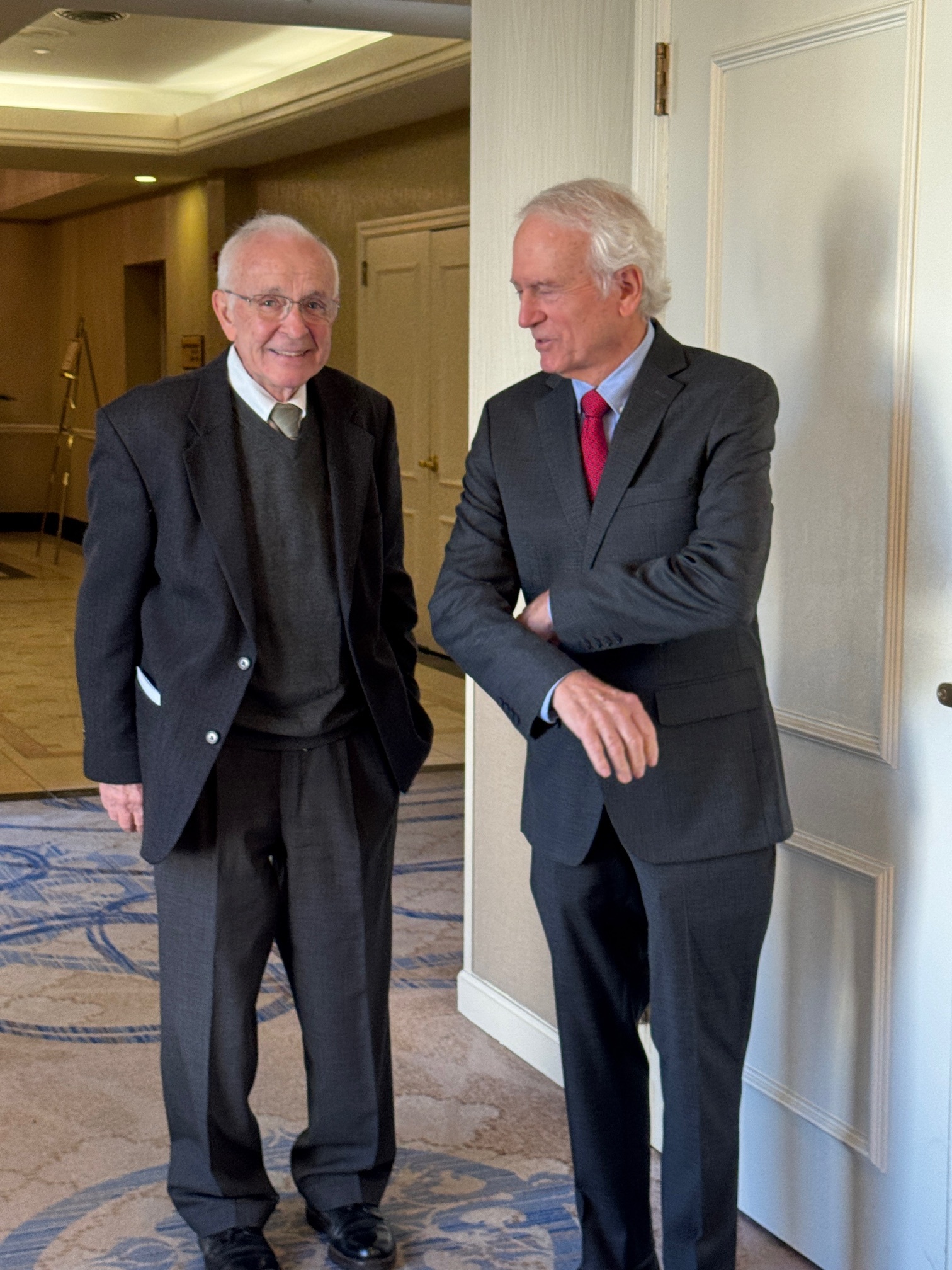
The series, which helped send seven men to prison and made Ganey a finalist for a Pulitzer Prize in investigative reporting, was classic Ganey. Over a journalism career that spanned five decades, he unearthed the backstories behind the news, exposed wrongdoing in state government and helped lift the curtain on the Anheuser-Busch beer dynasty. With his dogged but low-key approach, Ganey also showed that you can hold power to account without being antagonistic.
“He was a small guy with a quiet manner but what you missed was that he could latch on to your ankles and not let go,” said Kevin Horrigan, a retired reporter and editorial writer who started work at the Post-Dispatch on the same day that Ganey did in 1977.
Ganey died Dec. 26 at his home in St. Louis from complications of cancer. He was 77. Visitation will be held at Kutis Funeral Affton Chapel from 2 p.m. to 7 p.m. on Jan. 18. A prayer service will begin at 6:30 p.m. A celebration of life has been scheduled for 2 p.m. to 4 p.m. on March 15 at the Piper Palm House in Tower Grove Park in St. Louis.
An East St. Louis native and a Southern Illinois University-Edwardsville graduate, Ganey worked five years for the Associated Press in St. Louis and Jefferson City before becoming chief of the Post-Dispatch Jefferson City Bureau. He held the position 28 years.
I worked with Ganey 16 of those years, and long before digital records and 24-hour Internet coverage put legislative antics on everyone’s cellphones, Ganey was digging into the underbelly of Jefferson City.
An exhaustive series he wrote in 1982 with Horrigan and reporter Roy Malone focused on what a Post-Dispatch reprint called the “personal and financial dealings that govern the making of Missouri law.”
Ganey’s stories showed how the system worked, using vivid examples of legislators relying on special-interest lobbyists not only for food, drink and campaign contributions but for entertainment, personal errands and jobs for family members.
Loved being immersed in documents
He loved nothing more than being immersed in documents or finding the elusive, revealing document. When House Speaker Bob Griffin was arrested for DWI and Jefferson City police were refusing to release the report, I got it from a tipster, only to return to the office and find Ganey also had it, from the Department of Revenue, which handles driver’s license revocations.
Ganey combined old-school reporting methods – door-knocking and deep sourcing — with documents and data to break stories that forced changes in state government.
Arthur Mallory was the state’s top education leader in 1987 when Ganey reported that Mallory had been arrested on suspicion of shoplifting at a Jefferson City grocery store. Mallory had not been charged but a source told Ganey the educator had made restitution greater than the amount of the theft: a $3.19 bottle of wine. After denying the incident, Mallory admitted he had a drinking problem and had been stealing wine from the grocery for months. He later stepped down.
Some readers complained that the story should not have named Mallory since no charges had been filed. The paper responded that Mallory was a major public figure; Ganey said the story had to be printed because his investigation had shown evidence of a cover-up. The public has a right to know about such things, he told Post-Dispatch Readers Advocate Sue Ann Wood.
While reports on laws and regulations can be eye-glazing, Ganey’s in-depth understanding of state government helped him paint a picture of who was being helped and who was being hurt by policies.
In 2004, for example, he spotlighted a bill that legislative leaders were quietly fast-tracking that would have eliminated requirements that basic health insurance include certain coverage, such as mammograms and maternity care.
A book on Anheuser-Busch
Ganey stayed cool and calm, whether he was fielding a call from an irate statewide elected official or facing off with a bevy of Anheuser-Busch executives and lawyers trying to quash independent reporting by Ganey and newspaper colleague Peter Hernon.
“Terry doesn’t show emotion much. He’s sort of a glinty-eyed kind of guy,” Hernon said.
He and Ganey co-authored the 1991 book, “Under the Influence: The Unauthorized Story of the Anheuser-Busch Dynasty.” Hernon said teaming up with Ganey was “the best thing that happened to me because Ganey was such a superior reporter, and really focused.”
Hernon recalled when Ganey returned from a reporting trip to Germany with a bonanza of information on the brewery family’s ancestral roots.
Usually, after interviews, the two conferred on whether they thought they had obtained something they could use. Hernon said that as Ganey got off the plane from Germany, he “looked at me, just smiling. ‘I know we’ve got something we can use,’” Ganey told Hernon.
Ganey had found, among other things, a copy of the house guestbook of Wilhelmina Busch Scharrer containing the signature of Adolf Hitler.
Ganey also authored a true crime book about a serial murderer (“St. Joseph’s Children, a true story of terror and justice”).
But he spent the bulk of his career watchdogging Missouri state government. The Jeff City bureau usually included three reporters and a news clerk, plus, in later years, an intern during the legislative session, staffing that Ganey fought to protect as newspapers cut back.
Rather than work out of free state-provided office space in the Capitol, as most of the press corps did, the Post-Dispatch rented space in an historic building. The windows leaked and giant roaches came out at night but the important thing was that it was less than a block from the Capitol.
And as other tenants in the building gradually left, Ganey kept expanding the newspaper’s space until the bureau occupied almost the entire second floor.
Kim Bell, a Post-Dispatch reporter who worked in the bureau from 1994 to 1999, described Ganey as a patient listener who “stuck up for us” when politicians complained about a story.
Married to Judy, his high school sweetheart, Ganey juggled the job’s demands with being a dedicated father to the couple’s three children, David, Tim and Colleen. Even on hectic news days, he left work early to attend their sporting events and coach their middle school basketball teams.
He also enjoyed reading about British sports cars and, in earlier days, tinkering with and tooling around town in his Austin-Healey.
Covering Iraq — more journalists killed than in Vietnam
While being a Pulitzer finalist might have been enough for some journalists, Ganey didn’t quit there.
At one point, miffed that he hadn’t been considered for a special reporting project, he told Post-Dispatch editors he wanted a shot at the next “plum assignment.” Soon afterward, they asked if he wanted to go to Iraq. He said yes.
Ganey, who had served as an enlisted soldier in the Army Reserves from 1970 to 1976, was embedded in Iraq with an engineering unit of the U.S. Army’s 4th Infantry Division in spring 2003. He later wrote a master’s degree thesis, at the Missouri School of Journalism, that explored the differences between covering the Vietnam and Iraq conflicts in terms of journalists’ access, government controls and physical danger.
Among the findings: reporters faced greater dangers in Iraq. Seventy-one journalists were killed in the 10-year Vietnam War period, compared to 124 during about 4 ½ years in Iraq.
After taking a buyout from the Post-Dispatch in 2005, Ganey worked at the Columbia Daily Tribune, covering higher education, state government and politics. In a letter he wrote me shortly after joining the paper, Ganey said he had just written “a small item” about a University of Missouri worker who was fired for using an MU credit card to buy $5,900 worth of furniture.
“It was only after I called and cajoled the ‘news bureau’ that they surrendered some information,” he said. “The incident was apparently reported to campus police after I called. I don’t think it would have been reported but for my inquiry and it makes me wonder how many other people have these credit cards and whether other abuses are occurring.”
Though resources were tighter at the Columbia paper than at the Post-Dispatch – “there’s not much of a bench,” he once quipped – Ganey still carved out time for investigations. For example, he exposed conflicts of interest involving a Columbia developer and a commissioner handing out low-income housing tax credits.
After he retired, Ganey became active in the Sierra Club, summited some of Colorado’s highest mountains and spent time with his six grandchildren – including helping homeschool three of them in Oregon during the pandemic.
He was a guest contributor and editor at the Gateway Journalism Review, painstakingly analyzing everything from the Missouri Senate kicking reporters off the Senate floor to the continuing staff cutbacks at the Post-Dispatch. He also collaborated with then-U.S. Sen. Claire McCaskill on her Memoir, “Plenty Ladylike.”
In interviews and comments on Facebook, friends and officials of all political persuasions praised his reporting prowess, but even more prominently, his humility and fairness.
Newspaper colleague Tim O’Neil said Ganey “never made a show of himself. Terry was just studious. He just did his job. He wouldn’t take no for an answer.”
John Pelzer was the state’s commissioner of administration under Republican Govs. Christopher “Kit” Bond and John Ashcroft. The commissioner oversees state financial chores such as budgeting.
Ganey’s coverage was always fair, Pelzer said. Later, he and Ganey became such good friends that Pelzer asked Ganey to officiate at Pelzer’s daughter’s wedding and a granddaughter’s funeral. Ganey had become an online ordained minister when one of his sons married.
Andrea Routh held various positions in the administration of Democratic Gov. Mel Carnahan. She summed Ganey up this way:
“He was a model of what real journalism looks like,” she said. “When he was investigating a story, we always knew he’d get to the truth and report it.”
In lieu of flowers, donations in Ganey’s honor may be made to the AP Fund for Journalism or the American Cancer Society.
Virginia Young covered Missouri state government for the St. Louis Post-Dispatch for 26 years, the last 10 as bureau chief. She holds a master’s degree from the Missouri School of Journalism, where she has taught public affairs reporting and investigative reporting.
