Tag: Journalists

Freelancing during the pandemic: Journalists chase assignments, security as more of them exit the industry

After covering the Jussie Smollett case for nearly two years for The New York Times, I had to turn down reporting from the actor’s trial in Chicago recently on charges that he faked a racist, homophobic attack in 2019.

I had another assignment that week so couldn’t commit to being in court every day of the trial, which The New York Times wanted when they asked me to cover it. I didn’t think it would be hard for them to find someone else. The high-profile trial was taking place in a major media market flush with journalists.

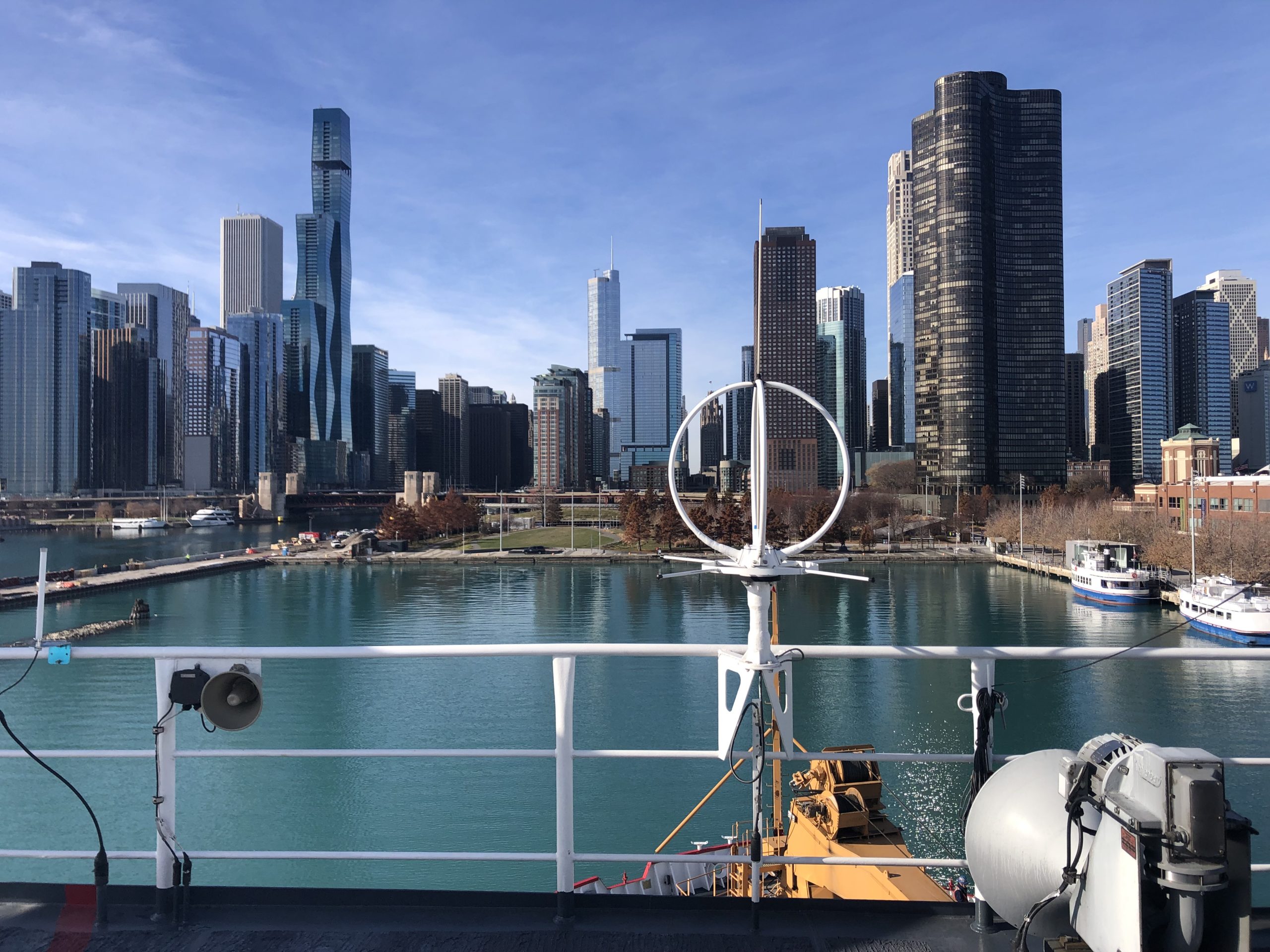
A Coast Guard ship comes into Navy Pier on a mission to deliver Christmas trees, a tradition in its 22nd year. A story by the author, who was on the boat, ran on the front page of Chicago-Sun Times this week. (Photo by Bob Chiarito)

But I later discovered that wasn’t the case. While the New York Times eventually found someone for the assignment, three other outlets contacted me, each offering me money to drop my other assignment to cover the trial, which ended last week with a guilty conviction for the former “Empire” actor. All of them were having trouble finding experienced freelancers. 

The experience backed up recent reports that the more and more journalists are exiting the industry, their departure heightened by the pandemic. Just this week the Tow Center for Digital Journalism released findings that more than 6,100 news industry jobs were lost during the pandemic even as readership surged. At least 100 news organizations closed during the pandemic, and another 42 were consumed by mergers and acquisitions, with a net loss of 128, according to the Tow Center report.

For me, a general assignment freelancer who reports out of Chicago for The New York Times, Agence France-Presse and The Chicago Sun-Times, among others, the period of the COVID-19 pandemic has been the busiest of my career. I’m well aware that this has not been the case for every journalist. Those who cover the arts, entertainment and restaurant industries were hit especially hard. Shonda Talerico Dudlicek reported for GJR in April 2020 about the challenges she faced when venues were closed during the height of the pandemic. 

And even among general assignment reporters, the experience of working through the pandemic has been vastly different.

For Mark Guarino, a Chicago-based freelancer who regularly reports for the Washington Post, his workload did not change much.

“I think Covid was a factor in all the social unrest last year and I was involved in covering that, so I think the type of stories we covered was affected that way. It definitely put me and other people at risk because we had to cover large crowds,” Guarino said.

Risk from Covid is one reason Washington, D.C.-based freelance photographer Alyssa Shukar, a Nebraska native who also worked in Chicago,  has been transitioning more to nonprofit work. Schukar, a freelancer for The New York Times, The Wall Street Journal and several others, said when the pandemic began, many events she normally would cover were cancelled. Then, once things started up again, she had to think about what was worth covering.

“Any assignment I would take, if there were risks involved, I’d also be risking assignments moving forward,” Shukar said. “So, there was a lot of analysis of what was the most appropriate decision given the risk.”

Schukar also noted that photographers, unlike some reporters, did not have the option of working remotely.

“As photographers we have to be out in the field.” 

However, one thing that helped is that some media companies paid freelancers a higher “hazard rate” while covering events during the pandemic.

“We weren’t able to necessarily make as much money as we did before the pandemic, but freelancers were able to have fewer assignments and still get by,” Schukar said.

While Schukar stayed safe from Covid, she missed three months of work after having to undergo three surgeries after getting hit in the hand by a rubber bullet while covering the unrest after the Jabob Blake shooting in Kenosha, Wisconsin. Along with medical expenses, that experience cost her some jobs even when she was recovered.

“The New York Times helped me financially but I definitely lost money. As a freelancer, if you get out of the swing of things it’s a lot more difficult. Editors are less likely to call you if you keep saying that you’re unavailable,” Schukar said.

Another freelance photographer, Kamil Krzaczynski, who covers sports as well as news out of Chicago for USA Today, AFP, Getty and others, said his workload remained about the same but things were different. 

“When sports restarted, we were far away from the action, shooting from the stands. But I looked at it this way — it was just from a different angle. It wasn’t like I couldn’t take pictures, they were just different than if I was sitting on the floor during a basketball game or being on the field for a football game,” Krzaczynski said.

It’s a bit ironic that the thing that caused some reporters to lose work, made others extremely busy. When there were less than 100 Covid in the U.S., I was recruited by The New York Times to be on a team that tracked Covid cases and Covid deaths that not only kept me busy for 8 hours a day for months, but ultimately was part of a broader entry of Times virus coverage that received a Pulitzer Prize in the Public Service category in June 2021. And while I worked on the team, I continued working on stories. Over the last 18 months, I’ve covered many Covid-related stories; unrest in Chicago and Kenosha; dozens of court appearances related to Jussie Smollett and singer R. Kelly; a mass shooting in Indianapolis; Chicago gun violence; the recent tragedy in Waukesha, Wisconsin and the recent tornadoes in the Midwest. I even spent a couple days on a Coast Guard ship for a story. 

Others racked up just as many clips, and covered other big events such as the 2020 presidential election. Simply put, as I told WGN Radio interviewer Rick Kogan several months ago, those who worked in journalism over the last two years experienced more than the previous generation covered in two decades. However, being busy is great but is also not guaranteed, especially as a freelancer. 

As Schukar put it, the pandemic exposed a lot of the vulnerabilities of freelancers and has forced her to transition a lot of her work away from the news industry.

“A lot of us are trying to shore up some stability, especially given that we don’t have health insurance with our work,” Schukar said. “And it’s not just me, a lot of my freelancer friends are looking for ways to shore up some sense of security in our work, and that’s often looking away from journalism, unfortunately.”

Bob Chiarito is a Chicago-based freelancer who has written for The New York Times, Chicago Sun-Times, Agence France-Presse and Thomson Reuters.

Is the Supreme Court’s most famous press freedom ruling at risk?

Ask any 10 journalists to name the most important First Amendment decision ever handed down by the U.S. Supreme Court, and at least nine of them will say New York Times Co. vs. Sullivan

If your media law class was long enough ago that you no longer remember the details, the case involved a local official in Alabama who sued the Times over a 1964 ad in the paper that took Alabama authorities to task over civil rights abuses. The ad, headlined “Heed Their Rising Voices,” was signed by dozens of prominent civil rights activists. It accused Alabama officials of violating the Constitutional rights of civil rights protestors. 

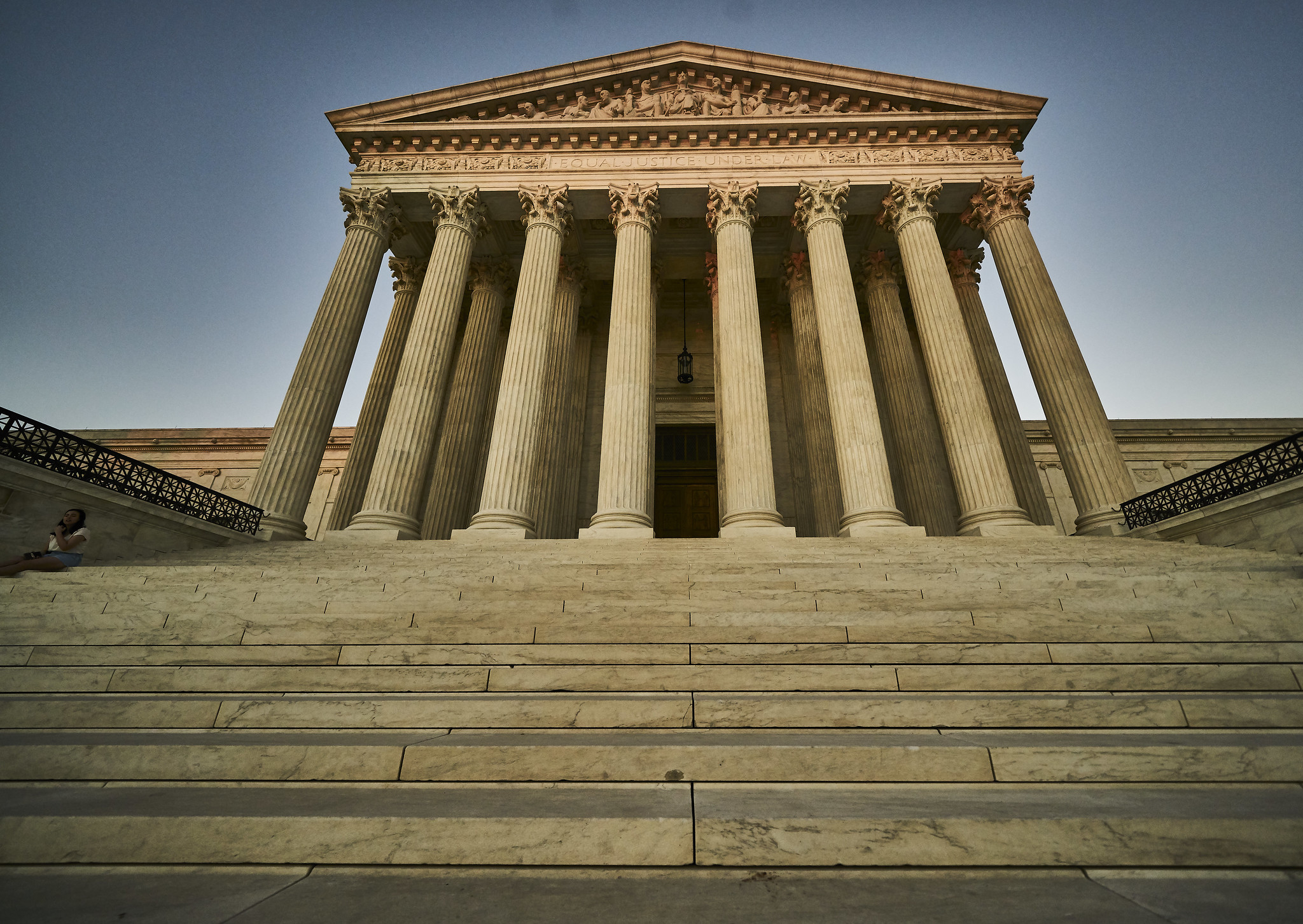
Photo by Sean O’Connor via Flickr

L.B. Sullivan, a local official, sued the Times, arguing he was defamed by the encompassing statement aimed at ostensibly all government officials in the state. The Supreme Court ruled that in order to win a defamation suit, public officials had to prove “actual malice” was in play. That is, the Court said, that the press acted with “knowledge of falsity” or “reckless disregard for the truth.” 

The actual malice standard became the bellwether for media outlets over the next 50 years, particularly after subsequent rulings expanded the test beyond public officials, applying it to all “public figures” and in some circumstances even so-called “limited public figures.”

But now, with the Court firmly in the hands of its more conservative members, the tide may be turning on Sullivan. At least two members of the nine-member body have questioned whether the actual malice standard as applied to mere public figures (as opposed to public officials) should stand.

Justice Clarence Thomas, long known for lone-wolf dissents that call for sweeping changes to established precedents, has several times questioned the application of the actual malice standard to mere public figures – those non-governmental actors who may just happen to be household names for various reasons. In 2019, he specifically called for reconsidering Sullivan and the public figure standard in a case involving one of Bill Cosby’s accusers, who alleged that Cosby’s lawyers defamed her by releasing misleading information about her background via the internet. 

In McKee vs. Cosby, the Court found that a lower court’s ruling finding Katherine Mae McKee to be a limited purpose public figure would stand. Thomas wrote a concurrence with the judgment based on existing law, but used it to expand on his argument that the actual malice standard was nearly impossible for plaintiffs to meet, even as some were genuinely harmed by the spread of misinformation about them. He called for revisiting the application of actual malice to public figures. Still, few media law scholars took notice because Thomas seemed to be alone in his desire to tinker with Sullivan

Then in July of this year, Justice Neil M. Gorsuch jumped on Thomas’ bandwagon. In dissenting from the Court’s denial of certiorari in Berisha v. Lawson, Gorsuch wrote that the internet had changed the defamation landscape since Sullivan and its progeny were decided in the last century.  

“Rules intended to insure a robust debate over actions taken by high public officials carrying out the public’s business increasingly seem to leave even ordinary Americans without recourse for grievous defamation,” wrote Gorsuch. “Thanks to revolutions in technology, today virtually anyone in this country can publish virtually anything for immediate consumption virtually anywhere in the world.”

The debate is making its way into legal academia as well. Gorsuch’s dissent relied heavily on a law review article by David A. Logan, a law professor at Roger Williams University in Rhode Island. The article’s opening line: “Our democracy is in trouble, awash in an unprecedented number of lies.”  

In an era where most people get their news on the internet, and pundits and politicians love to raise the specter of “fake news,” many ordinary people seem to have a hard time distinguishing high-standard, reported journalism from the ramblings of random conspiracy theorists. As a result, people made famous even for the proverbial fifteen minutes may find themselves in the eye of a storm of mischaracterizations that ruins their reputations, livelihoods and relationships. At times, merely attempting to defend themselves online can cause courts to find the aggrieved has “stepped into the controversy” in such a way as to become a limited public figure, severely limiting their legal recourse. 

Whether the Supreme Court decides in the coming years to modify the Sullivan line of cases in an attempt to address these issues remains to be seen. But the immense harm ill-conceived tinkering could do to current First Amendment protections is an issue that will undoubtedly be on the minds of media scholars and journalists for the foreseeable future. 

Meg Tebo is an attorney, writer and editor who taught media law in Chicago.

Kay Drey: Whistleblower for an Atomic Age in St. Louis

Commentary

Kay Drey is an activist, environmentalist, a whistleblower and an Earth Mother. Who could argue that there is anyone more passionate than Kay Drey about protecting humanity from the dangers of the atomic age?

Humanity means mothers, fathers, children – it’s not just a word. She is the premier whistleblower because she has educated so many journalists to blow the whistle, to make some noise, to sound the alarm in defense of man, woman and child.

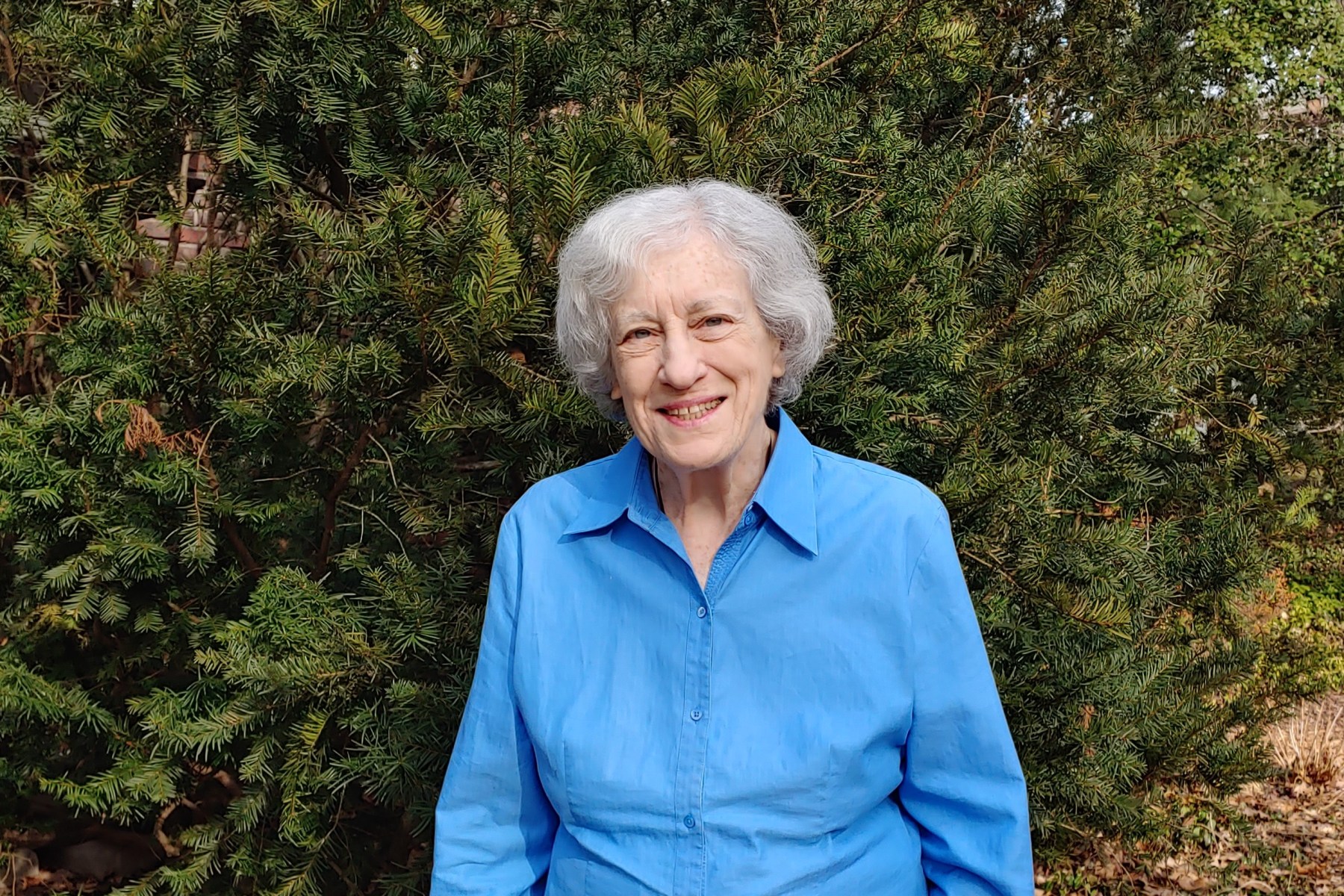
Kay Drey

She is the Paul Revere of the Nuclear Age: 

• “Mobile Chernobyls are coming!” she warned us.

•  “Plutonium is coming!” she warned us.

• “Polonium is coming! Have you heard of it?” she asked us.

In recognition of those midnight rides to warn about environmental dangers, the Gateway Journalism Review is giving Drey its Whistleblower award at its First Amendment Celebration later this month.

Who else but Kay Drey would have tritium3 as her email address? It is impossible to message her without wondering if this radioactive element might be contaminating the neighborhood.

Most St. Louis journalists who have covered nuclear issues in any depth have found their way to Kay Drey’s basement. Full of file cabinets packed with items like 200-page Department of Energy documents, her basement is an extensive library on nuclear issues.

Two legendary Post-Dispatch investigative reporters, Lou Rose and Roy Malone, found their way to her basement when nuclear power plants were first being proposed for Missouri.

When writers with the Society of Environmental Journalists wanted to find out about yellow cake, and why St. Louis is called “atomic city” for its role in the making of the first atomic bombs, they found their way to Kay Drey’s basement.

Whether it was a story on the careless disposal of byproducts in the manufacture of atomic bombs, or a plan for nuclear power plants at Callaway near Fulton, Missouri, Kay Drey was in that basement helping journalists find facts. And she would talk with them.

Kay Drey would say: “It’s been more than a half century since the beginning of the atomic age, and we still don’t know what to do with the first cupful of the dangerous radioactive waste that has resulted.”

Kay Drey doesn’t just stay in the basement, though. With her knowledge of the dangers of the nuclear age, she might be forgiven for hunkering down in the basement. And never mind the radiation danger – how about a fallout shelter for protection from the profiteers, policy makers and public relations men of the atomic age?

No, Kay Drey has not stayed in the basement. She has come to the aid of her countrymen when they have organized and protested neglect of dangerous debris buried in lakes and streambeds. She has demonstrated with mothers opposed to train cars of radioactive waste barreling through their backyards.

There is, in fact, much more to be done in Kay Drey’s basement, but she has felt compelled to take on other obligations. She has served on professional panels and at university seminars on the intricacies of nuclear technology and radioactive containment.

She was not afraid or intimidated to debate the engineers and the project managers of the Weldon Spring Remedial Action Project for burial of atomic waste in the St. Louis region.

Despite her best efforts, a tomb for some of the worst radioactive waste from the atomic age was built on a 45-acre site at Weldon Spring. The highest point in St. Charles County now is not a bucolic, vine-covered bluff overlooking the Missouri River. It’s a boulder-covered mound of atomic debris. It’s a pyramid completed in 2001 containing 1.5 million cubic yards of hazardous waste.

Kay Drey told the project officials that they had no business siting an atomic waste repository in a significant population area – literally just a few thousand feet from Francis Howell High School. It belonged at sites sanctioned to isolate the wastes from people and the environment.

Under Kay Drey’s questioning, officials conceded that the burial site might be effective for 1,000 years or less. Not a good fit for deadly materials with a half-life that could exceed hundreds of thousands of years.

When the Nuclear Regulatory Commission and the Department of Energy decided to ship the radioactive debris from the 1979 Three Mile Island (TMI) accident through Pittsburgh, Indianapolis, St. Louis and Kansas City, Kay Drey once again sounded the alarm. The shipments especially upset mothers in St. Louis who saw the rail casks of radioactive materials coming by their schools and backyards.

Kay Drey helped form Citizens Against Radioactive Transport (CART), which successfully got the attention of city and county officials, as well as the St. Louis congressional delegation, to demand more safety measures for the program to transport debris from TMI to Idaho.

St. Louis’s most informed nuclear activist warned that the TMI program was just a dry run for a plan to ship thousands of spent nuclear plant fuel rods for decades from the East Coast, through the Midwest, to Yucca Mountain, Nevada. The U.S. Congress eventually nixed the Yucca Mountain plan. 

“Spent fuel rods should not be coming through populated cities,” Drey told a reporter with the Webster-Kirkwood Times. “Such shipments can be mobile Chernobyls. They must be isolated, under constant surveillance. Irradiated fuel rods are always vulnerable to acts of terrorism, fire and accidents.”

When concerns over global warming and climate change began to make headlines in the 1990s, the nuclear industry began talking about the need for new, safer, greener energy generation with nuclear power plants. Kay Drey blew the whistle to remind us of accidents like TMI, Chernobyl and Fukushima.

When Ameren-UE began talking about a second nuclear plant at Callaway, or a series of small, modular reactors for electric energy, Kay Drey blew the whistle. She insisted that nuclear power reactors are neither safe, nor economical for ratepayers and taxpayers.

“My number-one reason for disliking nuclear power is – you can’t have it without exposing workers to the radiation,” she told St. Louis Magazine. “I don’t think they level with the workers about that. My second reason is routine releases: Every nuclear power plant, even without accidental releases, sends nuclear waste into the air and water – in our case, from Callaway into the river. And I don’t think people know that.

“Then there’s the possibility of huge accidents. Terrorism – it’s a dream for a terrorist,” Drey added. In one reactor vessel the size of Callaway, there are 16 billion curies – a long-lived radioactivity equivalent to 1,000 Hiroshima bombs – and there’s even more in the spent fuel pool. And there is simply no place for the waste.”

In recent years, Kay Drey has devoted much of her energy to the cause of Just Moms St. Louis. This is a group of North St. Louis County citizens who have suffered ill effects from Mallinckrodt Chemical’s atomic waste being dumped in their Coldwater Creek, in their West Lake Landfill, in sites near their Lambert International Airport.

No one knows the importance of the presence of Kay Drey in an atomic battle more than Dawn Chapman and Karen Nickel. Kay Drey helped educate Just Moms St. Louis about the radioactive materials and their correlation to cancers, instances of leukemia, and immune-deficiency diseases in North County.

What’s more, Kay Drey helped them communicate with their county, state and national officials about the overdue cleanup of contaminated landfills that have been plagued by underground fires. Eventually, federal officials took notice and drew up a remediation plan.

“Kay Drey has been our Erin Brockovich and so much more,” said Chapman. “She has been our Lois Gibbs. What Lois Gibbs was to the cleanup of the toxic disaster of Love Canal, that’s what Kay has been for us with the West Lake disaster.

“She was there for us when we needed to learn more about what was happening to us where we live,” added Chapman. “She was there for us for organizing, demonstrating, and expanding awareness of the terrible legacy in St. Louis of the atomic age.”     

The word exceptional has lost much of its meaning in a time of faltering “exceptional leaders” and the broken promise of our “American Exceptionalism.” However, there is real meaning when just ordinary, concerned mothers like Dawn Chapman and Karen Nickel call Kay Drey a truly exceptional person – an exceptional environmentalist. 

Consider a partial list of Kay Drey’s environmental accomplishments:

• She led a campaign to stop Callaway from building a second reactor. 

• She got the DOE to admit to the radioactive waste at Lambert Airport. 

• She won a 20-year battle to get airport contaminants removed. 

• She identified contaminated quarry water at Weldon Spring.

• She made sure a water treatment plant was built near Weldon Spring so “hot” radioactive waste would not be dumped into the Missouri River.

• She played a pivotal role to get the EPA to acknowledge responsibility for at least a partial cleanup of radioactive waste at WestLake Landfill.

• She has served on the Board of Great Rivers Environmental Law Center.

• She has served as president of Beyond Nuclear, a national nonprofit on nuclear issues.

• She and her late husband, Leo A. Drey, were founders of the Missouri Coalition for the Environment in 1969 and she remains active with MCE. 

• She and Leo Drey amassed more than 153,000 acres in the Missouri Ozarks and donated most of the property to the L-A-D Foundation for protection and recreation.

Let’s be honest. After all, Kay Drey has been honest for nine decades of life. The days are numbered. We are not going to have Kay Drey to blow the whistle for our own safety’s sake forever. And who among us could possibly take her place?

Don Corrigan is former editor of the Webster-Kirkwood Times and emeritus professor at Webster College. He has written stories and books about the environment and drew on his decades of reporting on Kay Drey to write this appreciation.

Working moms push for flexibility to remain as newsrooms open again

Like many journalists in the early months of the pandemic, Susie An was mostly working from home. Draped in a blanket, her radio equipment propped on a big box of diapers, the education reporter at WBEZ in Chicago voiced her news stories and features from a closet. With schools and daycares closed, her days were hectic working from home with her sons, ages 7 and 3. “My children are quite loud and, shall we say, creative with their play,” she said. “There were times when I was on an interview and my husband was in a meeting. That’s when our children broke a lot of things, made big messes or got hurt.”

Photos courtesy of Susie An
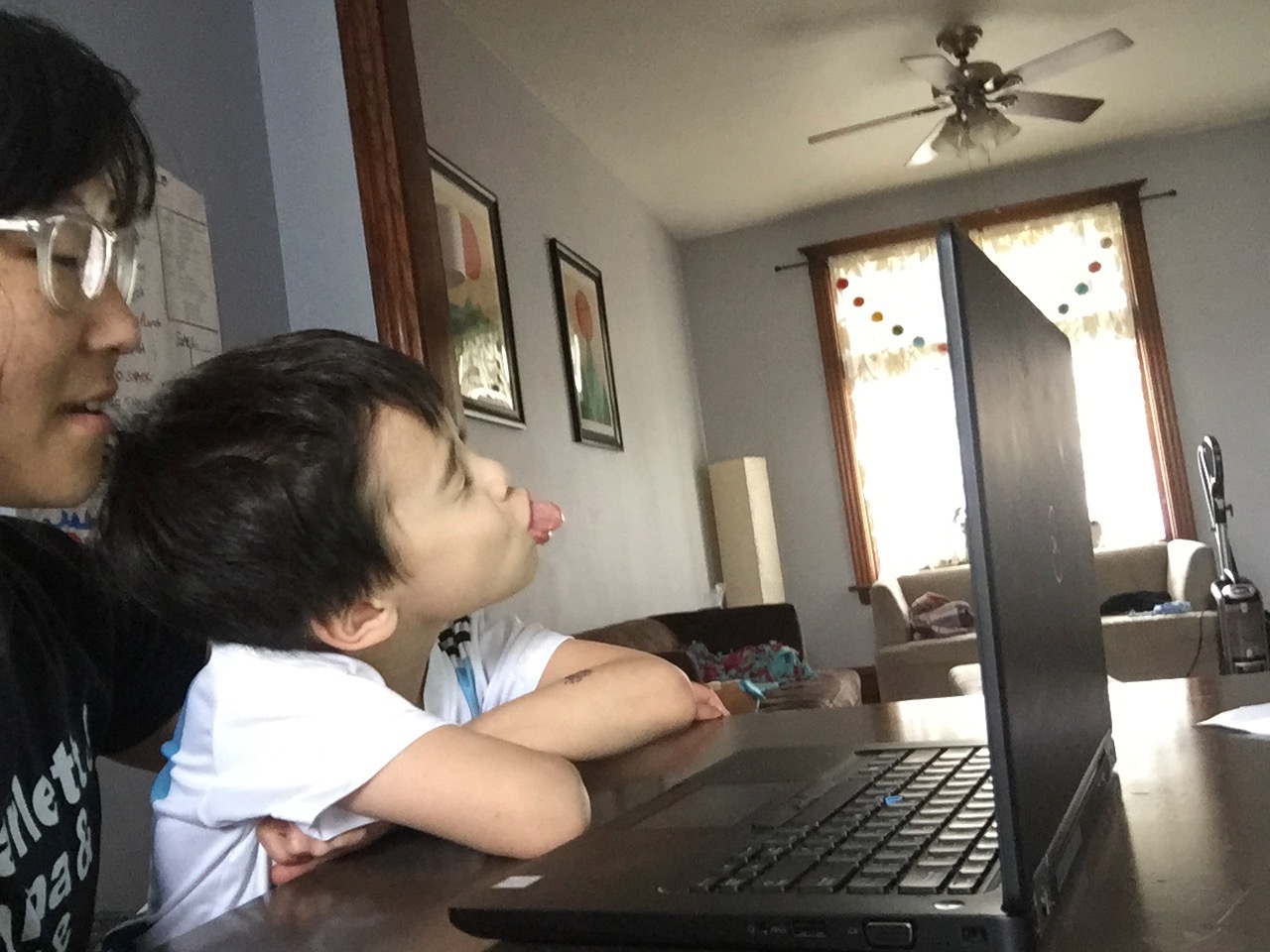
WBEZ reporter Susie An works from home with her two young sons during the pandemic.

In Atlanta, Cynthia DuBose, the managing editor for audience engagement at McClatchy, had to jump from her own work video calls to helping her daughters log into their virtual classrooms for school. “I remember in those first weeks, waking early, working, getting the girls up and busy, working until 6, cooking dinner, spending family time, having bedtime and working again from 8 until I fell asleep,” said DuBose, whose daughters are 6 and 9.

Meanwhile, Bethany Erickson, the digital editor for People Newspapers in Dallas, found herself working later and later to account for the breaks she took during the workday to help her 10-year-old son with his fourth grade math, which, she noted, is nothing like the math she did in fourth grade. 

“I’m always just at that edge of kind of tired and actually exhausted,” Erickson said.

For many working moms in journalism, the past year of juggling job responsibilities and parenting–often in the same shared space, was one of their toughest, even if it also produced unexpected gifts like reclaiming time from long commutes, earlier dinner times with their families and just being around more.

Erickson’s son, who is autistic, started pitching stories after watching his mom work from home. “We worked in the same room a lot, and he got to see what steps go into writing a news story,” she said. He started asking questions and has even written a story and two op-eds for our papers this year. I don’t know that he would have been as interested in improving his writing if we hadn’t had this time together.”

Women make up nearly half of the total workforce in media and entertainment, although most of them are concentrated in entry-level positions, according to a 2020 report by McKinsey & Company, a global management consulting firm. The pandemic disproportionately affected them, especially if they were also raising children or doing it as a single parent. After all, if you don’t have childcare, it’s hard to drop everything to cover breaking news, and the news didn’t let up last year.

“I felt caught between doing a good job and being a good parent, but failing most days at both,” said An, who also fills in as an news anchor and talk show host at the public radio station. “I do credit my editor with having understanding of the situation and trying not to assign me quick turn news items in the mornings. That was helpful.”

Working dads didn’t escape the additional stresses of the pandemic. More worked from home and either shared or shouldered childcare or household responsibilities during the peak of the stay-at-home orders when nobody, except the most essential of essential workers, were going anywhere. There was a significant shift in parenting roles and involvement for many dads, including journalists. But the fact is that gender inequality remains, both in the workplace and in the home, and working mothers are more likely to scale back their careers or reduce their hours to care for children even outside of a pandemic. One study last year found that the gender inequity worsened, particularly for working mothers of school-age or younger children.

Across the globe, women worried about managing additional responsibilities while at home, a lack of childcare and the potential threat of losing income or jobs.  And it wasn’t just the pandemic, with its historic lockdowns and stay-at-home orders. It was the summer of racial reckoning and the protests that swept the world after George Floyd was murdered by a Minnesota police officer. It was the US presidential election. 

“I shared with a friend the other day that I am still in shock about 2020,” DuBose said. “It’s almost like I’m in a twilight zone. I lost family and friends, watched in disbelief as part of my beloved Atlanta burned, watched again in disbelief as a man was killed about 30 miles from our home at a Wendy’s parking lot and lived through my Georgia becoming ground zero for an election like none other. And that’s just news.”

Mira Lowe, president of the nonprofit Journalism and Women’s Symposium, said women journalists on the frontlines of covering the pandemic and the social unrest of last summer had to contend with keeping themselves safe while in the field and their loved ones safe when returning home. “Self-care was also a stretch for women juggling the demands of the job and family while working remotely,” she said. “Many of us worked more hours while at home.”

She said one of the biggest challenges for women in journalism, particularly freelancers and entrepreneurs, was loss of income. “For many, writing assignments evaporated and contracts were put on hold,” said Lowe, who is also director of the Innovation News Center at the University of Florida.  “Public speaking engagements were cancelled. Book promotions ceased. In some cases, spouses and partners also lost jobs.”

S. Mitra Kalita, a veteran media executive and columnist for Fortune magazine, said the fact that decent health coverage remains anchored to full-time work is a massive roadblock to balance, innovation and flexibility for working moms. “You might say you can turn to Obamacare or the exchange,” she said. “Except that the process of researching, switching and advocating is a whole ‘nother job.”

Women also are often caring for aging parents, not just their children. When the pandemic began, Kallita moved between her parents’ place in New Jersey and her family’s home in Queens. “My father had a second stroke right before lockdown, and I was terrified of him being in a hospital or rehab. So we brought him home,” said Kalita, whose daughters are 9 and 16.

“My parents are in the process of selling their house right now,” she said. “Navigating the property tax breaks for seniors, necessary smoke-alarm inspection before closing and even just asking why their latest prescriptions did not qualify for reimbursement is a massive part of my life and time. I don’t need help from employers with this though. Rather, I think we need to collectively fight to make processes simpler, equitable and accessible. Think of how much invisible labor women like us pour into this.”

With the Delta variant of COVID-19 circulating and children under 12 still ineligible for the vaccine, it’s hard to talk about post-pandemic life in the present. It may yet be months off. But one thing is almost certain. “The pandemic has shown us we can work remotely,” Lowe said. “And so, I think the remote workforce is here to stay. Companies should find ways to embrace it and adapt benefits to support it. Consider flex schedules and policies that allow for a better integration of work and life responsibilities. Continue to incorporate virtual meetings into workflows so that everyone can be included. Focus on self-care strategies, and providing mental health and wellness resources. Invest in virtual and onsite skills-based training to help employees keep their skills sharp. Build online communities or interest groups, i.e. for working mothers, to fuel connection and support.”

Kalita, who left her job as a senior vice president at CNN Digital at the end of 2020 to launch her own media business, said the media industry needs a shift in work cultures toward moms and caregivers. “We will often say someone didn’t want to apply for the bigger job or stay with an organization because of their kids,” said Kalita, who co-founded Epicenter-NYC, a community journalism movement, and URL Media, a network of Black and Brown news outlets. “Instead, we need to be asking how we – as organizations – can better support them to help them ascend or be retained. It puts the commitment to keeping talent on work culture versus trying to shoehorn old methods into new realities.”

DuBose, who worked from home before the pandemic, said she definitely learned that she needs to prioritize self-care, which includes delegating, blocking her calendar and taking a real lunch. “Without it, I’m not sure how I would have survived.”

She also said what 2020 did for race conversations cannot be downplayed. “The events allow me to now have very real conversations with some of my white friends (allies) that I probably would not have before. I know that some events really divided our country but I also believe that for those of us who see the value in listening to gain understanding, 2020 was a game changer.”

Both An, in Illinois, and Erickson, in Texas, plan to continue working remotely part of the time this fall when their children are back in school or daycare. It will be easier, of course, when they are alone at home working.

“Both of my children have been receiving virtual therapy, but will likely do in-person visits starting in the near future,” An said. “I hope there will be good balance and understanding as we transition into that. Also, I hope schools will keep doing the virtual teacher parent conferences. Pre-pandemic, that was nearly 2 hours out of my day for a 15 minute meeting.”

Erickson also was able to negotiate a hybrid schedule starting in August, where she will be in the office three- to four- days a week and working from home one day a week. “My husband was able to negotiate the same, which means we’ll only need to nail down after school care for two-three days a week,” she said.

Kristen Graham, who covers Philadelphia schools for the Inquirer, said she can’t imagine going back to the newsroom full-time again, certainly not eight hours a day, five days a week like she used to. (The Inquirer newsroom is still closed, but employees may return as early as September.)

“Selfishly, I’d love to go back,” she said. “I liked having eight hours where I was just working. But I can’t imagine going back just because I feel that I need more flexibility in my day. I was trying to fit in too much in non-work hours.”

Graham, whose sons are 8 and 5, plans to work from home several days a week. “I’ve found that I’m surprisingly productive when I have my kid at tennis practice, and I’m writing in the car.”

Her editors are both working parents and have not pressured her about returning to the newsroom, she said. “Being a working parent is hard,” Graham said. “Having some flexibility makes it easier.”

Media personalities look back

For its 50th anniversary, Gateway Journalism Review asked eight journalists from print, broadcast and online media to share memories of their careers and the stories that they remember most vividly. GJR also asked them where they get their news, where they think the news business is headed, and which reporters and editors from past decades have had the most influence on them and St. Louis journalism as a whole.

Ellen Futterman

Editor, St. Louis Jewish Light; former reporter and editor at the St. Louis PostDispatch

First job in journalism:

General assignment reporter at the Los Angeles Herald-Examiner in the late 1970s: “There was no getting anywhere in L.A. in a reasonable time because of the traffic. I remember the first time I ever saw a dead body; it was in a plane crash. I got to the crash site before the FAA did. The body was still strapped into the seat. That was crazy.”

Memorable stories:

“Not long after I got to the Post-Dispatch was when the AIDS epidemic started coming to the forefront. I knew this was going to be a big, important story, so I kind of jockeyed to get on that beat. This was in the middle or late 1980s. Nothing had really been done at the Post on the gay community before then. I wrote a three-part story about what the epidemic looked like. It was striking how many people wouldn’t allow their names to be used. It was a difficult story to do; it was also hard to get it into the paper. But I had some great editors, and we got it in.

“Another was when we had an interview scheduled with Bob Dylan. I was the entertainment editor; our critic Harper Barnes was supposed to interview him on a Friday. On Tuesday the phone rang. And it was Bob Dylan. And you don’t say to Bob Dylan ‘sorry but this interview is scheduled for Friday, can you call back then.’ So I did it. I love music. (Reporter) Paul Hampel was passing me pieces of paper with questions written on them. The funny thing was, other journalists were calling me after the story came out, asking me about Bob Dylan, because he did so few interviews.”

Influential people:

“Jim Millstone (Post editor) was extremely helpful, and a good voice of reason. Sally Bixby Defty was one of the first women on the news desk. She is a role model. I have a great deal of respect for (former Post reporter) Martha Shirk; she carved out a great path covering women and children. John Brophy (Post newsroom manager) was a very even-tempered, kind person. I learned a lot from him as an editor myself.”

Where I get my news:

“The New York Times, Washington Post, Politico, and the ‘Letters From An American’ newsletter that Heather Cox Richardson (U.S. history professor) sends out every night; she researches the history behind the news. I admit I get some of my news from People magazine, too.”

Where the news business is headed:

“The pandemic has shown how much work we can do from our homes. The future is digital. And it will be curated. For example: You’ll get your sports news from one source, world news from a different source, and Jewish news from another source. I see more publications going to a not-for-profit model.”

Illustration by Steve Edwards

Carol Daniel

News Anchor, KMOX Radio

First job in journalism:

“A small country music station in Jefferson City. I did the weekends; there was a top hits show and I would break in and do the weather and a couple of news headlines. I had to do sports, too. I would call my mother – she’s an avid sports fan – and she would tell me how to pronounce the players’ names.”

Most memorable stories:

“Mel Carnahan’s plane crash (in 2000). I had interviewed Carnahan on several occasions. It was a surreal experience to have a man of that stature die in such a way. He was a generous interviewee. It was as if he enjoyed just talking to me. That made it more of a conversation than an interview. “And Ferguson. From a news standpoint, it’s one thing that your town’s on fire. There’s such pain and anger and anguish. But as the mother and wife of Black men, I reacted to it in that way as well, understanding what I knew about the polarizing points of view in our society about race. That’s what was so impactful for me. “At the time, our pastor took part in a prayer vigil at the Old Courthouse. We took our youngest son with us – he was 14 then. He was so upset. Later on, I realized he wasn’t mad; he was just afraid. He said: ‘I don’t know why you brought me out here, when a (Black) boy who looks like me was just killed.’ I could only empathize with that. For me, news has always been not only about information, but information that can change people’s lives. Ferguson was personal.”

Influential people:

“Karen Foss was influential: a trusted voice and no agenda, which I think is what has always been needed. And Sharon Stevens (longtime education reporter at KSDK and KTVI). Reporters covering education – that is so important to have.”

Where I get my news:

“I watch network news, mostly CBS. I read the Business Journal, some of the articles in the Post, and the Washington Post. Also a couple of print publications focused on the Black community. Some Vox. And I work every day with [stories from] the Associated Press.”

Where the news business is headed:

“The trust factor has been so deeply impacted; we have to address that. For journalists today who are out there talking about ‘fake news’: Can we do some soul searching of our own? Can we look back at the example of the ‘50s, ‘60s and ’70s, and the way journalism specifically portrayed the Black community then? “As journalists, if you don’t take the job seriously, this is going to be a tough battle for you. But even if you do take the job seriously, it’s still tough. Building trust and reclaiming it – this is a tough battle. But it’s a battle worth fighting.”

Ray Hartmann

Founder of the Riverfront Times and its current columnist; former CEO/owner of St. Louis Magazine; panelist on the Nine Network’s Donnybrook; radio host for Big 550 KTRS-AM

First job in journalism:

Copy boy for St. Louis Globe-Democrat Editorial Page Editor Martin Duggan in 1968

Memorable stories:

“One of the defining stories for the RFT was during the mid to late ‘80s, when the powers that be in Civic Progress were taking a big chunk of the local tourism budget and just giving it to the VP Fair. One year it was $650,000; they were just giving it to them, with no bid process. They were doing it to give some guy a job; it was an absolute raid on the treasury. “Another story the RFT did was about Joe Pulitzer (Joseph Pulitzer Jr., chairman of Pulitzer Publishing Co.) and a unique arrangement he had with the Saint Louis Art Museum. He would donate millions of dollars of artwork to the museum, and then it was ‘loaned’ back to him so he could use it at his home. It was a singular arrangement. It was not the most important story we did, but it was one that we were known for.”

Most influential people:

“Bill McClellan Media personalities look back by Jack Grone Daniel Hartmann Futterman 9 has been one of the most consistent and best writers anywhere. Certainly Bob Hyland (former KMOX-AM general manager) was impactful. And Duncan Bauman (GlobeDemocrat publisher from 1967 until 1984); I think one of the first stories we did at the RFT was about how Duncan played his aces. And my old friend Martin Duggan: He was really the driving force behind Donnybrook.”

Where I get my news:

“I’m constantly devouring material online; I write articles for Raw Story and I throw in a little bit of work with search engines. It’s always amazed me how little publications use their own morgues and story files.”

Where the news business is headed:

“Print media are really endangered. I would be surprised if the Post lasts too much longer in its printed format. The Post has done as good a job as it can with STLtoday and trying to save its business.”

Sarah Fenske

Host of “St. Louis on the Air” on St. Louis Public Radio; former editor in chief of the Riverfront Times

First job in journalism:

At the Lorain (Ohio) Morning Journal: “I covered the suburbs at first, then switched to city hall.”

Most memorable stories:

“I was the editor on a story that Doyle Murphy did at the RFT called “Seamstress for the Klan.” It was about this woman who murdered the grand wizard of the Ku Klux Klan (in Leadwood, Mo. in 2017). She had been sewing the robes for the people in the KKK. It was this crazy, kind of gothic story about Missouri. “Another thing: Back when I was managing editor of the RFT I did some stories (in 2011) about our lieutenant governor (Peter Kinder), who had gone to some ‘pantsless parties’ at this bar. It started with a funny blog post; from there, I started getting all these interesting tips. It ended up being six or seven blog posts. It wasn’t intended to be a serious story, but it turned into one.”

Influential people:

Tom Finkel, the editor of the RFT who brought Fenske to St. Louis. Also Bill McClellan: “The man is a genius. The way he sees the world, and the affection he has for it, is very much a St. Louis trait. He approaches the city with sympathy; with kindness. He’s a perfect St. Louis journalism avatar.”

Where I get my news:

“I have to give credit to the Post-Dispatch. They still set the agenda in this town; they do good work. I also think St. Louis Public Radio is increasingly doing a lot of stuff that you can’t ignore. The Business Journal also does some great work.”

Where the news business is headed:

“It’s a tough time for smaller and midsized cities. St. Louis is still doing a lot better than other comparably-sized places. We still have a good city magazine; we still have an alt-weekly. St. Louis journalism is hanging on in ways that are very impressive.”

Ellen Sherberg

Former editor and publisher of the St. Louis Business Journal; now a consultant for American City Business Journals

First jobs in journalism:

Copy desk intern at the Providence Bulletin; later city desk secretary at the Globe-Democrat

Most memorable stories:

“Probably the crash of Ozark Airlines Flight 809 right near UMSL (July 1973). An airplane crash takes precedence over everything. I was at the Globe at the time. To be fair, I didn’t report the story myself; I just carried the batteries for the reporters’ walkietalkies. The destruction at the crash scene – it was overwhelming. “Also, the first profile we did on Sam Goldstein, the chairman of Apex Oil, right at the beginning of the Business Journal. We were doing our list of the biggest private companies in St. Louis. Apex was at the top, and nobody knew anything about them, so we wrote a long profile. Mark Vittert (Business Journal co-founder) came up with the headline: ‘Sam Who?’”

Influential people:

William Woo (former editor at the Post); Martin Duggan at the Globe “although I didn’t agree with him. They were both very clear voices, and important voices in print journalism.” Sally Bixby Defty at the Post: “She taught me about second chances. She was a real role model for women in journalism.” Mark Vittert: “His vision for covering business news impacted news coverage in general.” Al Fleishman (a founder of Fleishman Hillard PR agency): “He taught me about people and power as well as people in power.”

Where I get my news:

“For local news about St. Louis, I read the Post online, and the Business Journal online. And then the Times and the WSJ. And Axios and Politico. And television, too.”

Where the news business is headed:

“It’s going to be hyper-local. A lot of the big, national coverage will be industry-segmented. I think more news outlets will charge for subscriptions what they should be charging, and people will then make choices based on what’s important to them.”

Sylvester Brown

Former Post-Dispatch columnist; former publisher of Take Five magazine; author and not-forprofit executive

First job in journalism:

“At a local black-owned publication called Tryst that was distributed at restaurants and bars. I was at community college studying art and graphic design. It was like an unofficial internship; I started writing stories and interviews.”

Most memorable story:

“In 2003 there was a group of people going to Powell Symphony Hall in a car when another car plowed into it, killing two of them. The driver of the second car went through the windshield; he woke up after the accident and ran off. He was wanted. I had an activist lawyer friend, Justin Meehan, who called me two days later and said: ‘I’ve got the guy in my office and he wants to talk to you.’ When I got there he was wailing. He wanted to tell his story before he turned himself in. “I told his story verbatim in the paper. They held the presses for it; it was my first frontpage story. I covered the trial a year later. The family members of the victims spoke about forgiveness. [Prosecutors recommended a 14-year sentence, but the judge ended up giving the defendant 120 days in jail plus five years’ probation, according to Brown’s story at the time.] “The judge said the victims’ families had saved his life. It was the most beautiful story of redemption and humanity that I had ever written. And it changed the outcome of that trial.”

Influential people:

“When I started Take Five, I wanted to emulate the Riverfront Times. I thought Ray Hartmann was one of the boldest journalists in St. Louis. His voice and his take on things were very influential on me.”

Where I get my news:

“I’m a Facebook Fenske Brown Sherberg Continued on next page I think more news outlets will charge for subscriptions what they should be charging, and people will then make choices based on what’s important to them.” — Ellen Sherberg “ 10 junkie. I’ve also got a subscription to the PostDispatch, and The New York Times and the Washington Post.”

Where the news business is headed:

“Now anybody can go out there with a cell phone or camera and report the news. There’s this site called Real STL News; they remind me of myself back in the ’80s. They’re showing up at crime scenes; they’re talking to people in the street. But the internet is a double-edged sword. Everybody’s ideas are validated, no matter how wacky and crazy they are. We can use the media for good, but there’s always the threat that it can be used for bad.”

Jeannette Cooperman

Prolific feature writer, former staffer at the Riverfront Times and St. Louis Magazine, and staff writer at The Common Reader at Washington University

First job in journalism:

Managing editor of an earlier incarnation of St. Louis Magazine in the early 1990s. “It was fun, chaotic and disorganized.”

Most memorable stories:

“Going back and researching the history that put Ferguson into context (for the magazine). That really opened my eyes and helped me gain perspective. “Another one was writing about the River Des Peres for the Riverfront Times (in 2000). It was kind of a depressing story. I was going to community meetings; architects had ideas to clean it up and develop it and turn it into a real center for St. Louis. But you could see people’s caution and fear about trying to do something; people seemed to prefer an open ditch. It was maddening trying to cover that. It has a history of environmental toxins, but nothing ever got done. I think they should clean it up and turn it into something that’s an asset.”

Influential people:

Sarah Fenske: “She brought the RFT back to what it used to be; now she’s doing an amazing job in her show on St. Louis Public Radio.” Bill McClellan: “He gives people something to hang onto that feels human and accessible.”

Where I get my news:

Local news is hugely important. I get a lot of my news through online newsletters; I love the Atlantic; I also read The New Yorker and The New York Times. We watch the local news because it’s something to talk about in the evening. I’ll read the Post, but not with the same kind of excitement I did years and years ago. St. Louis Public Radio is probably my favorite source of local news. I feel like they have the chops that used to be the purview only of the daily newspapers.”

Where the news business is headed:

“Online, for sure. I do think it’s going to be a lot more newsletterish; a lot more niche. This is to our detriment; every city needs a local version of the NYT, but we haven’t figured out a way to pay for that investigative reporting. I would love to see more public funding.”

Karen Foss

Former anchor at KSDK-TV NewsChannel 5; now living in Santa Fe, New Mexico.

First job in journalism: “A fill-in secretary at the CBS station in Kansas City in the mid-‘70s. I couldn’t type, but my communications professor told me I should apply for the job. So I put on a skirt and went downtown. I worked my way up through the station and ended up being an anchor there – for a general manager who had said he would never have a woman anchoring the news.”

Most memorable story:

“The flood of 1993. It was a local story that made international headlines. It was both professionally and personally a big story. I had a little cottage on the Mississippi between Elsah and Grafton; I remember helping sandbag in Elsah. The most heartbreaking image was when our reporter Jean Jackson was standing by when this enormous farmhouse – two stories plus an attic – was swept away by the water (during a levee breach in Monroe County, Illinois).”

Influential people:

Bill Bolster (former KSDK general manager): “He brought a fresh and much more aggressive tone to the station, but not in a negative way. He really believed in promoting what we were doing, and putting the money behind it.”

Where I get my news:

“We have a remarkably good local newspaper, the Sante Fe New Mexican. It’s a family-owned paper. The owner sold it to Gannett, but he became so frustrated with how they were running the paper that he bought it back. And The New York Times and the Washington Post online.”

Where the news business is headed:

“The most important thing lies with consumers; for them there needs to be media intelligence. We’re bombarded with so much information, and so much opinion that is labeled as news. For many people it’s hard to distinguish where the information is coming from, and whether it’s from a reliable source.”

GJR Publisher, William H. Freivogel, asked three St. Louis journalists to look back and ahead.

Don Marsh, Don Corrigan, and Linda Lockhard (left to right)

Don Marsh

TV and Radio reporter and longtime host of St. Louis on the Air

We’ve come a long way since my early television days in the sixties when local television news crews of three or four would haul 600 pounds of camera gear to cover stories. Then came video tape and mini cams, satellite technology, and now TV reporters shooting their stories themselves with cameras they can hold in their hands, and edit in the field. Not to mention Zoom interviews in these days of pandemic.

Technology has changed everything. The future will certainly include further technological advances resulting in more blogs, podcasts, and news distributed by, and consumed through, social media. Everything we need to know will continue to be at our immediate disposal on devices we hold in our hands, wear on our wrist or perhaps from chips embedded in our skin, dispensed by a wide variety of sources…including everyman journalists…with myriad motives. They will be capable of reaching us with fewer editorial firewalls and minimum fact checking while traditional print media resources drift into the shadows. Can the Post Dispatch become what it once was again? Can traditional television networks remain relevant? Can radio? Cooperman Foss Marsh Everybody’s ideas are validated, no matter how wacky and crazy they are. We can use the media for good, but there’s always the threat that it can be used for bad.” — Sylvester Brown “ The most important thing lies with consumers; for them there needs to be media intelligence.” — Karen Foss “ 11.

Will they be like today’s major cable networks presenting opinion as news and play to audiences who, like Lemmings, flock only to politically comfortable sources leaving them unexposed to opposing points of view. That’s seenn by many as a major source of today’s political and social polarization.

While it’s impossible to predict the future of journalism and how it will be produced and consumed, it is not difficult to imagine much of it as a potential threat to democracy as we have known it requiring new levels of vigilance and media literacy.

Don Corrigan

Webster University professor and former editor Webster-Kirkwood Times

It’s hard not to think of the 50 years that Charles Klotzer has devoted to the Journalism Review and wonder if there is not some disappointment – maybe even a bit of sadness. Let’s face it, has the situation for journalism in St. Louis and in our nation gotten any better after all those issues, all those articles and bylines? Newspapers have folded forever. Venal politicians yell “fake news.” Our city and our country is divided. We cannot even agree on basic human health measures in a 100-year pandemic. Charles Klotzer might, with good reason, feel some disillusionment in these dark days.

The truth is, however, that Klotzer has made a difference. His legacy journalism and his journalism legacy have made a difference. I saw it personally after the Hazelwood Supreme Court decision in 1988, when young people were told that free speech was a First Amendment gift that was not meant for them. Klotzer wasn’t having it. He argued otherwise. Young people were moved by what his publication had to say – and many of them became reporters and editors and parents who carried that message forward. When I see new generations of young people bravely speaking out that black lives matter, that climate change is real, that the carnage of gun violence has to end – I know that the philosophy of free speech espoused by Klotzer is somehow a factor in all of this.

Klotzer’s Review has argued for many of the causes that young people have embraced today and many, many more important issues over five decades. He has criticized the press when it has looked the other way, when it has not wanted to confront and cover issues that make people uncomfortable. At the same time, Klotzer also has been a steadfast ally of the press, especially in these times when the chips are down and, frankly, the chips are in short supply to fund vibrant and much-needed media voices. Perhaps, Klotzer’s biggest accomplishment is having fostered a nucleus of concerned citizens who care about journalism. These are people who will not sit quietly when demagogues try to silence journalists and call them “enemies of the people.” These are people who have been inspired by the 50-year legacy of Charles Klotzer.

Linda Lockhart

Interim editor St. Louis American and former editor and reporter at St. Louis Public Radio and the PostDispatch

The media landscape in St. Louis has been changing and continues to change at a pace that makes my head spin.

I set out on my path to become a journalist in 5th grade at St. Stephen’s Lutheran School in the old Gaslight Square neighborhood, some 57 years ago. The school newsletter for which I reported was cranked out on a mimeograph machine. Not quite the hammer and chisel of the earliest scribes. But pretty primitive, still.

Fast forward through nearly a half dozen decades, I’ve gone from using manual typewriters, to electric ones; on to several generations of computers, until the convenient laptop I use today.

Fewer people are reading print editions that I prefer, shifting instead to getting their headlines not just on the aforementioned laptop, but on phones that fit in the palm of their hands or even on their Smart watches. They look to Twitter to see what’s happening rather than picking up a paper at their doorstep.

The methods for gathering, presenting and obtaining the news may have changed, but the mission and goals, at least for me, remain the same:

Give the audience stories that help them learn more about what’s happening Give them something I believe they need to know

Give them something that they wouldn’t get, if not for me; something that will make them say, “hmmm, that’s interesting.”

That was my mantra when I worked as an editor on the national/international news desk at the St. Louis Post-Dispatch. It remains true for me as I serve now as the interim managing editor of the St. Louis American.

None of us knows what the landscape of the future will look like. But I expect for the journalists and the audiences we serve, we’ll just keep pushing forward to do what we are called to do: educate, inform, enlighten, no matter which tools we use.